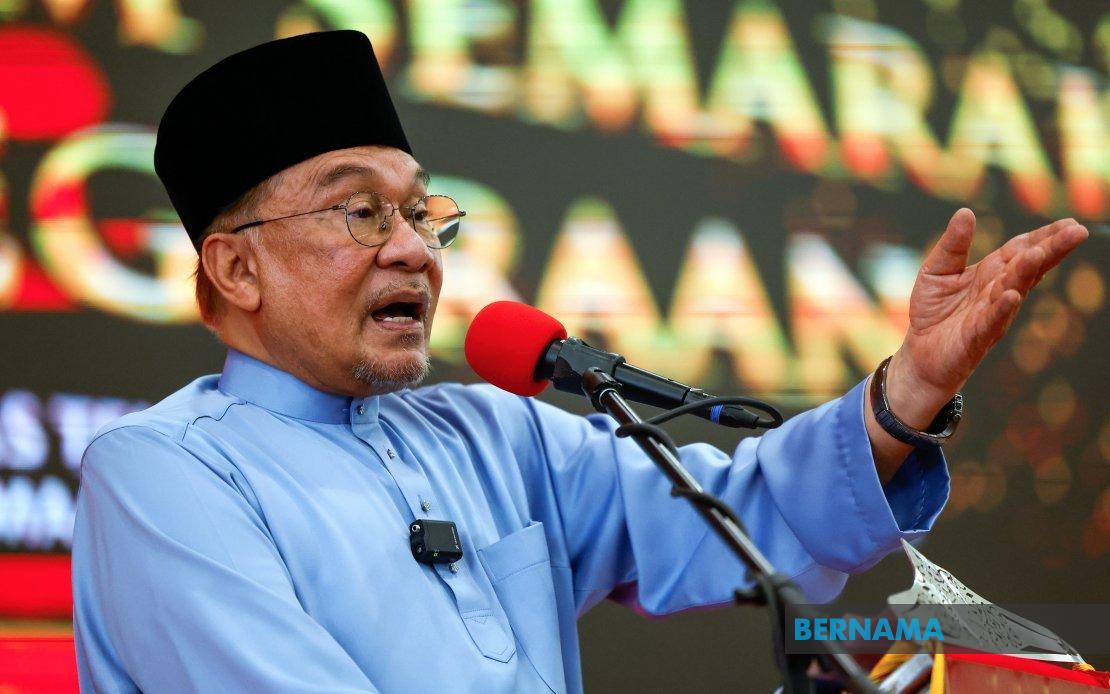
Prime Minister Datuk Seri Anwar Ibrahim has committed to repealing the Universities and University Colleges Act (AUKU) 1971, a landmark policy shift intended to grant Malaysian students substantially wider democratic participation and personal freedoms within tertiary institutions. The announcement, delivered during the 2026 PKR National Congress at the Melaka International Trade Centre in Ayer Keroh on August 15, signals a significant departure from restrictions that have shaped campus life for over five decades.
The decision follows direct engagement between the government and student leaders, who submitted memoranda and provided sustained feedback advocating for comprehensive reform of the legislation. Anwar acknowledged that these representations prompted serious reconsideration of the Act's fundamental framework. Rather than pursue incremental amendments, the government has determined that complete repeal represents the most appropriate response to student aspirations, suggesting a philosophical alignment with youth calls for institutional change.
While previous governments introduced targeted amendments to AUKU that incrementally expanded student participation opportunities, these modifications proved insufficient to satisfy emerging demands for genuine autonomy. Anwar explicitly recognised that earlier piecemeal reforms, though well-intentioned, did not address the underlying structural constraints that student activists believed limited their ability to organise, express opinions, and engage in campus governance. The recognition that "some are still not satisfied" despite these adjustments indicates that cosmetic changes to the restrictive framework had reached practical limits.
The AUKU 1971 has historically restricted student political activities, union membership, and public participation in political matters. These provisions were established during a different national context and have long been contested by civil society advocates who argue they inhibit democratic development at institutions meant to foster critical thinking. The Act's restrictions on student unions and political engagement have periodically sparked campus tensions and broader debates about academic freedom and the appropriate balance between institutional stability and democratic expression.
For Malaysian readers, this repeal carries substantial implications beyond university campuses. Malaysia's higher education sector serves as a proving ground for democratic practices and citizenship formation. Students who experience expanded participation rights develop civic engagement habits that extend throughout their careers and communities. By widening democratic space within universities, the government signals commitment to nurturing a generation equipped to navigate complex political and social challenges with developed critical faculties and practical experience in collective decision-making.
The timing of this announcement reflects broader regional patterns. Across Southeast Asia, rising student activism and international human rights attention have prompted several governments to reconsider restrictions on campus political activity. Thailand's recent student movements, Hong Kong's university politics, and broader regional conversations about youth empowerment have created political space for Malaysian leadership to position educational liberalisation as forward-looking governance. The AUKU repeal therefore positions Malaysia within global conversations about higher education's role in democratic society.
Implementation will require careful legislative drafting to balance expanded student freedoms with institutional stability and educational mission. Universities will need new frameworks governing campus political activity, student organisation, and protest. These emerging regulations will likely become testing grounds for how Malaysian institutions translate abstract commitments to student democracy into practical governance structures. The quality of implementation will significantly influence whether the repeal fulfils its democratic promise or merely displaces restrictions rather than eliminating them.
The announcement aligns with the government's stated education reform agenda, which emphasises creating more dynamic, internationally competitive tertiary institutions capable of attracting both domestic and regional talent. Prospective students increasingly prioritise educational environments offering intellectual freedom and civic participation opportunities. By enhancing these dimensions, Malaysia can strengthen its appeal within Southeast Asia's competitive higher education market while addressing longstanding student grievances about institutional paternalism.
Student movements have historically served as barometers of political sentiment and channels for articulating social concerns. The government's responsiveness to student memoranda demonstrates recognition that engaging youth constituencies directly contributes to policy legitimacy and social cohesion. This approach contrasts with historical patterns where student demands were often dismissed or suppressed. The shift suggests confidence that expanded democratic space on campuses strengthens rather than threatens institutional and national stability.
Universities themselves will navigate new responsibilities arising from expanded student freedoms. Institutions must develop inclusive governance structures, establish robust dialogue mechanisms, and create environments where diverse viewpoints receive respectful consideration. These institutional adaptations, while demanding, offer opportunities to deepen universities' engagement with surrounding communities and enhance their relevance to pressing social questions. Malaysian universities can potentially position themselves as models for democratic engagement within Southeast Asian higher education.
The opposition and concerns this policy may generate warrant consideration. Some institutional leaders, conservative constituencies, and security-focused officials might express reservations about student political organising or protest activities. Managing these tensions constructively will require sustained political commitment and clear communication about how expanded freedoms contribute to educational excellence and democratic resilience. The government's willingness to proceed despite potential controversy suggests substantive commitment to the policy direction.
Longer-term implications extend beyond campuses into broader democratic culture. Universities represent spaces where young adults develop political consciousness and organisational skills. Experiences during tertiary education often shape lifelong civic engagement patterns. By expanding student democratic participation now, Malaysia invests in more politically engaged, informed citizenry better equipped to negotiate Malaysia's complex plural society and participate constructively in democratic processes across decades.

