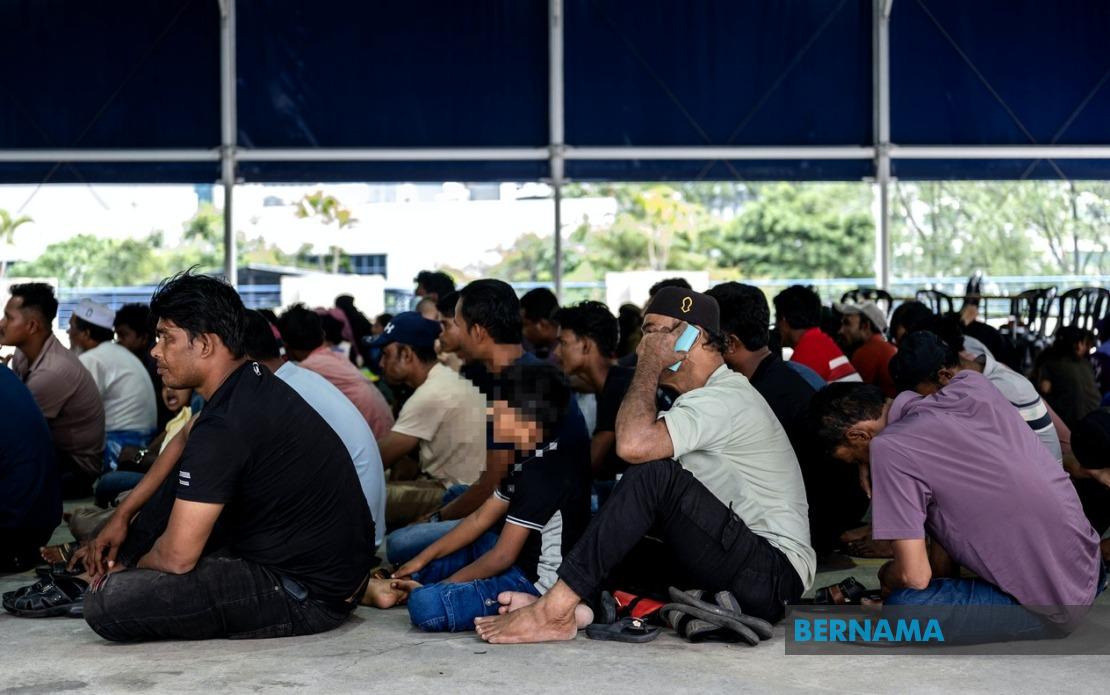
Malaysia's government has set its sights on completing the first phase of a comprehensive refugee data collection exercise by the end of this year, with Home Minister Datuk Seri Saifuddin Nasution Ismail pledging to make the findings public once available. Speaking after a ceremony in Putrajaya, the minister indicated that the preliminary results from the Refugee Registration Document (DPP) programme would emerge in the fourth quarter, marking a significant milestone in the country's efforts to systematically catalogue and manage its refugee populations.
The data-gathering initiative, being orchestrated jointly by the Home Ministry and the Immigration Department, represents a substantial shift towards more structured governance of refugee matters. Rather than relying on ad-hoc identification methods, the DPP programme aims to create a unified database containing verified biometric and identity information for all individuals classified as refugees within Malaysian territory. This systematic approach aligns with the government's broader security and administrative objectives, as outlined in the National Security Council Directive No. 23 (Revision 2023), which established the policy framework for managing displaced persons.
The significance of this exercise extends beyond mere administrative convenience. For Malaysia, a nation grappling with one of Southeast Asia's largest refugee populations, establishing reliable data remains fundamental to formulating evidence-based policies. Accurate numbers will enable policymakers to better understand the scale of the challenge, allocate resources more effectively, and coordinate with international partners including the United Nations High Commissioner for Refugees. The absence of precise figures has long complicated Malaysia's approach to refugee management and hampered bilateral discussions with origin countries.
Minister Saifuddin Nasution emphasised that individuals verified as legitimate refugees through this process would receive priority consideration for repatriation efforts, coordinated through the Foreign Ministry (Wisma Putra). This sequential approach—first identifying and documenting, then facilitating return—reflects Malaysia's stated preference for resolving displacement through voluntary repatriation rather than indefinite settlement. The minister acknowledged that reaching refugee communities to encourage their participation in the registration exercise presents a distinct challenge, requiring sustained public communication and outreach mechanisms.
While Myanmar remains the most visible source of displacement in Malaysia, the minister clarified that the DPP programme casts a wider net, encompassing refugees from all origins currently in the country. This inclusive framework ensures that data collection efforts will illuminate the full demographic landscape of Malaysia's refugee situation, not simply the Myanmar dimension. Such comprehensive documentation could reveal patterns of vulnerability, assist in identifying trafficking victims or undocumented migrants within refugee populations, and provide clearer information about the geographic distribution of displaced communities across Malaysian states.
The timing of this announcement reflects growing international pressure on Malaysia regarding refugee management. The country hosts approximately 184,000 registered refugees and asylum-seekers according to UNHCR, yet significant numbers remain undocumented. This gap between registered and actual populations has created persistent difficulties in accessing basic services, employment opportunities, and legal protection. A comprehensive database should help address these gaps and improve humanitarian responses, though questions remain about how Malaysia will handle cases where individuals lack documentation or cannot be reached through existing communication channels.
For Myanmar-origin refugees specifically, the stakes are particularly high. Many have fled military persecution, armed conflict, and economic collapse since the 2021 coup, with Malaysia representing the primary destination for displaced Myanmar nationals seeking safety beyond their region. These communities face precarious circumstances, including restrictions on movement, limited employment options, and vulnerability to exploitation. The Home Ministry's pledge to prioritise repatriation of verified refugees raises questions about the conditions under which return would be considered safe, particularly given ongoing instability in Myanmar and concerns about whether returnees face risks of arrest or persecution.
The coordination between KDN and Wisma Putra suggests that repatriation efforts will be coupled with diplomatic engagement, likely involving negotiations with Myanmar authorities and potentially other international actors. However, voluntary repatriation has historically proceeded slowly in Malaysian contexts, as many refugees harbour legitimate safety concerns about returning home. The government's emphasis on identifying "legitimate" refugees implies that some registered individuals may not meet international protection standards, raising possibilities for reclassification or alternative processing that could range from local settlement agreements to onward resettlement in third countries.
The fourth-quarter timeline carries practical implications for Malaysia's administrative and security planning. With the data expected imminently, the government will soon need to articulate concrete implementation strategies based on the verified numbers. This includes determining resource allocation for repatriation programmes, deciding on domestic settlement capacity, and establishing protocols for international cooperation. For Southeast Asian regional observers, Malaysia's approach may serve as a reference point, as neighbouring countries including Thailand and Indonesia manage similarly substantial displaced populations with limited bilateral coordination mechanisms.
Minister Saifuddin Nasution's assurance that findings would be transparently shared with media and presumably with parliament represents a departure from previous opacity surrounding refugee statistics. This commitment to public disclosure should facilitate informed public debate about Malaysia's humanitarian obligations, security concerns, and resource implications. Malaysian civil society organisations, particularly those focused on human rights and humanitarian protection, will likely scrutinise both the data and the government's subsequent policy responses.
The broader context underscores that Malaysia's refugee challenge remains fundamentally unsustained without regional cooperation frameworks and international burden-sharing. While the DPP programme represents a constructive administrative step, it alone cannot resolve the underlying drivers of displacement from Myanmar or address the structural challenges that make Malaysia an attractive but precarious destination for refugees. Sustained regional dialogue, investment in neighbouring countries' hosting capacities, and international support mechanisms remain essential complements to Malaysia's domestic registration efforts.
Looking ahead, the release of preliminary refugee data will mark a watershed moment for Malaysian policymaking. For the first time, government and civil society actors will possess verified baseline figures enabling more sophisticated analysis and planning. Whether these numbers translate into meaningful improvements in refugee protection, more efficient repatriation processes, or alternatively contribute to more restrictive policies will depend substantially on political will and international engagement. The coming months will be crucial in determining how Malaysia leverages this new information to shape its humanitarian trajectory.

