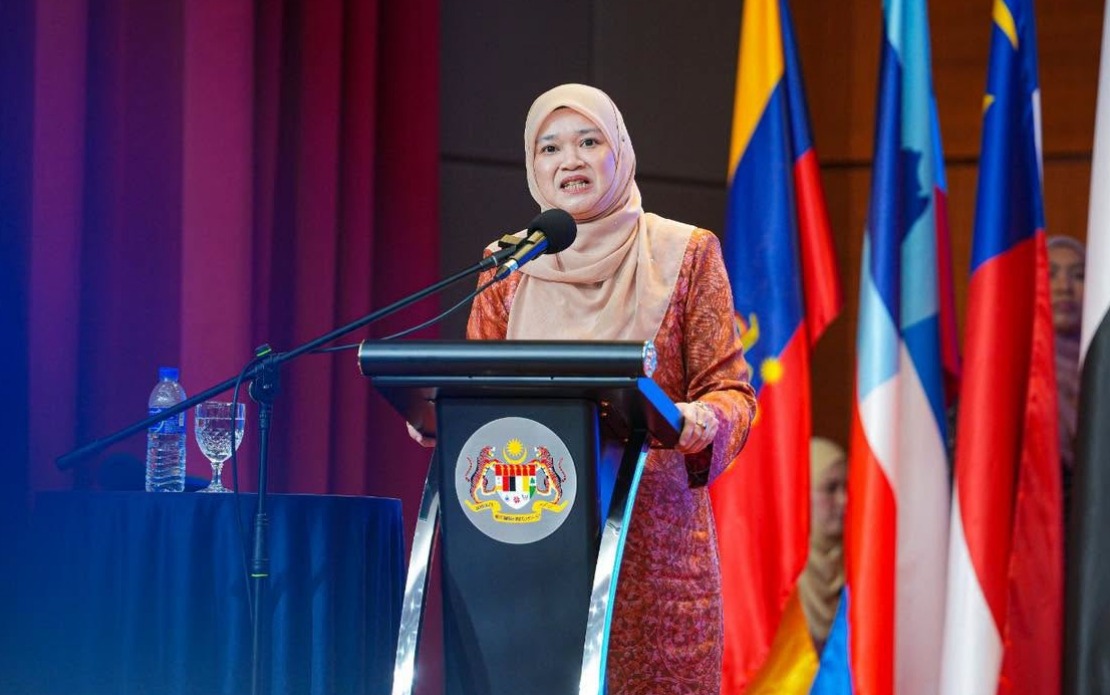
The Education Ministry has committed to evaluating mechanisms that would credit participation in sports and co-curricular activities for students studying within prison institutions, potentially strengthening their applications for university admission once they complete their secondary education. Minister Fadhlina Sidek outlined this initiative while presiding over the closure of the 17th Hijrah Kasih Programme, a collaborative effort between the ministry and the Malaysian Prison Department held in Kajang. The announcement reflects a broader policy recognition that young people serving sentences should not face permanent educational barriers upon their return to society.
Fadhlina emphasised that the credit system represents a crucial intervention to keep educational pathways open for this vulnerable cohort beyond their Sijil Pelajaran Malaysia (SPM) examinations. Her statement acknowledged that completing secondary schooling whilst incarcerated presents sufficient obstacles without adding institutional disadvantage at the tertiary level. The merit earned through approved activities could become a tangible asset when these students transition to civilian life and pursue further qualifications. This approach aligns with broader rehabilitation philosophies that emphasise skill-building and personal development alongside academic achievement.
Beyond co-curricular recognition, the ministry is exploring parallel mechanisms to formalise vocational training undertaken in prison settings. Discussions with the Technical and Vocational Education and Training division centre on issuing formal skills certificates to inmates who complete training programmes in areas such as sewing, food preparation, and other trades. These qualifications would provide documented evidence of competency that employers recognise, addressing a critical gap in the reintegration process. Many incarcerated students acquire genuine practical abilities that could command market value, yet without official certification, potential employers often dismiss their experience as informal or unverified.
The data supporting this initiative is compelling. Prison school students have achieved a 100 percent pass rate in SPM for two consecutive years, a statistic that defies common assumptions about institutional barriers limiting academic performance. Fadhlina attributed this success not to privileged circumstances but to individual determination, suggesting that the prison population demonstrates exceptional motivation precisely because they have invested effort in education despite significant personal challenges. This framing rejects deficit narratives that treat incarcerated youth as inherently academically weaker, instead positioning them as exceptional achievers whose external constraints would typically suppress rather than enhance performance.
Deputy Director-General of Education Datuk Zainal Abas provided implementation specifics, indicating that the Physical, Sports and Co-curricular Assessment (PAJSK) scores from prison schools should receive official recognition within the current year. The timeline would enable SPM candidates beginning from 2027 onwards to incorporate a ten percent merit component based on these achievements when submitting university applications. This percentage carries meaningful weight in Malaysia's competitive admission environment, potentially transforming borderline applicants into competitive candidates. The staggered implementation allows institutions time to develop assessment frameworks and ensure consistency across different prison school settings.
The recognition of PAJSK scores addresses a longstanding inequity in how educational merit is calculated. Students attending mainstream schools routinely accumulate co-curricular credits through validated participation, creating an implicit advantage in university selection processes. Prison students, despite engaging in identical activities, historically received no institutional credit for these efforts. Formalising their recognition corrects this structural imbalance and sends a clear message that personal development matters regardless of the student's location or circumstances. This approach may also incentivise broader participation in organised activities within prison schools, enhancing rehabilitation outcomes simultaneously.
Digital access represents another frontier in equalising educational opportunities. The ministry is examining ways to connect prison school students with recent educational developments outside their institutions, particularly through digital platforms. The potential expansion of access to DELIMa, Malaysia's Digital Educational Learning Initiative, would enable incarcerated students to engage with online learning resources and educational materials maintained on government platforms. However, officials are proceeding carefully, balancing educational access with institutional security requirements that necessitate controlled connectivity within custodial environments.
The prospect of providing comparable digital learning facilities to prison school students addresses a critical equity concern. Mainstream students benefit from internet connectivity, interactive online resources, and digital collaboration opportunities as standard educational infrastructure. Restricting prison students from these tools creates a knowledge gap that compounds upon release. By selectively extending DELIMa access with appropriate security protocols, the ministry acknowledges that modern education increasingly depends on digital literacy and access. Students who graduate without familiarity with online learning platforms face additional barriers when transitioning to university-level study, where digital engagement is often mandatory.
Minister Fadhlina also elevated the role of family support in her remarks, recognising that institutional reforms alone cannot ensure educational success. Parents maintaining contact and providing emotional support during incarceration significantly influence whether young people remain invested in their studies. The acknowledgment that parental engagement matters most during "the most difficult periods" recognises the psychological toll of incarceration on adolescents and young adults. Educational achievement in these settings requires both systemic support and relational continuity, a reality that policy frameworks sometimes overlook in focusing exclusively on curriculum and assessment structures.
These developments carry implications extending beyond individual student trajectories. Malaysia's incarcerated youth represent a demographic cohort whose successful reintegration affects community stability and public safety outcomes. Young people who exit prison with recognised qualifications, formal skills certification, and university eligibility occupy fundamentally different social positions than those leaving with only basic secondary credentials. The reduced likelihood of recidivism associated with educational attainment translates to measurable public benefits. From an investment perspective, allocating resources to ensure prison school students access equivalent opportunities represents sound policy that generates returns across multiple social dimensions.
The initiative also reflects evolving international approaches to correctional education. Jurisdictions that have integrated incarcerated students fully into national educational frameworks—granting equivalent recognition for achievements and maintaining technological parity—report improved outcomes across recidivism, employment, and continued education metrics. Malaysia's adoption of similar principles positions the country among progressive authorities recognising that rehabilitation depends on genuine opportunity rather than mere programme participation. The commitment to recognise PAJSK scores, explore skills certification, and extend digital learning access demonstrates systematic thinking about what genuine educational equity requires.

