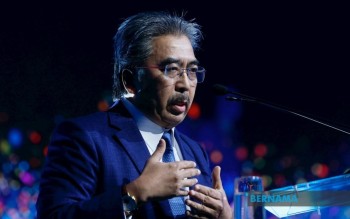
Malaysia's government intends to undertake a systematic examination of the country's import profile, encompassing both consumer goods and capital equipment, with the goal of formulating measures that will progressively lower the nation's dependence on foreign supply chains. Datuk Seri Johari Abdul Ghani, who holds the portfolio of Minister of Investment, Trade and Industry, detailed this initiative during remarks made at an industry conference in Kuala Lumpur on Monday, emphasizing that such a strategic shift is essential if Malaysia is to generate genuine economic value domestically and ensure that growth in commerce and foreign direct investment translates meaningfully into improved living standards for ordinary Malaysians.
The minister's statement reflects a broader recognition within government circles that Malaysia's traditional economic model, built substantially on being an attractive destination for multinational manufacturing and a conduit for global trade flows, requires recalibration. Speaking at the RHB Bank Bhd RHB Progress Series 2026 conference, Johari stressed that the development of indigenous technological capabilities and home-grown innovations must become central pillars of Malaysia's economic strategy moving forward. This marks a noticeable shift in emphasis from previous eras when foreign investment was courted principally on the basis of cost advantages and regulatory flexibility.
The timing of these comments coincides with encouraging trade performance data. During the previous year, Malaysia achieved a historical milestone when the combined value of all imports and exports surpassed the RM3 trillion mark—the first instance of such a total in the nation's recorded economic history. Export volumes expanded at an annual rate of 6.5 per cent, reaching RM1.61 trillion, whilst import volumes grew at a somewhat slower pace of 6.2 per cent to reach RM1.45 trillion. This configuration produced a merchandise trade surplus of RM151.8 billion, demonstrating Malaysia's continued competitive strength in international commerce. However, the minister's current emphasis on reducing import reliance suggests that policymakers view these headline figures as potentially masking underlying structural vulnerabilities.
Central to Johari's argument is Malaysia's unfinished journey toward achieving high-income economy status, a designation that carries both economic and geopolitical significance in the Southeast Asian context. According to classifications maintained by the World Bank, nations qualify as high-income economies when their per capita gross national income reaches approximately US$14,375. Malaysia currently stands at US$12,380 per capita, positioning the country approximately 16 per cent beneath this threshold. The minister acknowledged that this benchmark itself shifts annually as global economic conditions evolve, meaning that Malaysia must achieve productivity and innovation gains not merely to close the existing gap but to maintain pace with rising standards elsewhere.
Johari articulated a pointed critique of conventional strategic thinking, arguing that maintaining the status quo through passive acceptance of existing trade and investment patterns is insufficient for the challenges ahead. The minister contended that Malaysia must develop what he termed strategic agility—the capacity to respond swiftly to altered global circumstances, cultivate a more diverse portfolio of international partnerships, and make calculated policy decisions that protect Malaysia's long-term economic sovereignty and interests. This language suggests concern about over-reliance on any single trading partner or sector, potentially alluding to broader geopolitical tensions affecting Southeast Asia.
A cornerstone of the proposed policy framework involves deliberate categorization of import items, distinguishing between those that should continue entering Malaysia from abroad and those where domestic production capacity should be expanded or developed. The minister cautioned against an uncritical embrace of cheaper foreign alternatives, warning that such short-term cost savings might ultimately atrophy Malaysia's domestic industrial base and manufacturing expertise. Over time, this erosion could render the nation structurally dependent on imported goods for even basic requirements, constraining economic independence and vulnerability to supply chain disruptions—concerns that have gained prominence globally since the COVID-19 pandemic.
To illustrate this concern concretely, Johari referenced Malaysia's historical experience with iron and steel production. The domestic industry once operated on a self-sufficient basis, possessing the capacity to meet domestic demand and contributing meaningfully to employment and value creation. However, following the entry of substantially larger foreign manufacturers producing comparable products at competitive prices, the local industry contracted significantly. Rather than adopting a blanket protectionist stance, the minister indicated that Malaysia remains receptive to foreign investors, provided they add genuine value by introducing products, technologies, and capabilities not yet present within the Malaysian economy. Under this selective approach, foreign companies would complement the domestic ecosystem rather than directly displacing established local producers.
The practical implications of this strategic reorientation extend across numerous sectors. Industries ranging from semiconductor assembly to petrochemicals refining, automotive manufacturing to advanced materials processing, would likely experience shifting incentive structures. Businesses engaged in importing finished goods for local distribution may face heightened tariffs or regulatory barriers, while those willing to establish manufacturing operations in Malaysia could receive enhanced incentives. The distinction between foreign investors who establish genuine production capabilities within Malaysia versus those who merely use the country as a trans-shipment or warehousing hub appears set to become more pronounced in policy terms.
Paralleling this policy initiative, the financial services sector is undergoing its own modernization. During the same conference, RHB Bank unveiled RHB Pay, positioned as the nation's first bank-owned integrated digital payment platform. This system consolidates the previously fragmented landscape in which businesses required separate arrangements to accept different payment methods. Through a single integration, merchants can now accept card-based payments, the increasingly ubiquitous FPX interbank transfer system, and DuitNow Pay, with the processed funds flowing directly into RHB customer accounts. The platform incorporates institutional-grade security protocols, automated transaction reconciliation, and real-time visibility into cash flow positions, addressing persistent pain points that have constrained smaller enterprises from embracing digital commerce.
The payment infrastructure upgrade carries significance beyond mere convenience. By reducing friction and costs associated with accepting diverse payment methods, RHB Pay potentially accelerates the adoption of cashless transactions among Malaysian businesses, particularly mid-market enterprises, commercial operations, and government-linked entities. Enhanced cash flow visibility and faster access to transaction proceeds can improve working capital management for businesses of all scales. During 2026's fourth quarter, the platform intends to expand its capabilities to encompass e-wallet acceptance, QR code payments, direct debit arrangements, and automated debit facilities, creating an increasingly comprehensive ecosystem for merchants navigating Malaysia's increasingly digital economy.
When considered together, the government's import review initiative and the financial sector's push toward integrated digital payments suggest a coordinated effort to strengthen Malaysia's domestic economic fundamentals. The payment infrastructure investment facilitates the operational efficiency of whatever manufacturing and commercial enterprises emerge from the import substitution strategy, whilst the policy framework creates space for those enterprises to develop competitive advantages. For Malaysian businesses, these developments signal both challenges—in the form of heightened expectations regarding local content and technological sophistication—and opportunities, through protection from unfettered foreign competition and access to improved financial infrastructure.
The success of this reorientation will depend substantially on execution capacity and the political durability of policy commitments. Industries historically protected from foreign competition sometimes prove reluctant to invest in productivity improvements or innovation when insulated from competitive pressure. Simultaneously, sudden restrictions on imports could provoke retaliatory measures from trading partners and potentially raise prices for Malaysian consumers in the short term. Balancing these competing considerations whilst maintaining Malaysia's attractiveness as a destination for the high-quality foreign investment the country genuinely seeks represents the central challenge for policymakers in the months and years ahead.

