Next year's National Day and Malaysia Day celebrations promise to be a significantly expanded affair, with the Communications Ministry introducing a comprehensive slate of 16 programmes designed to deepen patriotism and reinforce national unity across Malaysian society. The initiative represents a deliberate effort by the government to ensure that the country's most important civic observances extend far beyond ceremonial gestures, engaging citizens from diverse backgrounds and geographic locations in meaningful commemorations of Malaysia's independence journey.
According to Harun Ali, secretary of the Communications Ministry's Management Services Division, the 2026 celebration suite encompasses a diverse range of activities spanning cultural performances, community engagement, and competitive events. Among the initiatives are Kembara Merdeka Jalur Gemilang, an ambitious nationwide programme; the National Month Decoration Competition, which invites Malaysians to transform their surroundings into patriotic displays; Ekspresi Merdeka, a platform for creative expression; and the Kita MADANI Carnival, designed to bring communities together through festive activities. These offerings are complemented by numerous grassroots and cultural initiatives intended to create multiple entry points for participation regardless of demographics or location.
A significant departure from tradition is the decision to relocate the main Merdeka Eve Celebration from Putrajaya to Stadium Merdeka, a venue steeped in Malaysia's historical narrative. This shift carries symbolic weight, as Stadium Merdeka served as the site where Malaysia's independence was first declared in 1957, making it a particularly fitting location for marking the nation's anniversary. The choice reflects an intentional reconnection with Malaysia's founding moment, grounding contemporary celebrations in the nation's historical foundations and creating a tangible link between past struggles and present achievements.
The centrepiece of the 2026 celebration will be a special Merdeka Address delivered by Prime Minister Datuk Seri Anwar Ibrahim as midnight approaches on Merdeka Eve. This carefully timed intervention is intended to crystallise the evening's themes around national resilience and collective purpose, with the Prime Minister's remarks designed to galvanise popular sentiment and reinforce shared values binding Malaysians together. The symbolic timing of this address, coinciding with the moment of transition into National Day proper, underscores the government's recognition that leadership messaging during these pivotal occasions shapes how citizens internalise and commemorate national identity.
A striking new attraction introduced for 2026 is an aerial display concept titled "Melukis Senja", featuring performances by aerobatic team Aero 3. The display incorporates sophisticated aerial manoeuvres that produce distinctive smoke trails interspersed with fireworks bursts across Putrajaya's skyline. This fusion of precision aviation with pyrotechnics aims to create a memorable visual spectacle that captures public imagination, particularly among younger audiences who may relate to contemporary forms of entertainment. The selection of this particular attraction reflects broader trends in national celebrations globally, where organisers seek to blend traditional symbolism with modern entertainment aesthetics.
The underlying rationale articulated by ministry officials emphasises that independence, while now taken for granted by many Malaysians, represents an achievement that came at considerable cost. Harun Ali stressed this dimension during his radio interview, noting that the freedom Malaysians enjoy today was neither cheaply nor effortlessly secured. This framing carries particular relevance in contemporary Malaysia, where younger generations with no lived experience of colonial rule may lack visceral understanding of what independence represents. By embedding this historical consciousness within celebratory programmes, the government seeks to cultivate deeper appreciation for national sovereignty among all age cohorts.
The ministry's explicit call for Malaysians to fly the Jalur Gemilang flag as a manifestation of national pride and gratitude operates on multiple registers simultaneously. Surface-level, flag display represents visible patriotic expression, transforming the physical environment into a sea of national symbolism. Deeper still, the emphasis on flag-flying as a conscious gesture of gratitude and belonging speaks to identity formation and community membership. In Malaysia's multicultural context, such calls take on additional significance, functioning as inclusive invitations for all citizens to express attachment to the nation as a unifying framework transcending ethnic and religious particularities.
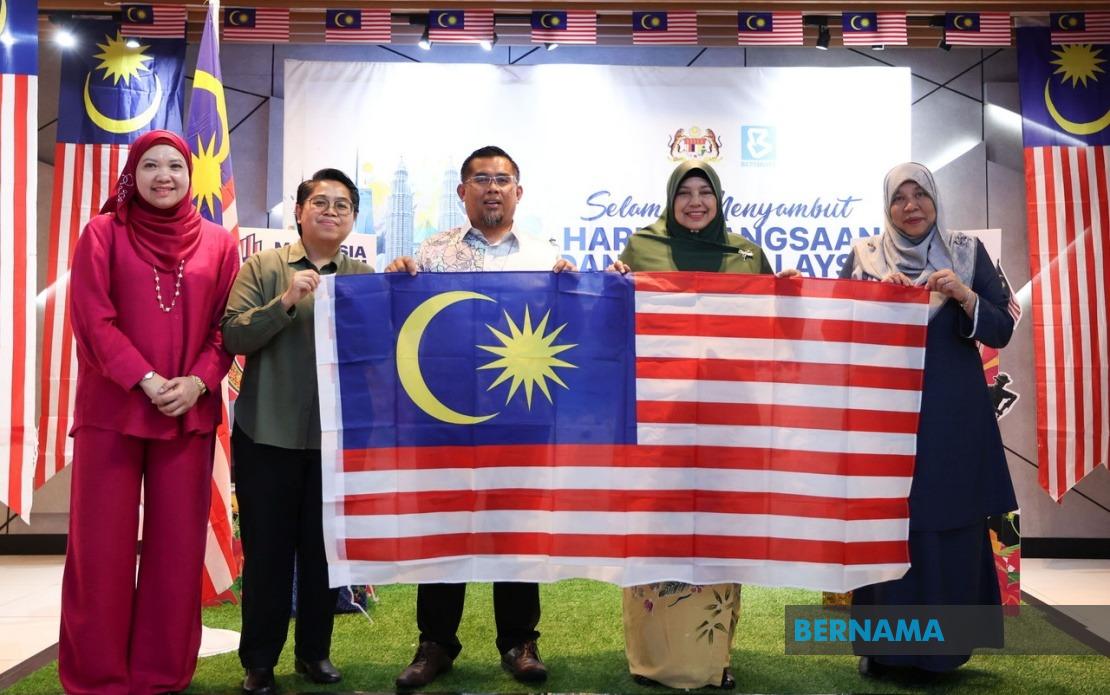
The Communications Ministry formalised its commitment to expanded celebrations through a ceremonial flag handover to staff of Bernama, the Malaysian National News Agency. This symbolic gesture, while seemingly procedural, serves multiple purposes: it enlists media institutions as active participants in patriotic messaging, establishes visual documentation protocols for celebrating institutions, and creates photo opportunities that can be disseminated across news platforms to build public awareness of commemorative activities. Such coordination between government and media represents standard practice in national celebration management, though it warrants noting as an illustration of how official messaging channels are mobilised during these periods.
For Malaysian citizens and organisations seeking to participate in the expanded 2026 celebration framework, the government has established an official website containing detailed programme schedules and participation guidelines. This digital infrastructure reflects contemporary practices of civic engagement management, allowing government to reach geographically dispersed populations and accommodate diverse participation preferences. The online portal functions both as logistical coordination mechanism and public information resource, reducing barriers to entry for potential participants while enabling the government to aggregate participation data and assess programme success.
The scope of the 2026 initiative carries implications extending beyond symbolic patriotic renewal. The economic stimulus generated through celebration-related procurement, from decorative materials to entertainment services, supports domestic industries and small businesses. The employment of Aero 3 for aerial displays, for instance, channels economic resources toward specialty aviation services, while decoration competitions stimulate demand for design and materials sectors. Community carnival activities create opportunities for grassroots entrepreneurs and informal traders to generate income, distributing celebratory spending across economic strata.
From a regional Southeast Asian perspective, Malaysia's strategic expansion of national day programming warrants observation as a deliberate state building exercise. Throughout Southeast Asia, governments increasingly recognise that patriotic sentiment requires continuous reinforcement and creative activation, particularly in pluralistic societies where competing identities and narratives persistently challenge unified national consciousness. The Malaysian approach, emphasising inclusivity, creativity, and historical grounding, offers a model distinguishable from more coercive or exclusionary nationalism visible in certain regional contexts.
Looking forward, the success of the 2026 HKHM celebration framework will likely depend on execution fidelity and genuine grassroots engagement rather than government proclamation alone. The programmes announced represent intentions and possibilities rather than guarantees of deep patriotic transformation. Whether Malaysians embrace the expanded offerings, whether younger citizens connect meaningfully with historical narratives, and whether these celebrations genuinely strengthen social cohesion remains contingent on how effectively these initiatives resonate with diverse audiences and authentic community participation.

