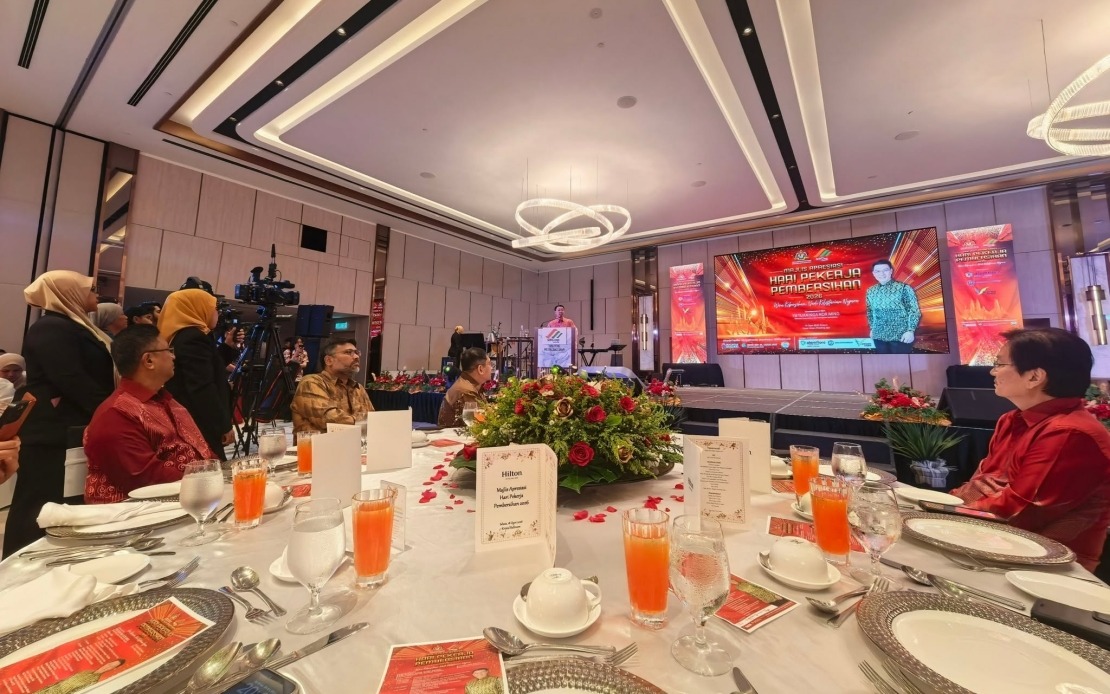
The Housing and Local Government Ministry (KPKT) will formally nominate recipients of the 2026 Cleaning Workers Award for state honours, marking an expansion of recognition efforts for Malaysia's frontline sanitation workforce. Housing Minister Nga Kor Ming announced the initiative during the 2026 Cleaning Workers Appreciation Day ceremony in Petaling Jaya, emphasising that the nation's cleaning workers deserve formal acknowledgement for their dedication to maintaining public hygiene and environmental standards across the country.
The proposal, developed in consultation with KPKT secretary-general Datuk Dr Wira M Noor Azman Taib, represents a strategic move to institutionalise recognition of cleaning sector employees at the state level. Rather than limiting honours to national awards, the ministry will channel award recipients' names to respective state palaces, enabling state rulers to confer official recognition upon these workers. This structure leverages existing state-level honours systems to create a more inclusive and widespread acknowledgement framework across all Malaysian states.
Penang has served as the model for this expanded recognition programme, having honoured cleaning workers at the state level for nearly a decade. Nga noted that this established practice demonstrated both the feasibility and the positive impact of formal state recognition on worker morale and public awareness. The minister highlighted that Penang's experience provided a proven template for other states to adopt, effectively creating a nationwide network of appreciation that extends beyond federal-level awards.
The cleaning and solid waste management sector represents a significant component of Malaysia's environmental services infrastructure, currently employing 26,889 workers through various concessionaires. Among this workforce, tenure patterns reveal deep commitment to the profession: many have served for over a decade, whilst others have dedicated nearly three decades to maintaining public cleanliness. This longevity suggests a stable, experienced workforce that has navigated significant changes in waste management practices and environmental standards throughout their careers.
Despite their essential role in maintaining public health and environmental quality, cleaning workers often remain invisible to casual public notice, labouring in early morning hours and performing tasks that society depends upon but rarely celebrates. Nga emphasised that these workers operate the backbone systems that keep public spaces sanitary, safe and pleasant for residents and visitors alike. Their behind-the-scenes contributions directly influence public health outcomes, disease prevention and environmental aesthetics across urban and suburban areas.
The ministry's recognition initiative must be understood within a broader framework concerning Malaysia's environmental and social responsibilities. Nga articulated this perspective by stressing that public cleanliness cannot rest solely on the shoulders of professional cleaning workers. Instead, maintaining a clean environment demands collective citizen participation and behavioural change across all demographic and economic segments of Malaysian society. This philosophical positioning reframes cleanliness as a shared national responsibility rather than a sectoral obligation.
To reinforce this collective responsibility ethos, Nga called upon the Solid Waste Management and Public Cleansing Corporation (SWCorp) to intensify enforcement of the Community Service Order (PKM) mechanism. As of mid-August, authorities had issued 14,807 offence notices for littering and sanitation violations throughout 2026. The enforcement data reveals that 548 individuals have undertaken Community Service Orders in states that have adopted Act 672, with 419 having completed their obligations and 129 currently serving their sentences. These statistics demonstrate active implementation of consequences for sanitation violations.
Crucially, Nga reframed the Community Service Order not as punitive machinery but as an educational intervention designed to cultivate discipline, civic responsibility and environmental consciousness. This conceptualisation aligns with international approaches to behavioural correction that emphasise rehabilitation and awareness-building over pure punishment. By requiring offenders to engage directly in community cleanliness activities, the programme creates experiential learning opportunities that may generate sustained behaviour modification beyond the service completion period.
The 2026 Cleaning Workers Award recognised seven exceptional individuals drawn from two major sanitation service providers: Alam Flora Sdn Bhd contributed two recipients whilst SWM Environment Sdn Bhd contributed five awardees. Beyond the formal awards, the ministry distributed contributions to three recipients as tangible expressions of support for worker welfare. These financial gestures signal official commitment to improving material conditions for workers whose compensation may not always reflect the essential nature of their labour or the challenging conditions they regularly encounter.
The recognition programme operates within the broader context of the 'Malaysia Bersih, Rakyat Sejahtera' (Clean and Prosperous Malaysia) national aspiration. This policy framework articulates a vision whereby environmental cleanliness translates directly into improved quality of life, public health and citizen wellbeing. By honouring cleaning workers and simultaneously implementing enforcement mechanisms against littering, the government attempts to create a comprehensive ecosystem of cultural, professional and regulatory elements that mutually reinforce environmental stewardship.
For Southeast Asian regional observers, Malaysia's approach demonstrates one model for bridging the dignity gap between formal sector and sanitation worker categories. Many ASEAN nations struggle with similar challenges of maintaining adequate sanitation infrastructure while ensuring worker recognition and welfare. Malaysia's state honours framework and community service enforcement mechanisms offer potential templates for neighbouring countries seeking to upgrade both professional recognition systems and citizen engagement in environmental maintenance.
The initiative further reflects evolving Malaysian governance priorities regarding the formal recognition of essential service workers. As the nation develops economically and socially, acknowledgement of foundational sectors like sanitation gains visibility within policy discourse. This trajectory suggests that future national honours and recognition programmes may increasingly incorporate workers from infrastructure, maintenance and essential service roles whose contributions shape daily life but have historically received limited ceremonial or institutional acknowledgement.

