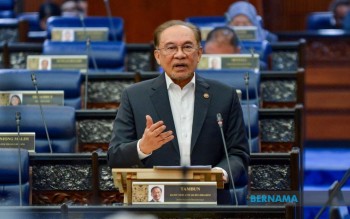
Malaysia is preparing to evaluate the establishment of a national petroleum reserve as part of its broader strategy to safeguard energy security in an increasingly unpredictable global environment. Prime Minister Datuk Seri Anwar Ibrahim unveiled this initiative following the National Energy Council Meeting No. 1 2026, which he chaired in Kuala Lumpur, signalling government commitment to building economic resilience against future supply shocks and geopolitical tensions that could disrupt energy markets.
The decision reflects growing concerns about international energy stability, particularly as conflicts and trade tensions continue to roil global commodity markets. By establishing strategic petroleum reserves—similar to models deployed by advanced economies—Malaysia would create a buffer against sudden price spikes or supply interruptions that could destabilize domestic industries and household budgets. This approach acknowledges that despite the country's hydrocarbon wealth and refining capabilities, regional and global uncertainties demand additional protective measures.
Simultaneously, the government reaffirmed its commitment to the National Energy Transition Roadmap, demonstrating that Malaysia is balancing near-term energy security concerns with long-term sustainability objectives. As of December last year, renewable energy capacity reached 31 per cent of installed generation, a significant milestone reflecting the administration's pivot away from coal-dependent power systems. This transition represents both an environmental imperative and an economic strategy, as renewable energy increasingly offers cost advantages while reducing exposure to volatile fossil fuel markets.
Corporate sector participation is accelerating renewable energy adoption through the Corporate Renewable Energy Supply Scheme, which has been enhanced with Battery Energy Storage System technology. This combination addresses a fundamental challenge of renewable energy integration—intermittency—by enabling businesses to store excess solar and wind generation for use during peak demand periods. The scheme's expansion suggests Malaysia is building a more sophisticated and resilient grid capable of balancing renewable sources with conventional generation.
Transportation electrification remains another pillar of Malaysia's energy transition strategy. The rollout of 250 electric buses across the country and the expansion of rail networks covering 800 kilometres nationwide signals a major shift in how Malaysians move. These investments directly reduce petroleum consumption in what is typically the largest fuel-consuming sector, easing pressure on energy supplies whilst improving urban air quality. The initiatives demonstrate that energy security encompasses not just reserves and supply chains but also demand-side efficiency and modal shifts.
Biodiesel integration presents an intermediate pathway as Malaysia transitions away from conventional petroleum products. The B15 biodiesel programme, which blends 15 per cent biofuel with diesel, has gained traction across the transport sector and will receive additional momentum through Petronas's biofuel hub development in Pengerang, Johor. This facility will leverage Malaysia's agricultural capacity and refining expertise to produce sustainable fuels domestically, reducing import dependence whilst creating value-added industries.
Sarawak's hydrogen hub initiative, meanwhile, positions East Malaysia as a frontier for next-generation energy technologies. The Autonomous Rapid Transit system's Phase 1 development, scheduled for completion by end-2026, will serve as a proving ground for hydrogen-powered public transport. Hydrogen represents the ultimate decarbonization solution for heavy transport and industrial applications, and Malaysia's early investment signals ambitions to lead Southeast Asia in this emerging sector.
For Malaysian policymakers, the petroleum reserve proposal represents pragmatic risk management. Nations holding strategic oil reserves can weather temporary supply disruptions without triggering economic disruptions, providing time for markets to rebalance. Moreover, reserves can be deployed to stabilise domestic fuel prices during global volatility, protecting lower-income households and energy-intensive industries from sudden cost shocks. The approach does not contradict the energy transition—it complements it by ensuring the country remains stable during the decades-long period required to fully transition away from hydrocarbons.
Regionally, Malaysia's dual focus on energy security and transition carries implications for ASEAN partners. Several Southeast Asian nations face similar vulnerabilities to energy supply disruptions whilst pursuing net-zero commitments. Malaysian investments in renewable capacity, storage technology, and alternative fuels generate knowledge and technology spillovers that benefit neighbouring economies. Furthermore, Petronas's biofuel hub could serve as a regional hub, processing feedstocks from across Southeast Asia and supplying sustainable fuels to regional markets.
The timing of these announcements also reflects Malaysia's awareness of its strategic position in global energy markets. As a major oil and gas producer with significant refining capacity, the country has responsibilities to regional energy security. Building strategic reserves whilst simultaneously diversifying energy sources allows Malaysia to maintain its energy industry relevance whilst adapting to long-term market shifts toward renewables and green hydrogen.
Successful implementation of both the petroleum reserve initiative and the broader energy transition roadmap will require sustained investment, regulatory clarity, and coordination across government agencies, state-owned enterprises, and private sector players. The National Energy Council's expanded focus suggests institutional arrangements are being strengthened to manage these complex, inter-dependent challenges. For Malaysia to achieve both near-term resilience and long-term sustainability, policymakers must maintain momentum on all fronts—traditional energy security, renewable integration, transport electrification, and hydrogen development.

