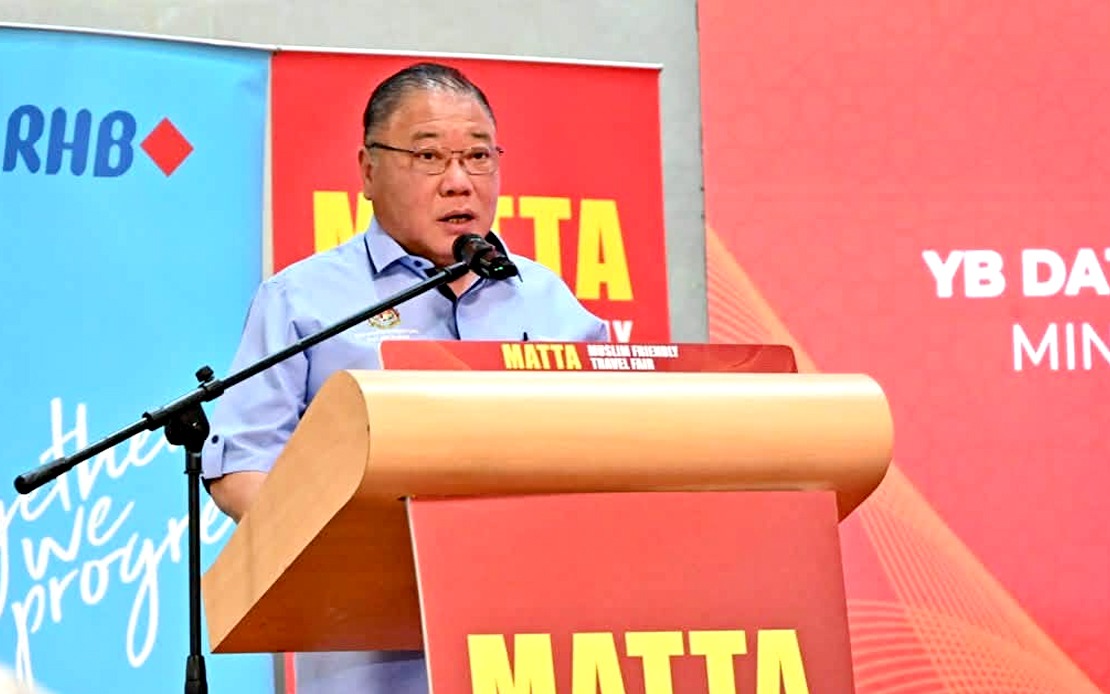
The Malaysian government is moving to establish regulatory guardrails around the umrah tourism sector, announcing plans for a minimum pricing structure and mandatory service specifications that will govern how travel operators package and promote religious journeys to Saudi Arabia. Tourism, Arts and Culture Minister Datuk Seri Tiong King Sing revealed the policy direction while addressing delegates at the Malaysian Association of Tour and Travel Agents Muslim Friendly Travel Fair 2026, signalling a coordinated approach involving multiple government bodies including Tabung Haji and the Religious Affairs Ministry to tighten oversight of an industry that has increasingly attracted concern over service quality lapses.
The initiative targets a persistent market dysfunction where cut-throat competition has led operators to offer unsustainably cheap umrah packages that ultimately fail to deliver promised services, leaving pilgrims stranded overseas or unable to complete their religious obligations. Tiong described this as an unacceptable outcome, emphasising that the government will not tolerate situations where travellers depart Malaysia for umrah but find themselves unable to return home or face obstacles in fulfilling their spiritual mission. This framing reflects growing public concern about umrah package failures, which have occasionally resulted in diplomatic incidents and reputational damage to Malaysia's standing in religious tourism.
The proposed mechanism will function by establishing a price floor below which umrah packages cannot be marketed, while simultaneously requiring operators to provide transparent, itemised service descriptions for each tier they offer. Rather than imposing a one-size-fits-all approach, the framework contemplates allowing operators flexibility in tiering their offerings—designating packages as Premium, Gold, Silver, and Platinum, for instance—provided each tier meets the minimum cost threshold and includes clearly articulated inclusions. This allows market differentiation while preventing a destructive race to the bottom that has historically characterised unregulated sectors.
The policy reflects a broader recognition within government circles that reputation and consumer protection in religious tourism carry strategic importance beyond immediate economic metrics. When pilgrims return from umrah having experienced poor accommodation, inadequate meals, transportation failures, or cut corners in religious facilitation, they communicate these experiences across their social networks and communities, potentially damaging Malaysia's carefully cultivated image as a destination aligned with Islamic values and hospitality standards. The intervention thus addresses both consumer welfare and national brand protection.
Tiong's comments place this initiative within the context of intensifying global competition for Muslim traveller spending, a market segment that is expanding rapidly as middle-class consumers across the Muslim world acquire greater disposable income and travel appetite. He highlighted Macau's strategic investment in Muslim-friendly infrastructure—including expanded halal dining, prayer facilities, and dedicated information services for Muslim visitors—as evidence that neighbouring competitors are actively capturing market share in religious and faith-based tourism. This competitive pressure explains why Malaysia, despite its geographic and cultural advantages in serving Muslim pilgrims, cannot assume market leadership without continuous innovation and quality assurance.
The regulatory approach being contemplated also reflects learning from experience with other regulated tourism sectors. Malaysia's halal certification framework and various tourism licensing schemes have established precedent for government-mandated quality standards coupled with market segmentation. The umrah package regulation appears designed along similar lines, where government sets baseline requirements but allows operators to compete on quality and premium features rather than price alone. This model has proven effective in preventing a commodity-like race to the bottom while maintaining dynamic market competition.
Implementing this framework will require coordination among several agencies with overlapping mandates. Tabung Haji, as the primary Islamic financial institution involved in umrah financing, holds critical leverage in the distribution chain and can condition financing on compliance with new standards. The Religious Affairs Ministry brings authority on Islamic matters and pilgrimage protocols. Tourism authorities can handle licensing and compliance monitoring. This multi-agency approach, while requiring careful coordination, distributes enforcement capacity and reduces reliance on any single body to police the entire ecosystem.
From the Malaysian consumer perspective, this initiative addresses a genuine pain point. Families saving for umrah journeys often compare packages across dozens of operators, and the presence of anomalously cheap offerings creates decision paralysis—uncertainty about whether a bargain-priced package represents genuine efficiency or hidden service gaps. By establishing transparent price-to-service correspondences, the regulation reduces information asymmetry and allows pilgrims to make more confident purchasing decisions. This particularly benefits less-sophisticated consumers who lack the knowledge to evaluate which cost-cutting measures represent acceptable economies and which constitute unacceptable compromises to the pilgrimage experience.
The broader policy context also matters. Malaysia's Muslim-Friendly Tourism and Hospitality ecosystem strategy positions religious tourism as a cornerstone of economic diversification, particularly valuable given its resilience and the demographic trends driving Muslim traveller growth. Protecting the reputation and quality standards of umrah packages indirectly protects this broader sector, since excellence in pilgrimage services creates positive brand associations that extend across hospitality, dining, and accommodation industries more generally. A single high-profile umrah service failure can inflict disproportionate reputational damage because of the spiritual significance pilgrims attach to these journeys.
The timing of this announcement also carries significance. With travel recovering strongly post-pandemic and Middle Eastern travel increasingly accessible to Southeast Asian Muslim populations, the competitive landscape for umrah packages is intensifying. Without proactive regulation, market consolidation around lowest-cost providers could accelerate, progressively degrading service quality across the industry. The government's intervention now, before such degradation becomes endemic, represents preventive policymaking that addresses market failures before they become entrenched.
Operators will face adjustment challenges implementing these standards, particularly smaller players operating on thin margins who have relied on volume-based low-price strategies. However, the regulatory framework being contemplated appears designed with transition consideration in mind, establishing clear baseline requirements but allowing differentiated tiers where operators can justify premium pricing through documented superior services. This creates pathway opportunities for operators to migrate toward higher-margin, quality-focused business models rather than forcing abrupt exits from the market.
The initiative also implicitly acknowledges that consumer choice alone cannot optimally regulate religious tourism markets, given the information asymmetries and emotional dimensions involved in pilgrimage decisions. While market mechanisms remain important for driving efficiency and innovation, government standard-setting provides essential guardrails that protect vulnerable consumers from exploitation while maintaining overall industry viability. This represents pragmatic policymaking that recognises the limits of purely laissez-faire approaches in sensitive sectors affecting citizens' spiritual wellbeing.

