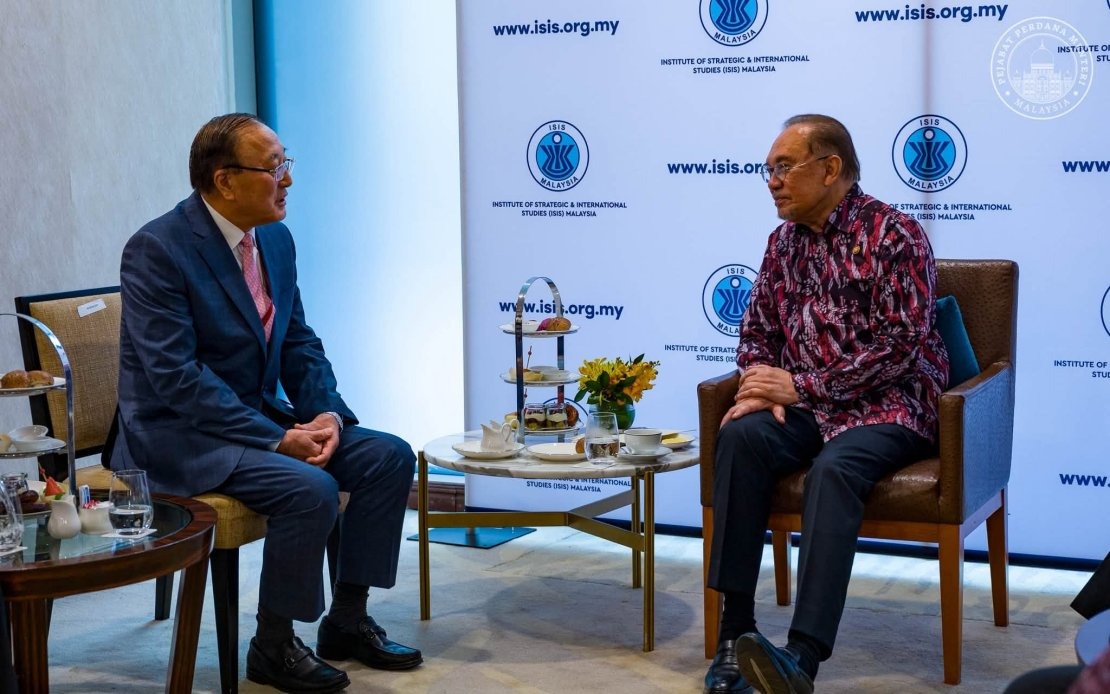
Malaysia will intensify its partnership with the Boao Forum for Asia across a comprehensive range of economic and technological domains, Prime Minister Datuk Seri Anwar Ibrahim announced on July 2. The commitment comes as the country seeks to position itself at the centre of regional dialogue and cooperation mechanisms during a period marked by geopolitical volatility and economic uncertainty throughout Asia and beyond.
Anwar revealed his intentions during a meeting with BFA secretary-general Zhang Jun, with the two officials exchanging perspectives on the mounting challenges confronting the region and the wider international system. The discussion reflected Malaysia's strategic interest in engaging multilateral forums that can facilitate constructive dialogue among Asian nations and their development partners. As both Finance Minister and Prime Minister, Anwar underscored the government's conviction that regional cooperation mechanisms remain essential instruments for addressing contemporary challenges that no single nation can resolve in isolation.
The stated focus areas reveal Malaysia's strategic priorities in the coming years. Trade and investment cooperation forms the foundation of the partnership, reflecting the nation's ongoing commitment to deepening economic integration across the region. Alongside traditional commerce, Malaysia has identified digital transformation and artificial intelligence as critical fields requiring collaborative advancement, acknowledging that technological leadership will determine competitive advantage in the global economy. This recognition aligns with Malaysia's broader ambitions to position itself as a regional hub for digital innovation and technology-driven economic development.
Energy transition represents another pillar of the proposed cooperation framework. As the region grapples with balancing economic growth against environmental sustainability imperatives, Malaysia's involvement in collaborative energy planning through the BFA signals serious intent to participate in shaping regional responses to climate challenges and the global shift toward renewable energy infrastructure. This sector holds particular relevance for Malaysia's own transition away from fossil fuel dependency while maintaining energy security for its growing population and industrial base.
Food security and education also feature prominently in the cooperation agenda. These domains reflect recognition that economic development must encompass fundamental human needs and the cultivation of human capital. With regional populations growing and climate patterns becoming more volatile, coordinated approaches to agricultural productivity and supply chain resilience through the BFA can help insulate member economies from future shocks. Educational collaboration and talent development initiatives address the reality that Southeast Asian nations must compete globally for skilled workers while ensuring their own workforce possesses the competencies required in an increasingly technology-driven economy.
Anwar's emphasis on regional cooperation emerges from his assessment that the contemporary geopolitical environment demands collective responses rather than isolated national strategies. The mention of "geopolitical uncertainties, economic pressures and rapid technological change" reflects the precarious position of mid-sized Asian economies navigating great power competition, trade tensions, and economic volatility. By championing dialogue-based cooperation and inclusiveness, Malaysia signals its preference for multilateral engagement over zero-sum competition.
The timing of this announcement carries significance for Malaysia's foreign policy trajectory. The country has consistently advocated for ASEAN centrality in regional architecture, and the BFA represents a complementary platform through which Malaysia can project influence and shape discussions on issues affecting Southeast Asia. The forum's membership extends beyond Southeast Asia to encompass major Asian economies, providing Malaysia with access to policy-making networks that directly influence regional economic and political dynamics.
For Malaysian business and academic institutions, the cooperation framework opens pathways for deeper integration with peers across Asia. Companies engaged in digital services, renewable energy, and agribusiness can potentially access new markets and collaborative opportunities through coordinated BFA initiatives. Educational institutions may find expanded channels for student exchanges, research partnerships, and knowledge sharing with counterparts throughout Asia.
The government's commitment to pursuing tangible benefits for Malaysian citizens through this cooperation underscores a pragmatic approach to regional engagement. Rather than engaging in forums for diplomatic prestige alone, the administration emphasizes delivering concrete outcomes in job creation, technological advancement, and economic opportunity for the population. This framing connects Malaysia's foreign policy directly to domestic welfare considerations, justifying resource allocation to international cooperation mechanisms.
The BFA's role as a platform for Asia-centric dialogue has grown in importance as major Asian economies seek alternatives to Western-dominated international institutions. Malaysia's active participation positions the country as a bridge-builder among diverse Asian interests, a role consistent with its historical diplomatic identity. By engaging substantively on issues from artificial intelligence governance to energy security, Malaysia contributes to developing regional consensus on how Asia should address global challenges according to Asian priorities and values.
Moving forward, the success of this enhanced cooperation will depend on translating broad commitments into specific programs with measurable outcomes. Sectoral working groups, investment funds, research consortia, and educational exchange schemes represent the mechanisms through which cooperation materializes into tangible benefits. The coming months will clarify whether the BFA partnership becomes a significant driver of Malaysian development or remains primarily a forum for high-level rhetoric.

