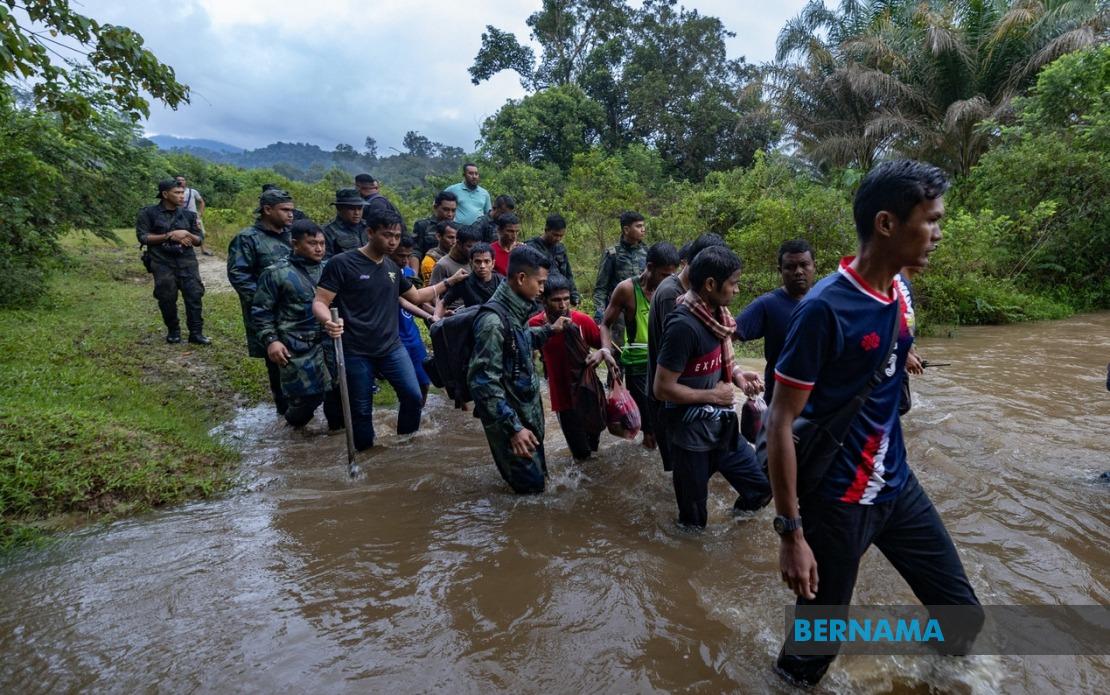
Malaysia has signalled its commitment to expand collaborative efforts with ASEAN and the United Nations High Commissioner for Refugees in tackling the protracted Rohingya refugee situation, moving toward a more integrated and strategically focused engagement model. Deputy Foreign Minister Datuk Lukanisman Awang Sauni outlined this position during parliamentary proceedings, emphasising that the country would persist in leveraging multilateral platforms to advance both humanitarian protection and regional stability objectives.
The Malaysian government's approach centres on two complementary tracks: utilising ASEAN mechanisms to advocate for peaceful resolution within Myanmar, while simultaneously partnering with the UNHCR to deliver on-the-ground protection and assistance to Rohingya populations residing in Malaysia. This dual-track strategy reflects the complexities inherent in addressing what remains one of the region's most significant displacement crises, with implications extending far beyond Myanmar's borders. For Malaysia, which hosts one of the largest Rohingya refugee populations globally, managing this challenge has become inseparable from broader national security and social cohesion considerations.
The humanitarian dimensions of this crisis carry substantial weight in Malaysia's policy calculations. Beyond immediate welfare concerns, the refugee situation generates cascading challenges including irregular maritime migration patterns, sophisticated human trafficking networks, and transnational security vulnerabilities. These cross-border dynamics underscore why Malaysia views the Rohingya question through a regional lens rather than merely a bilateral Myanmar issue, positioning refugee management as integral to ASEAN's collective security architecture.
Yet Datuk Lukanisman's parliamentary remarks candidly acknowledged fundamental structural constraints limiting the effectiveness of current institutional responses. ASEAN's foundational principle of non-interference in member states' internal affairs, combined with its requirement for consensus-based decision-making, creates an inherent tension when addressing situations demanding coordinated pressure or intervention. These mechanisms, originally designed to prevent intra-regional conflict, paradoxically inhibit decisive collective action against what many characterise as crimes against humanity within a member state.
Simultaneously, the UNHCR's mandate, while expansive in humanitarian terms, remains circumscribed when confronting the political pathologies underlying displacement. The organisation excels at providing sanctuary, documenting abuses, and coordinating assistance delivery. However, it lacks the political authority or enforcement mechanisms necessary to address root causes rooted in Myanmar's governance structures, military dominance, and ethno-nationalist policy frameworks. This distinction between symptom management and systemic resolution proved central to Lukanisman's analysis, explaining why existing frameworks remain fundamentally oriented toward protection and aid rather than comprehensive problem-solving.
The deputy minister's articulation of Malaysia's forward-looking approach introduced several conceptual innovations worth examining. Strengthening responsibility-sharing mechanisms across ASEAN represents a potential avenue for distributing refugee populations and related burdens more equitably, though achieving genuine commitment from governments wary of establishing precedents remains diplomatically challenging. This framework implicitly acknowledges that Malaysia alone cannot sustainably shoulder the humanitarian and security costs of large-scale displacement, necessitating burden-sharing mechanisms that ASEAN has historically resisted formalising.
Promotion of politically negotiated solutions enabling voluntary, safe and dignified Rohingya repatriation constitutes the longer-term strategic objective. This formulation carefully emphasises preconditions—voluntariness, safety, and dignity—that distinguish genuine return from coerced repatriation scenarios that have historically proven unstable. Achieving such conditions requires fundamental political transformation within Myanmar, particularly regarding minority protections, democratic governance, and accountability for past atrocities. The timeline for such developments remains indefinite, meaning Malaysia must simultaneously prepare for indefinite hosting responsibilities.
For Malaysian policymakers and regional observers, the articulated position signals acknowledgement that transformative solutions remain distant while demonstrating commitment to evolving current frameworks. Enhanced ASEAN coordination, while constrained by consensus requirements, can still amplify voices advocating for Myanmar's political evolution. Deepened UNHCR partnership allows Malaysia to improve operational efficiency in refugee management while contributing to global standard-setting in humanitarian practice. Neither avenue promises breakthroughs, but both represent available levers for advancing Malaysia's interests in regional stability and humanitarian responsibility.
The Malaysian approach also implicitly reflects how the Rohingya crisis has become embedded in broader Southeast Asian geopolitical dynamics. China's regional influence, Myanmar's strategic importance, and competing international interests all complicate responses that might otherwise focus purely on humanitarian imperatives. Malaysia's positioning within this landscape—as a middle power balancing humanitarian concerns with strategic realities—shapes what diplomatic space exists for innovative solutions.
Looking forward, Malaysia's stated readiness to explore additional regional strategies suggests openness to creative institutional arrangements, though breakthrough solutions would likely require developments beyond Malaysia's direct control. The effectiveness of intensified cooperation efforts will ultimately depend on shifts in Myanmar's political trajectory and ASEAN members' willingness to gradually recalibrate consensus-based decision-making for situations involving mass atrocities. Until such shifts materialise, Malaysia's strategy of strengthening existing frameworks while maintaining principled humanitarian advocacy represents a pragmatic accommodation with structural realities—neither defeatist nor naively optimistic, but appropriately calibrated to available leverage.

