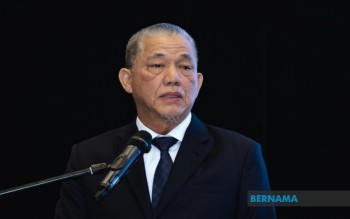
Deputy Prime Minister Datuk Seri Fadillah Yusof has announced an ambitious strategy to breathe new economic life into Malaysia's retiring coal-fired power stations by converting them into renewable energy hubs and battery storage complexes. The initiative, underpinned by a proposed National Coal Site Repurposing Framework, marks a significant shift in how the government approaches its coal phase-out, treating site retirement as an opportunity rather than a loss. Fadillah, who also holds the portfolio of Energy Transition and Water Transformation Minister, unveiled the framework at the World Economic Forum's Malaysia Energy Future conference in Kuala Lumpur, signalling strong governmental commitment to steering the nation's power sector away from fossil fuels while preserving economic value in affected regions.
The repurposing strategy recognises that Malaysia's existing coal infrastructure extends far beyond the power plants themselves. Each facility sits within a network of transmission lines, industrial infrastructure, and strategically positioned land assets that have accumulated considerable value over decades of operation. Rather than allowing these installations to become economically stranded once coal generation ceases, the government intends to leverage their existing grid connections and geographic advantages to facilitate rapid deployment of solar arrays, wind facilities, and energy storage systems. This pragmatic approach acknowledges that wholesale abandonment would squander billions in sunk infrastructure investments that could serve Malaysia's renewable transition far more productively.
The framework, developed through collaboration with the World Economic Forum and outlined in their insight paper "Beyond Coal: Building a Flexible, Resilient and Clean Power System for Malaysia," provides a structured pathway for government agencies, energy regulators, utilities, investors and local communities to work together on site transformation. This multi-stakeholder approach reflects recognition that successful transitions require coordinated action across multiple sectors, with particular attention to communities economically dependent on coal operations. By formalising the repurposing process, the framework aims to create certainty for investors considering large renewable projects and for workers whose livelihoods have centred on coal generation, enabling them to transition toward emerging opportunities in clean energy sectors.
Fadillah emphasised that every retiring power station represents potential for new industrial development and employment creation. The sites could potentially host manufacturing facilities for renewable components, research and development centres for clean energy technologies, or regional hub operations for battery storage systems. Such developments would generate fresh tax revenue streams for local governments, create skilled jobs requiring retraining, and establish Malaysia as a centre of excellence in clean energy innovation across Southeast Asia. This vision extends beyond simple energy replacement to encompassing broader economic diversification in regions historically reliant on coal mining and generation.
Crucially, Fadillah stressed that Malaysia must accelerate renewable energy deployment to outpace coal retirement, preventing the country from exchanging one form of import dependency for another. The specific risk he highlighted—that inadequate renewable growth might force Malaysia to substitute coal with greater reliance on imported liquefied natural gas—represents a genuine strategic vulnerability for the nation. LNG price volatility and exposure to geopolitical disruptions in global energy markets could undermine Malaysia's energy security and competitiveness more severely than gradual, planned coal transition. This consideration fundamentally shapes the government's renewable energy targets: achieving 70 percent renewable capacity by 2050 while phasing out coal-fired generation entirely by 2044 requires deployment rates that far exceed current levels.
To support this accelerated transition, the Ministry of Energy Transition and Water Transformation is prioritising multiple deployment pathways simultaneously. Large-scale solar projects, particularly on available land at coal plant sites and other suitable locations, offer the fastest path to significant capacity additions. The Corporate Renewable Energy Supply Scheme encourages large industrial consumers to source renewable electricity directly, reducing grid strain and creating investment incentives. Battery energy storage systems prove essential for managing solar generation's intermittency and ensuring grid stability as coal plants providing baseload power retire. Smart grid modernisation enables better distribution management, reduces technical losses, and facilitates integration of distributed renewable resources across Malaysia's power network. Together, these initiatives constitute the operational scaffolding supporting the coal site repurposing vision.
Beyond domestic measures, Fadillah reaffirmed Malaysia's commitment to advancing the ASEAN Power Grid initiative and expanding cross-border electricity trade within Southeast Asia. Regional electricity interconnections allow Malaysia to both export excess renewable generation and import power during periods of local shortage, effectively creating a larger virtual power pool that reduces storage requirements and improves overall system efficiency. By participating fully in ASEAN energy integration, Malaysia positions itself as a clean energy producer and exporter, creating additional revenue streams and strengthening relationships with neighbouring economies. This regional approach acknowledges that energy security in Southeast Asia depends on coordinated planning and investment rather than isolated national efforts.
The framework also accommodates longer-term decarbonisation options that extend beyond conventional renewables. Malaysia will continue exploring advanced nuclear technologies and small modular reactors as potential components of future clean energy systems, though Fadillah stressed that such developments require robust safety protocols, regulatory governance, and sustained public confidence. Nuclear energy could eventually provide firm, low-carbon baseload power that supplements solar and wind in Malaysia's energy mix, particularly as advanced reactor designs become commercially viable. However, the government recognises that nuclear deployment requires decades of preparation, public engagement, and international cooperation—considerations that reinforce the immediate importance of solar and battery storage scaling.
The National Coal Site Repurposing Framework ultimately reflects sophisticated energy policy thinking that acknowledges Malaysia's transition cannot succeed through simple technology replacement. Rather, successful decarbonisation requires that retiring coal regions capture new economic opportunities, that renewable deployment moves faster than coal retirement, that energy security improves rather than merely shifting from coal to imported gas, and that regional cooperation amplifies each nation's transition capacity. By treating coal site retirement as a development opportunity rather than an abandonment problem, Malaysia positions itself to achieve its climate objectives while building genuine prosperity in affected communities and strengthening its position as a clean energy leader in Southeast Asia.

