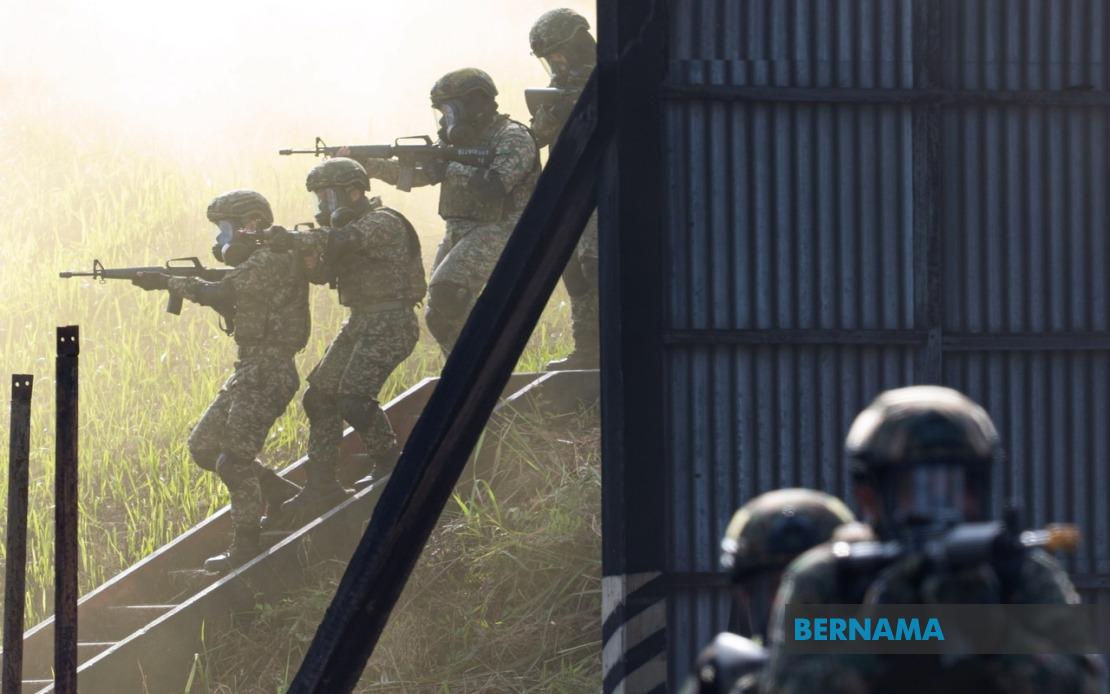
Prime Minister Datuk Seri Anwar Ibrahim has committed to a higher defence allocation in Budget 2027, signalling the government's determination to maintain military preparedness and strengthen the morale of armed forces personnel through improved living standards and facilities. Speaking in Melaka on August 7, Anwar, who also holds the Finance Ministry portfolio, framed the defence investment as essential to protecting what he described as the nation's most precious resource: peace and stability.
The timing of this announcement reflects broader regional security dynamics affecting Malaysia and Southeast Asia. With ongoing tensions in the South China Sea, evolving geopolitical rivalries between major powers, and transnational security threats ranging from maritime piracy to cross-border terrorism, the government's push for enhanced military investment resonates beyond domestic concerns. Anwar's emphasis on defence readiness as a continuous obligation rather than a reactive measure suggests a strategic shift towards forward-looking security positioning in an uncertain regional environment.
Central to the government's spending philosophy is a commitment to transparent procurement practices. Anwar explicitly cautioned against the kind of defence acquisition controversies that have plagued neighbouring nations and previously affected Malaysia itself, warning that weapons and equipment purchases must follow systematic processes without profiteering or inflated commissions to intermediaries. This emphasis on transparency addresses longstanding public concerns about defence spending integrity and signals an attempt to rebuild confidence in how military funds are managed.
The scale of recent defence investment provides context for the 2027 pledge. Over the past three years under the MADANI government framework, defence allocations have increased by more than 35 per cent—a substantial boost that Anwar acknowledges has received insufficient public recognition. The Prime Minister's frustration at the lack of awareness suggests a communication challenge: despite significant budget increases, public and political discourse has not adequately reflected the government's military modernization efforts. This transparency gap may hinder broader understanding of Malaysia's strategic posture in the region.
Personnel welfare emerges as a cornerstone of the planned expenditure. Beyond equipment and weapons systems, the allocation will address fundamental quality-of-life improvements for military personnel and their families, including upgraded accommodation, expanded medical facilities through a new military hospital, and maintenance of essential infrastructure such as water supply systems. These investments reflect recognition that armed forces readiness depends not merely on hardware but on the material welfare and morale of service members—a principle often overlooked in defence spending debates that focus exclusively on platforms and weaponry.
The economic foundation underpinning this commitment deserves scrutiny. Anwar tied the feasibility of higher defence spending to Malaysia's improving macroeconomic conditions, including currency stabilization, growing foreign direct investment inflows, and controlled inflation. This conditional framework suggests that defence allocations remain tethered to broader fiscal capacity rather than representing a shift in strategic priorities. Malaysia's ability to sustain elevated defence spending depends on maintaining economic momentum—a vulnerability should external economic shocks or domestic fiscal pressures emerge.
On August 7, the announcement was accompanied by specific welfare allocations, including RM147,000 directed towards the Armed Forces Family Welfare Association and RM1 million earmarked for maintaining religious facilities at four military installations in Melaka. These complementary funding decisions underscore a holistic approach to personnel support that extends beyond professional military requirements to encompass family security and spiritual welfare—institutional elements that contribute to retention and operational effectiveness.
The October 9 tabling of Budget 2027 in the Dewan Rakyat will provide the formal mechanism for parliamentary scrutiny of these defence proposals. The timing allows for political debate and potential amendments before the budget's passage. Given Malaysia's parliamentary system and the need to maintain coalition support, the defence allocation's final form may reflect negotiated compromises among coalition partners with varying priorities regarding military versus social spending.
For Malaysia's defence industry and allied sectors, higher military budgets carry implications for procurement opportunities and industrial participation. The government's emphasis on systematic, transparent purchasing creates space for competitive domestic suppliers and international partners to participate in modernization initiatives. Regional defence contractors and technology providers will monitor Budget 2027 closely for indications of specific procurement priorities and acquisition timelines.
Anwar's defence spending commitments also carry symbolic weight within Malaysian political discourse. By positioning military investment as compatible with economic prudence and good governance, the Prime Minister attempts to navigate a political landscape where defence spending sometimes faces criticism as inefficient or surplus to urgent civilian needs. This rhetorical strategy—linking defence readiness to national prosperity and stability—seeks to build broader political consensus for sustained military investment.
The regional security environment provides the ultimate context for Malaysia's defence spending trajectory. Competing claims in the South China Sea, potential flashpoints involving regional powers, and non-traditional security threats affecting Malaysia's maritime and land borders create legitimate justifications for military modernization. Whether the 2027 budget allocation proves sufficient to address operational requirements and equipment obsolescence will depend on specific allocation decisions and procurement execution over the coming year.

