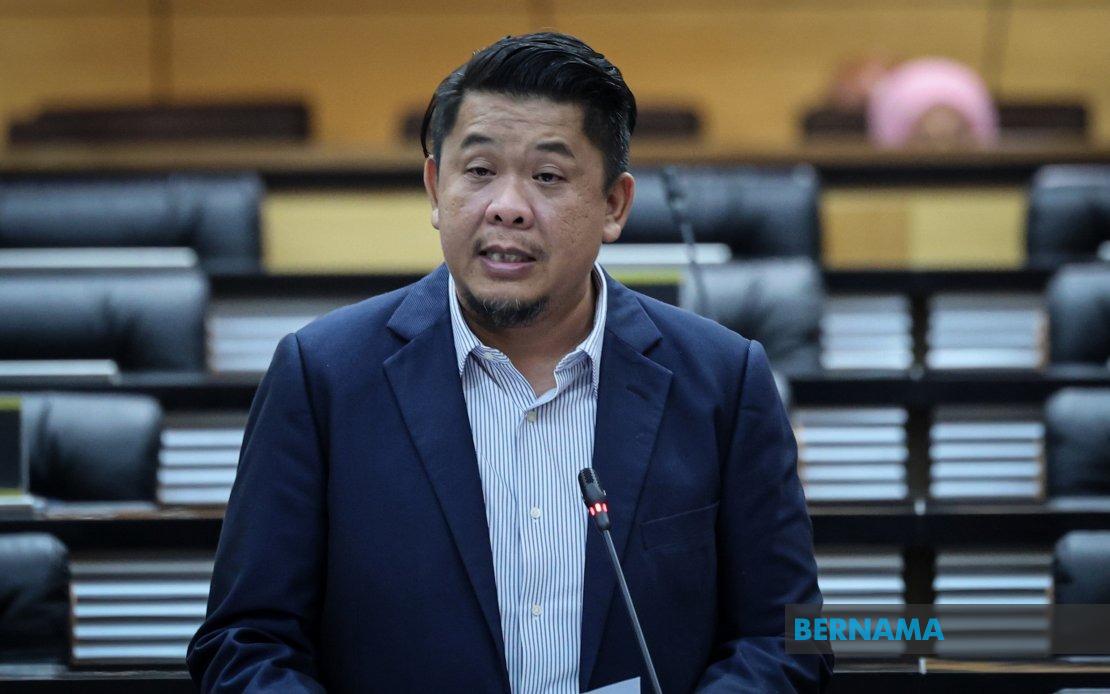
Malaysia has formally registered its candidacy to serve as a non-permanent member of the United Nations Security Council for the 2036–2037 term, signalling Kuala Lumpur's continued commitment to reshaping international security architecture. The submission, announced by Deputy Foreign Minister Datuk Lukanisman Awang Sauni during parliamentary proceedings, represents Malaysia's strategic positioning within multilateral diplomacy and reflects growing momentum among developing nations to challenge the existing power structure within the world body.
The candidacy comes as Malaysia maintains a vocal stance on one of the most contentious issues in global governance: the veto authority wielded by the council's five permanent members. Deputy Minister Lukanisman articulated a principled position, asserting that the veto mechanism itself is fundamentally unjust and ought to be eliminated entirely from the UN framework. This unambiguous language underscores Malaysia's refusal to accept the status quo, positioning the country alongside numerous other nations advocating for democratic reform of the institution.
While complete abolition of the veto remains a distant prospect given resistance from established powers, Malaysia proposes a more immediately achievable compromise: restricting veto usage in circumstances where grave breaches of international law occur. The proposal specifically identifies mass atrocities—including war crimes, genocide, and crimes against humanity—as categories where the veto should carry no weight. This distinction carries particular resonance given recent geopolitical developments, with Malaysia explicitly referencing the humanitarian crisis in Gaza as a contemporary example of why such restrictions matter.
The deliberate destruction of civilian infrastructure, when weaponised as a military strategy, represents the kind of systematic violation that Malaysia believes should transcend the protections afforded by permanent members' veto authority. By anchoring its reform proposals to documented violations of international humanitarian law, Malaysia frames the debate not as abstract institutional critique but as practical necessity rooted in preventing future atrocities. This rhetorical positioning strengthens the country's diplomatic hand when engaging with both allies and potential opponents.
Foreign Minister Datuk Seri Mohamad Hasan is scheduled to amplify Malaysia's message during his address at the 81st UN General Assembly Debate, which convenes in New York in September. His statement will serve as a formal reaffirmation of Malaysia's diplomatic priorities, ensuring that Kuala Lumpur's vision for UN reform reaches the widest possible international audience. The timing of this pronouncement—made during the assembly's opening weeks—positions Malaysia prominently within discussions about the institution's future trajectory.
Malaysia's advocacy for UNSC reform aligns with broader movements among non-aligned and developing nations that have long questioned the legitimacy of a security system designed during the Cold War. The country's non-permanent seat candidacy provides a platform from which to advance these arguments while simultaneously contributing to substantive debates on peace and security matters affecting the global south. A successful election would grant Malaysia genuine influence within the council's deliberations, transforming rhetorical positions into practical diplomatic leverage.
The parliamentary response, initiated by Datuk Seri Sh Mohmed Puzi Sh Ali from the ruling coalition, demonstrates that UNSC reform commands broad domestic political support across Malaysia's political spectrum. This consensus strengthens Kuala Lumpur's negotiating position internationally, signalling that its advocacy for institutional change reflects national interests rather than partisan positioning. Such unity proves valuable when seeking votes from other UN member states who may themselves question the fairness of existing arrangements.
Malaysia's approach differs subtly but significantly from more radical reform proposals that demand complete restructuring of the Security Council's composition. By proposing measured restrictions on veto authority while maintaining the institution's fundamental framework, Kuala Lumpur projects itself as pragmatic and solution-oriented rather than revolutionary. This positioning potentially commands support from moderate reformers while avoiding the accusation of naïveté about the practical constraints facing institutional change at this scale.
The country's emphasis on linking UNSC reform to genuine protection of vulnerable populations—rather than framing it primarily as an issue of procedural fairness—provides moral weight to its arguments. Contemporary conflicts, including ongoing disputes in the Middle East and their humanitarian dimensions, lend urgency to Malaysia's contention that the current system permits injustice. By grounding abstract institutional critique in concrete human suffering, Malaysia connects technical governance debates to the lived experiences of ordinary people affected by international security failures.
For Southeast Asian regional observers, Malaysia's candidacy and reform advocacy hold particular significance. The region contains numerous nations that have historically felt marginalised within global power structures dominated by established Western and Cold War-era powers. Malaysia's willingness to challenge these arrangements, while maintaining constructive engagement with multilateral institutions, offers a model for how middle-power countries can advance their interests without opting out of international frameworks altogether.
Looking forward, Malaysia faces the challenge of converting diplomatic rhetoric into concrete support when voting occurs in 2035. Building coalitions across the Global South, maintaining dialogue with permanent members who might view reform efforts as threatening, and articulating clear visions of how specific security challenges might be handled under reformed arrangements all remain essential tasks. The country's credibility and track record of diplomatic engagement will prove decisive in these efforts.
Malaysia's candidacy also reflects confidence that its diplomatic capital—accumulated through careful positioning on global issues—remains sufficient to secure election to the council. Unlike larger powers that can virtually guarantee election, smaller nations must actively campaign for support, leveraging their reputations for balanced policymaking and genuine investment in multilateral problem-solving. Malaysia's submission represents the beginning of this campaign, with substantive diplomatic groundwork anticipated over coming months and years.

