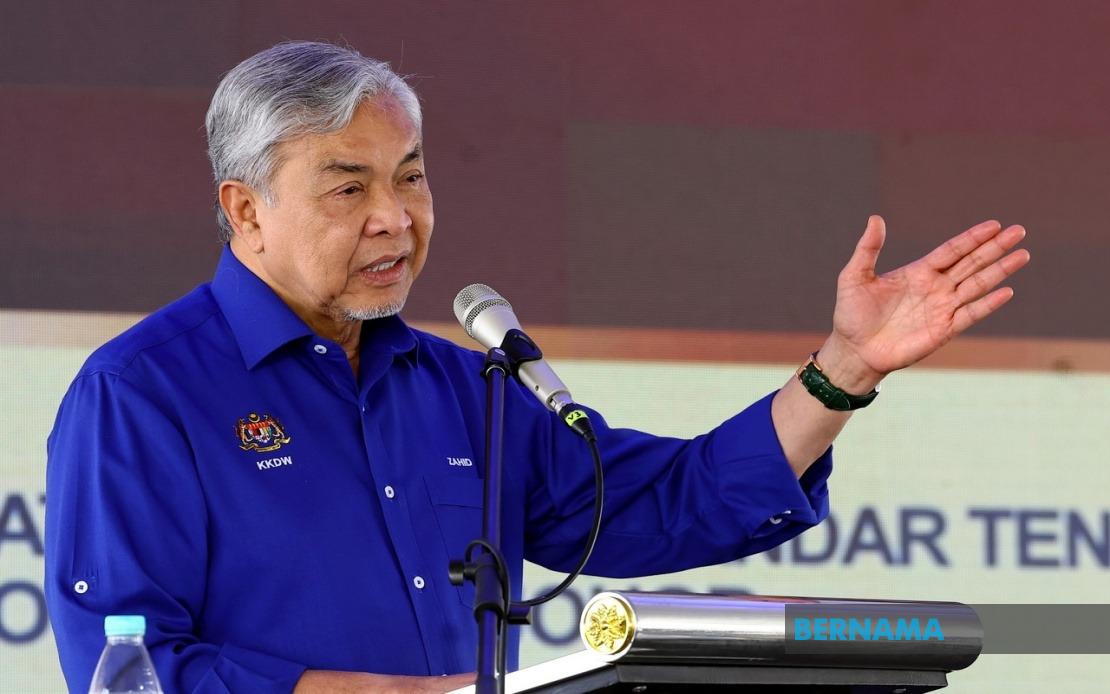
Malaysia is embarking on an ambitious three-decade programme to dramatically reduce its reliance on imported food, with Deputy Prime Minister Datuk Seri Dr Ahmad Zahid Hamidi announcing plans to slash import dependency by half by 2050. The sweeping initiative directly addresses the nation's ballooning food import bill, which currently drains approximately RM80 billion annually from the country's coffers. Unveiled during the officiation of the RISDA Agro Majestic programme in Bandar Tenggara, the roadmap represents one of the most substantial long-term commitments to domestic food production in recent years and signals a fundamental shift in how Malaysia approaches national food security.
The strategy unfolds across three distinct phases spanning the next 30 years. Ahmad Zahid laid out a series of progressively ambitious reduction targets designed to maintain momentum whilst allowing adequate time for agricultural infrastructure development and market adaptation. Between now and 2030, the government targets reducing food imports by at least 15 per cent, followed by a deeper cut exceeding 30 per cent by 2040, before reaching the ultimate goal of a 50 per cent reduction by mid-century. This graduated approach differs from more radical restructuring attempts, instead offering stakeholders across the agricultural supply chain time to adjust business models and investment strategies accordingly.
The Ministry of Rural and Regional Development (KKDW), under Ahmad Zahid's oversight, will serve as the principal execution vehicle for this transformation. The ministry has crafted a comprehensive long-term blueprint that leverages its existing network of agencies and their collective land holdings. By systematically optimising properties currently classified as idle or underutilised within KKDW's portfolio, the government intends to unlock significant agricultural production capacity without requiring extensive new land acquisition. This approach proves particularly strategic given Malaysia's competing land demands for urbanisation and industrial development.
The operational framework centres on developing these reclaimed properties into Agro MADANI projects and dedicated livestock farming zones. Ahmad Zahid emphasised close collaboration between key agricultural agencies including RISDA, FELCRA, the Department of Veterinary Services, and state-level agricultural authorities. This inter-agency coordination model aims to eliminate duplicative efforts while leveraging each organisation's specialised expertise and existing infrastructure. The synergistic approach reflects lessons learned from fragmented agricultural development programmes and represents a deliberate shift toward integrated institutional planning.
The livestock sector emerges as a critical pillar within this food security architecture. Ahmad Zahid highlighted existing initiatives in broiler chicken and layer farming, noting their measurable success in stabilising market prices through enhanced domestic supply. These projects, which commenced three years ago as part of a nationwide food security drive, have demonstrated the viability of government-backed production models. The expansion of these initiatives through KKDW's infrastructure provides a replicable template for extending self-sufficiency across additional protein sources, which remain particularly vulnerable to import shocks and global price volatility.
A careful distinction underpins the government's commercial positioning. Ahmad Zahid explicitly stated that KKDW's involvement deliberately avoids direct competition with established private livestock and agricultural enterprises. Instead, the emphasis centres on supply augmentation designed to benefit consumers through price stability and availability assurance. This positioning attempts to thread a delicate needle between achieving food security objectives and maintaining investor confidence in the commercial agricultural sector. The framing suggests the government perceives its role as market supplementation rather than market replacement—a nuance potentially significant for private sector participation and foreign direct investment in Malaysian agriculture.
The RM80 billion annual import expenditure represents a substantial economic burden with strategic implications beyond simple financial metrics. Food import dependency exposes Malaysia to currency fluctuations, global commodity price shocks, and supply chain disruptions—vulnerabilities starkly illustrated during recent global crises. By systematically reducing this dependency, Malaysia enhances economic resilience while redirecting expenditure toward domestic agricultural development and rural employment generation. For a nation with significant rural populations and agricultural heritage, food production expansion offers dual benefits spanning economic security and rural development objectives.
Regional context amplifies the significance of Malaysia's announcement. Southeast Asia remains vulnerable to global food price inflation and supply chain fragmentation, with most member states maintaining substantial import dependencies. Malaysia's phased reduction strategy potentially positions the nation as a regional model for agricultural self-sufficiency planning. Should the programme demonstrate measurable success, neighbouring countries facing similar vulnerabilities may adopt comparable approaches, collectively enhancing regional food security resilience. Conversely, implementation challenges could provide cautionary lessons about the complexity of fundamentally restructuring agricultural systems.
The timeline extending to 2050 reflects pragmatic acknowledgment of agricultural system transformation requirements. Achieving meaningful import reductions demands not merely land and capital investment but also technological adoption, skills development, market mechanism adjustments, and consumer behaviour shifts. The decades-long horizon permits policy course corrections, technological breakthroughs in production efficiency, and market evolution accommodating increased domestic supply. This extended temporality distinguishes the initiative from shorter-term import substitution campaigns, suggesting policymakers recognise the structural depth of required changes.
Successful execution faces considerable implementation challenges warranting careful monitoring. Land productivity improvements must outpace population growth and dietary diversification to meaningfully expand domestic supply. The collaboration framework demands sustained coordination across multiple agencies with potentially divergent institutional interests and operational cultures. Market mechanisms require recalibration to absorb increased domestic supply without depressing farmer incomes or triggering unintended economic distortions. Consumer acceptance of potentially higher-priced domestic products versus imported alternatives remains uncertain. Furthermore, climate change risks to agricultural output introduce volatility into long-term supply projections.
For Malaysian readers and businesses, the implications extend across multiple sectors. Agricultural enterprises face investment opportunities in technology, infrastructure, and supply chain development supporting import substitution. Consumers may experience gradual price adjustments as domestic supply increases and import competition changes. Rural communities potentially benefit from employment expansion and economic development tied to agricultural modernisation. Investors in food processing, distribution, and related sectors should monitor policy implementation progress and adjust positioning accordingly. The initiative essentially signals a fundamental recalibration of Malaysia's food economy requiring stakeholder awareness and strategic adaptation.

