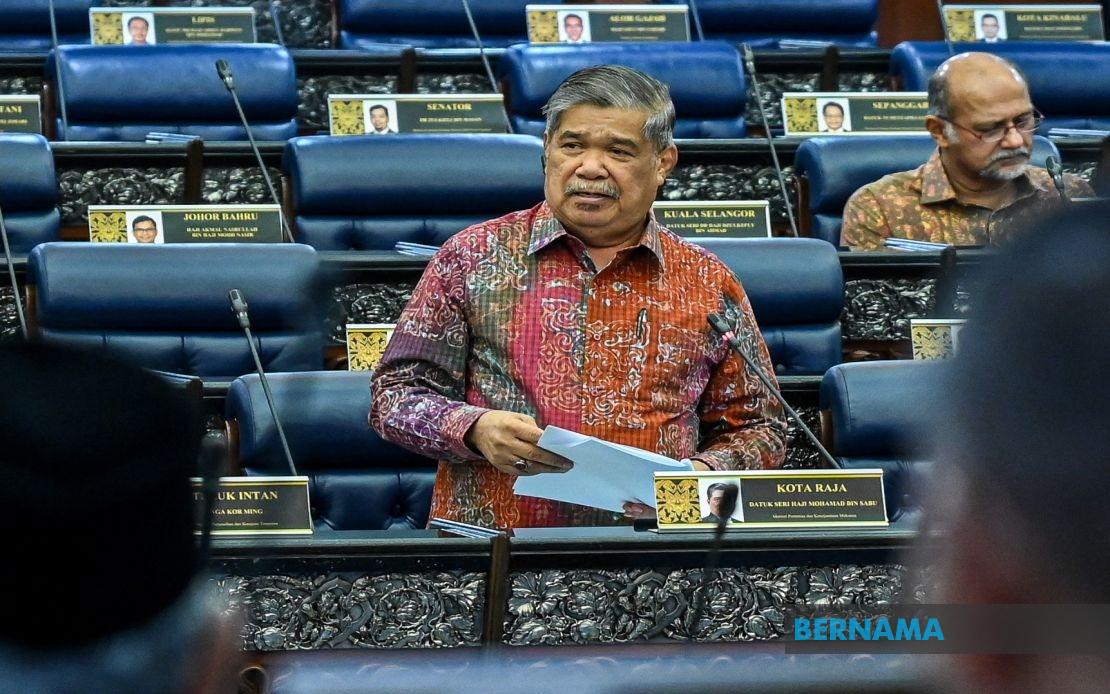
Malaysia is taking decisive action to shield its agricultural sector from the escalating threat posed by El Niño, with the government announcing a comprehensive package of interventions aimed at protecting food security and supporting rural livelihoods. Minister of Agriculture and Food Security Datuk Seri Mohamad Sabu outlined the multi-pronged strategy during parliamentary questioning this week, emphasising that the country cannot afford to be complacent as weather patterns become increasingly unpredictable. The initiatives reflect growing recognition that climate-driven agricultural disruptions pose as much a threat to national stability as any conventional economic challenge, particularly in a region where rice remains culturally and nutritionally central to daily life.
At the heart of the government's response lies a commitment to revolutionising how Malaysia manages its water resources, a critical factor given that the El Niño phenomenon invariably triggers drought conditions across much of the peninsula. The ministry is implementing continuous monitoring systems for water levels across dams and catchment areas, creating an early warning infrastructure that allows authorities to allocate supplies strategically before shortages become acute. Beyond passive monitoring, the government is actively promoting smart irrigation technology and drip irrigation systems that dramatically reduce water consumption while maintaining crop productivity. These technological upgrades represent a significant shift from traditional flooding methods, which waste considerable volumes of water through runoff and evaporation. For Malaysian farmers accustomed to conventional practices, the transition requires investment and training, but the long-term benefits in water conservation and yield stability make the transition economically compelling.
Parallel to infrastructure improvements, Malaysia is investing heavily in agricultural innovation through the Malaysian Agricultural Research and Development Institute, which is accelerating the development of drought-resistant rice varieties specifically engineered to withstand prolonged dry periods. This botanical approach addresses a fundamental vulnerability: traditional rice strains perform poorly when water becomes scarce, making crop failure a real possibility during severe El Niño episodes. By creating varieties that maintain acceptable yields even under water stress, researchers aim to provide farmers with genuine alternatives rather than merely hoping weather conditions improve. The government has also directed MARDI to intensify its research programmes following recommendations from the Prime Minister's Food Security Meeting, signalling that this initiative carries high-level political backing and adequate budgetary support. Cloud seeding operations complement these efforts, deploying technology to induce rainfall during favourable atmospheric conditions, though officials acknowledge that this technique remains weather-dependent and cannot be deployed as a reliable substitute for other mitigation measures.
Financial assistance to affected farmers forms another critical pillar of the response. Between 2024 and June 2026, the government distributed RM38.53 million across 55,058 rice farmers whose cultivation areas spanning 16,933 hectares in northern and eastern Peninsula states suffered drought-induced losses. In the initial phase alone, RM45.24 million reached 8,224 farmers, indicating that assistance flows have actually accelerated as the El Niño situation has intensified. These payments acknowledge a hard reality: even with improved technology and better water management, some farming seasons will inevitably produce inadequate harvests, leaving rural communities vulnerable to income collapse without timely government intervention. The breadth of assistance suggests official recognition that rice farming, while economically important, generates insufficient profit margins to allow farmers to build substantial reserves against climate shocks.
Beyond immediate aid, the government is pursuing longer-term production diversification strategies that reduce dependence on rain-fed agriculture in traditionally vulnerable regions. Large-scale rice field development initiatives across Sarawak, Pahang, and other states are designed to expand the national paddy footprint and presumably shift production toward areas with more reliable water availability or superior irrigation infrastructure. Simultaneously, the government is promoting controlled environment agriculture, which encompasses greenhouse systems and other protective growing methods that substantially reduce weather-related crop losses. These techniques demand higher capital investment and technical expertise than conventional farming, creating opportunities for agricultural commercialisation and employment while reducing the sector's vulnerability to climate variability. The approach essentially hedges national food security across multiple production systems rather than relying on traditional rain-fed agriculture alone.
Rice supply management through strategic reserves provides another buffer against El Niño disruption. The government maintains approximately six months of rice stocks in reserve, enabling the country to weather extended production shortfalls without immediately resorting to emergency imports that might be unavailable or prohibitively expensive during widespread regional drought. This stockpiling strategy, combined with ongoing commercial imports tailored to domestic consumption requirements, ensures that Malaysian consumers face minimal rice availability or affordability shocks regardless of harvest outcomes. The policy essentially decouples domestic food security from short-term harvest variability, though it requires substantial capital deployment and careful stock rotation to prevent spoilage. For consumers, this approach has historically meant stable rice prices even when neighbouring countries experience agricultural crises, a significant advantage in a region where rice price volatility can trigger social unrest.
The government's attention to durian market stabilisation reveals how El Niño impacts extend beyond staple grain production to commercially valuable export crops. Oversupply and consequent price collapse have damaged durian farmer incomes, prompting ministerial intervention focused on market expansion rather than production curtailment. The strategy emphasises penetrating smaller Chinese towns where market potential remains largely untapped, bypassing the saturated big-city segments where Malaysian durians currently dominate. This export-focused approach requires diplomatic coordination to smooth logistics and customs procedures, transforming what appears to be a straightforward agricultural problem into a trade negotiation challenge. Success in this sphere could substantially improve farmer returns without requiring production cutbacks, effectively converting supply-side challenges into opportunities for market deepening.
The multi-layered response reveals that Malaysian policymakers understand modern food security as encompassing far more than simply maximising production. Efficient water use, technological innovation, financial resilience, production diversification, and market development all feature in the overall framework. For Malaysia, which imports substantial rice quantities despite significant domestic production, this holistic approach acknowledges that food security ultimately rests on sophisticated supply chain management, farmer income stability, and hedging against climate shocks rather than pursuing self-sufficiency through conventional production expansion alone. The El Niño challenge, while immediate, serves as a catalyst for structural agricultural modernisation that should benefit the sector irrespective of climate outcomes.

