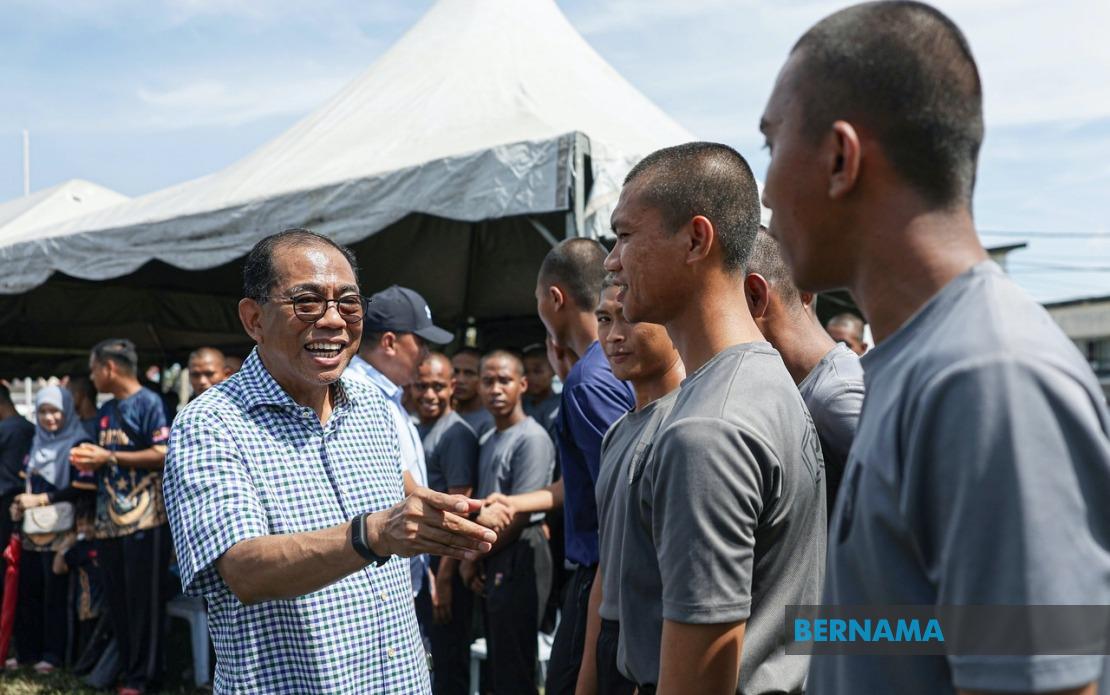
Malaysia has embarked on a strategic pivot in its defence procurement strategy by establishing direct government-to-government arrangements with Turkey and South Korea, a shift intended to streamline acquisitions and reduce costs. Defence Minister Datuk Seri Mohamed Khaled Nordin announced the signing of memoranda of understanding with both nations at the Malaysian Armed Forces Southern Zone Welfare Programme closing ceremony in Port Dickson on July 26, signalling a departure from the traditional open-tender model that has long characterised Malaysia's military equipment purchases.
This new procurement framework represents a fundamental recalibration of how Malaysia approaches defence acquisitions. Rather than permitting original equipment manufacturers, authorised agents, and other commercial intermediaries to compete openly for contracts, the government will now engage directly with select partner nations on designated projects. The restructured approach aims to eliminate the layering of agents and middlemen whose involvement has historically inflated acquisition costs and extended procurement timelines. Prime Minister Datuk Seri Anwar Ibrahim underscored the rationale last week, citing a 15 per cent cost reduction achieved in negotiations for Littoral Mission Ships through this direct government-to-government channel with Turkey—a tangible demonstration of the model's efficiency.
Beyond cost considerations, Khaled emphasised that the G2G mechanism incorporates strategic selection criteria for partner countries. Malaysia is prioritising nations demonstrating a genuine commitment to technology transfer, a capability that would strengthen the country's domestic defence industrial base. By channelling acquisitions through government partnerships rather than commercial vendors, Malaysia can negotiate not merely for hardware but for knowledge exchange and capacity building. This aligns with long-standing Malaysian policy objectives to reduce dependency on foreign systems and foster indigenous defence manufacturing capabilities.
The transparency dimension of this approach addresses longstanding concerns about procurement integrity. By eliminating intermediaries whose commissions and markups obscured true equipment costs, government-to-government transactions promise greater visibility into spending and pricing structures. Khaled stressed that the purchasing process would remain disciplined and requirements-driven, with Malaysia's military services—the Army, Navy, and Air Force—continuing to define technical specifications based on operational needs rather than procurement decisions being made in isolation. This safeguard ensures that cost savings do not come at the expense of military capability or operational relevance.
Interest in this model extends beyond Turkey and South Korea. Defence Minister Khaled indicated that Italy and France have also approached Malaysia proposing similar G2G arrangements, suggesting broader international momentum toward bilateral defence procurement frameworks. The proliferation of such arrangements reflects a global trend whereby nations increasingly prefer structured partnerships with trusted suppliers over fragmented open-market competition, particularly in defence sectors where strategic relationships carry geopolitical significance.
The emphasis on supply security warrants particular attention for Malaysian defence planners. Government-to-government arrangements carry the implicit backing of supplier nation governments, providing assurances regarding spare parts availability, technical support, and long-term sustainment—critical considerations for military platforms with multi-decade operational lives. This governmental commitment to supply continuity offers greater stability than purely commercial relationships, which can dissolve or become complicated by corporate mergers, market changes, or shifting business priorities.
For Malaysia's regional positioning, these defence partnerships carry strategic implications. Turkey and South Korea are both significant defence manufacturers and technology exporters with robust export control regimes. Their willingness to engage Malaysia on G2G terms reflects mutual strategic interest, suggesting potential for deeper defence cooperation in Southeast Asia. South Korea's advanced shipbuilding and electronics sectors and Turkey's missile and naval platform expertise complement Malaysian defence modernisation priorities. These partnerships may facilitate technology flows and co-development opportunities that would be less feasible through conventional commercial channels.
Beyond hardware acquisitions, Khaled raised a broader conceptual framework for understanding contemporary security threats. Modern national security challenges, he stressed, extend far beyond traditional kinetic conflicts to encompass hybrid threats ranging from social media-based information warfare to critical infrastructure sabotage targeting electricity and water supplies. This observation reflects evolving threat perceptions across Southeast Asia as nations grapple with non-traditional security challenges that blur lines between military and civilian domains. The Defence Minister's framing underscores why defence modernisation must balance conventional military capabilities with resilience against asymmetric threats.
Addressing these multifaceted threats requires rethinking national defence as a collective responsibility rather than the Malaysian Armed Forces' exclusive domain. Khaled articulated this perspective through reference to the government's Whole-of-Nation Defence (HANRUH) concept, which seeks to cultivate broader societal participation in national security. This approach recognises that civilian infrastructure, public perception and information environments, and social cohesion represent critical security assets requiring protection. By framing defence as a shared endeavour extending beyond uniformed services, Malaysian leadership attempts to mobilise comprehensive societal resilience against contemporary threats.
The G2G procurement model thus occupies a specific niche within Malaysia's broader defence transformation agenda. While direct government partnerships address cost, transparency, and supply security in military acquisitions, the Whole-of-Nation Defence framework acknowledges that equipment alone cannot address modern security challenges. Together, these initiatives suggest a maturing understanding of contemporary defence requirements—one balancing platform modernisation with societal engagement and hybrid threat awareness.
For Southeast Asian observers, Malaysia's procurement evolution merits attention as a potential template for regional peers facing similar pressures to modernise defence capabilities while constraining costs. The demonstrated 15 per cent savings on a major procurement represents substantial budgetary relief in resource-constrained environments. Additionally, the emphasis on technology transfer and indigenous capability development addresses a perennial concern across the region regarding long-term equipment dependency and sustainable defence industrial development. If Malaysia successfully operationalises this model across multiple platforms and partner nations, the approach could influence how other regional militaries structure their own equipment acquisition strategies.

