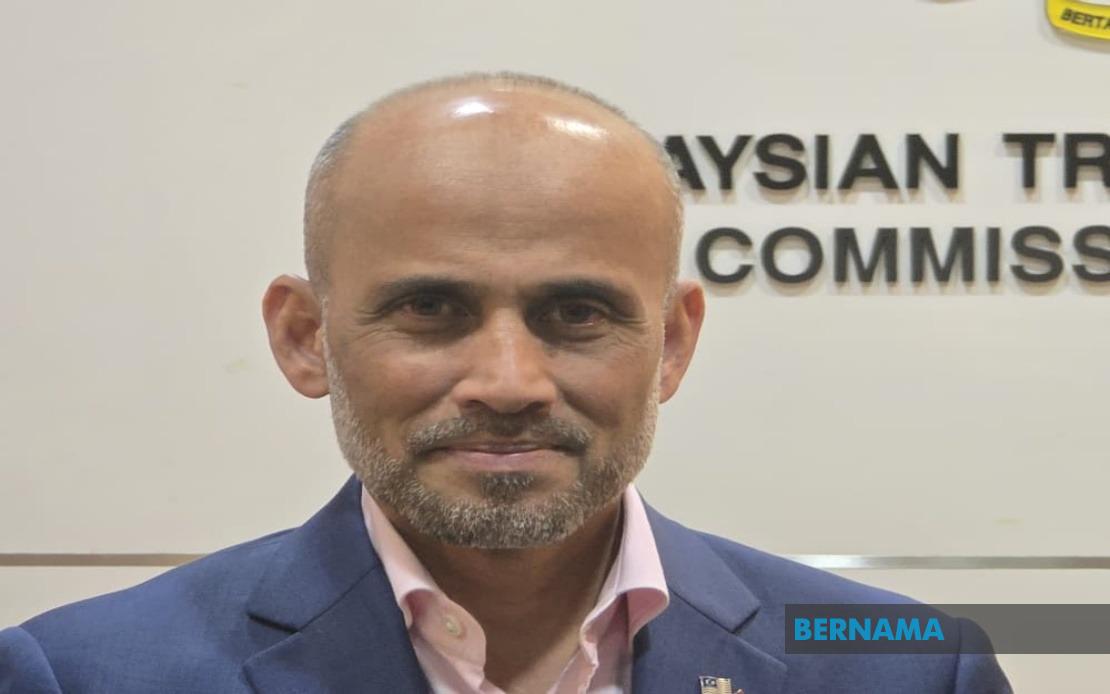
The Malaysia-Singapore relationship has emerged resilient and strengthened from years of navigating shared challenges, according to Datuk Dr Azfar Mohamad Mustafar, Malaysia's High Commissioner to Singapore, as he prepares to conclude his tenure in the city-state. Speaking in his final weeks before departing for a new posting as Malaysian High Commissioner to the United Kingdom effective July 1, Azfar reflected on five years of diplomatic service that coincided with unprecedented global disruptions and mounting geopolitical tensions.
Azfar's appointment to his new role came after he received instruments of appointment from His Majesty Sultan Ibrahim, King of Malaysia, on May 18. His transition to London marks a significant shift in his diplomatic career, moving from regional engagement in Southeast Asia to representation in a major Western nation. Yet his reflections on the Singapore posting underscore how the two neighbours have managed to deepen ties even as they confronted extraordinary external pressures.
The diplomat's tenure commenced in June 2021, a moment when the COVID-19 pandemic remained a dominant force reshaping global affairs. The health crisis imposed severe logistical constraints on the bilateral relationship, particularly affecting the substantial population of Malaysians who depend on daily cross-border commuting to Singapore for employment and commercial activities. Border restrictions implemented to contain viral transmission created immediate consular complications, as the sheer volume of Malaysian nationals seeking to navigate travel requirements and documentation overwhelmed normal administrative channels. This period tested diplomatic agility, requiring swift problem-solving to address documentation backlogs and ensure the smooth movement of essential workers and business personnel across the causeway.
Despite these immediate pressures, the underlying economic architecture binding Malaysia and Singapore proved durable. Trade and investment flows, which had contracted sharply during the initial pandemic shock, rebounded with considerable momentum and have now restored to pre-pandemic trajectories. Singapore maintains its position as one of Malaysia's most significant trading partners, a relationship built on decades of complementary economic structures and integrated supply chains. The city-state continues channelling substantial foreign direct investment into Malaysia, positioning itself among the largest external sources of capital for the country's development initiatives.
Prospects for enhanced investment flows appear particularly promising with the planned development of the Johor-Singapore Special Economic Zone, a megaproject that epitomizes the two nations' commitment to deepening economic integration. This initiative signals both countries' recognition that enhanced commercial cooperation and infrastructure linkages serve mutual interests, particularly in a region experiencing intensifying competition for foreign capital and technological expertise. Azfar highlighted expectations that Singaporean investment commitments to Malaysia, notably within Johor, would continue expanding as this special economic zone framework materializes and demonstrates tangible economic benefits.
Beyond immediate bilateral commerce, Malaysia and Singapore face a shared agenda in regional institution-building. Singapore's forthcoming assumption of the ASEAN chairmanship represents a pivotal moment for the ten-nation bloc, and Azfar signalled Malaysia's commitment to supporting Singapore's leadership during this critical period. The two nations have identified economic integration as a paramount priority for regional dialogue, reflecting broader recognition across ASEAN that deepened commercial ties and market harmonization strengthen the bloc's collective bargaining position amid global fragmentation.
A particularly significant collaborative initiative involves the ASEAN Power Grid project, which Azfar identified as an emerging priority for joint effort. This initiative transcends narrow bilateral concerns, addressing the region's collective energy security and sustainability imperatives. The power grid concept envisions interconnected energy infrastructure allowing ASEAN members to share electricity resources more efficiently, reducing dependence on volatile international fuel markets and supporting the region's transition toward renewable energy sources. Malaysia and Singapore's commitment to realizing this vision reflects how bilateral partnerships now function as building blocks for larger regional infrastructure ambitions.
Azfar's career trajectory illustrates the professional pathways of Malaysia's diplomatic corps. Appointed as an Administrative and Diplomatic Officer in 1996, he transitioned to the Foreign Ministry in 2001, subsequently serving as Ambassador to France from 2018 to 2021 before assuming the Singapore posting. His progression from European representation to Singapore and now returning to a major Western posting suggests a career emphasizing bilateral relationships with economically significant partners.
The broader context of Azfar's tenure underscores how Malaysia-Singapore relations have matured beyond the historical tensions and territorial disputes that once characterized the partnership. Contemporary challenges—pandemic management, regional economic competitiveness, infrastructure development, and geopolitical realignment—have created frameworks for cooperation that transcend traditional friction points. The ability of both nations to navigate these challenges jointly, despite divergent national interests in some domains, testifies to institutional mechanisms and diplomatic practices refined over decades.
For Malaysian readers and policymakers, Azfar's assessment carries particular significance given ongoing debates about economic diversification and attracting foreign investment. Singapore's sustained confidence in Malaysia's economic potential, demonstrated through continued investment flows and collaborative megaprojects, provides reassurance during periods of global economic uncertainty. The ASEAN Power Grid initiative and special economic zones represent tangible frameworks through which Malaysia can leverage regional cooperation to enhance competitiveness and infrastructure capacity.
The diplomat's acknowledgement that "we still have a long way to go" suggests realistic appraisal of remaining challenges. Historical grievances occasionally resurface in public discourse, and resource competition across maritime boundaries continues generating periodic tensions. Yet the pattern Azfar describes—of two neighbours consistently choosing cooperation over confrontation—demonstrates institutional maturity and shared recognition that bilateral stability yields greater returns than perpetual disputation.
As Azfar embarks on his new posting in London, his departure marks transition in Malaysian diplomatic representation in Singapore, a post of perennial strategic importance given the city-state's economic significance and regional influence. His successor will inherit a relationship characterized by robust economic interdependence, established diplomatic protocols for managing disagreements, and emergent opportunities for deepened integration. The foundations he describes—built through careful navigation of COVID-19 disruptions and geopolitical volatility—provide his successor with solid ground for advancing Malaysia's interests within this crucial bilateral partnership.

