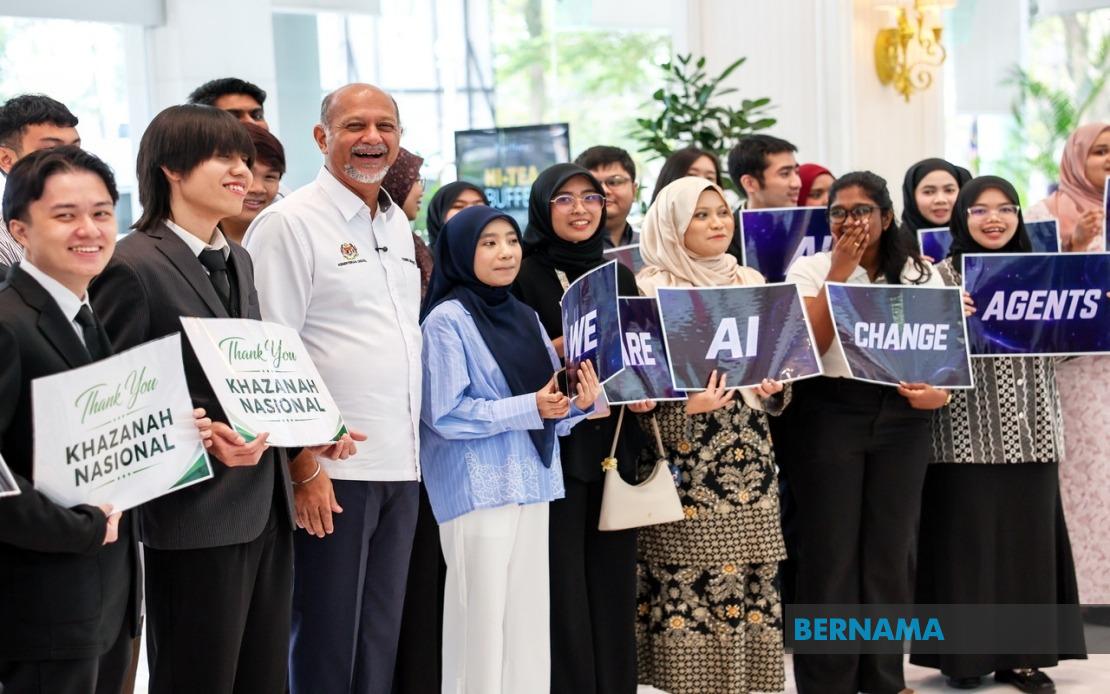
Digital Minister Gobind Singh Deo has signalled a fundamental shift in how the Malaysian government approaches technological governance, moving away from the traditional pattern of addressing crises after they emerge towards a forward-looking framework designed to preempt challenges. Speaking at the AI-Ready Malaysia Summit 2026 in Petaling Jaya, Gobind articulated this transformation as essential to meeting the demands of accelerating technological change, particularly in artificial intelligence where developments are outpacing conventional policy cycles.
The conventional model that has guided Malaysian governance, Gobind explained, centres on policymakers responding to problems only after they have materialised into tangible issues requiring legislative or enforcement action. This reactive approach, while historically embedded in administrative practice, has become increasingly inadequate as the velocity of technological innovation accelerates. The time lag inherent in formulating responses, drafting legislation, and implementing enforcement mechanisms means governments operating under this paradigm perpetually chase rather than lead developments. For a nation aspiring to position itself as a technology hub in Southeast Asia, this reactive posture risks surrendering strategic advantage and allowing other economies to capture opportunities.
The establishment of AI Malaysia represents the government's institutional response to this strategic challenge. Rather than treating the organisation as a compliance body or reactive problem-solver, the government has positioned it as the anchor institution for Malaysia's ambition to achieve AI nation status by 2030. This designation carries significant implications for how technology policy will be formulated across the Malaysian economy. By centralising AI governance under a dedicated lead body, the government aims to create coherence across disparate policy domains and ensure that anticipatory measures are embedded into planning rather than appended after crises force governmental hand.
The proactive methodology that AI Malaysia will employ involves several interconnected mechanisms. The organisation will work to develop legislative frameworks and policy instruments before technological challenges emerge, essentially creating institutional readiness that enables swift implementation when circumstances demand response. This represents a conscious recalibration of the policy timeline, moving governmental consideration forward into domains of possibility rather than confining it to domains of confirmed problems. The approach acknowledges that in technology governance, waiting for problems to materialise often means that potential harms have already embedded themselves deeply within social and economic structures, making remediation far more costly and complex.
A critical component of this forward-looking agenda involves sectoral focus that acknowledges Malaysia's economic structure and development priorities. AI Malaysia is concentrating analytical and policy resources on six key sectors identified as foundational to national competitiveness and citizen wellbeing. Among these, agriculture holds particular significance for a country where rural economies remain substantial and where productivity gains through intelligent automation could materially improve farmer incomes and food security. Transport represents another priority domain, reflecting both the infrastructure development underway across the country and the potential for AI applications to enhance efficiency and safety across road, rail, and emerging mobility systems. Healthcare stands as a third critical sector where AI deployment could address workforce shortages, improve diagnostic capabilities, and enhance treatment protocols across both urban and rural settings.
The articulation of a proactive AI governance framework also reflects Malaysia's position within regional technology dynamics. As Vietnam, Thailand, and Singapore advance their own AI strategies, Malaysia faces competitive pressure to avoid falling into a pattern where domestic technology adoption lags neighbouring economies. The risk extends beyond mere economic competition; it involves the potential for Malaysia to become a consumer of technologies designed and optimised for other contexts rather than an active participant in shaping technological development to suit local conditions and values.
Beyond institutional and sectoral dimensions, Gobind stressed that technological readiness requires cultivation of societal engagement with emerging tools. He articulated a three-stage progression beginning with awareness, moving through accessibility, and culminating in adoption. The awareness phase demands that citizens and businesses understand not merely what artificial intelligence is as a technical phenomenon, but how specific applications might generate practical value in their operational or daily contexts. This comprehension proves essential because technology adoption, contrary to assumptions that markets simply absorb superior tools, depends significantly on user understanding and perceived relevance.
The accessibility dimension addresses a concern particularly acute in middle-income economies with uneven resource distribution across regions and socioeconomic strata. Technology ecosystems that remain expensive, geographically concentrated, or technically demanding tend to reinforce existing inequalities rather than attenuate them. By emphasising accessibility, the government signals commitment to ensuring that AI development does not widen the gap between sophisticated urban users and populations in smaller towns or rural areas, nor create dynamics where only large corporations capture productivity benefits while small and medium enterprises find themselves further marginalised in competitive hierarchies.
The adoption phase, dependent on preceding stages of understanding and access, represents the actual integration of AI tools into productive activities across economic and social domains. Gobind's framing suggests that governmental responsibility extends beyond permitting technology to spread organically but involves active stewardship of conditions enabling widespread uptake. This might encompass training programmes, subsidy mechanisms, or regulatory sandboxes allowing experimentation with controlled risk exposure.
The philosophical reorientation that Gobind articulated has implications extending across policy domains beyond artificial intelligence. It represents a broader argument that in an era of rapid technological change, governments cannot limit their function to referee roles adjudicating disputes that arise from technological deployment. Instead, forward-looking governance requires anticipatory engagement, scenario planning, and institutional readiness. For Malaysia, where technology sectors represent an increasingly important component of the growth agenda and where a young demographic offers both opportunity and obligation to prepare economically capable populations, the pivot toward proactive governance carries substantial weight.
Implementing this framework will test Malaysian policymaking capacity. Creating effective anticipatory governance requires deep technical expertise, consistent engagement with industry practitioners and researchers, and willingness to adapt frameworks as technologies evolve in unpredicted directions. The establishment of dedicated institutional capacity through AI Malaysia provides a structural foundation, but success ultimately depends on whether this body can maintain strategic focus while navigating political pressures and competing claims on governmental resources. The next phase will reveal whether Malaysia can translate rhetorical commitment to proactive technology governance into sustained policy coherence and practical results across the economy.

