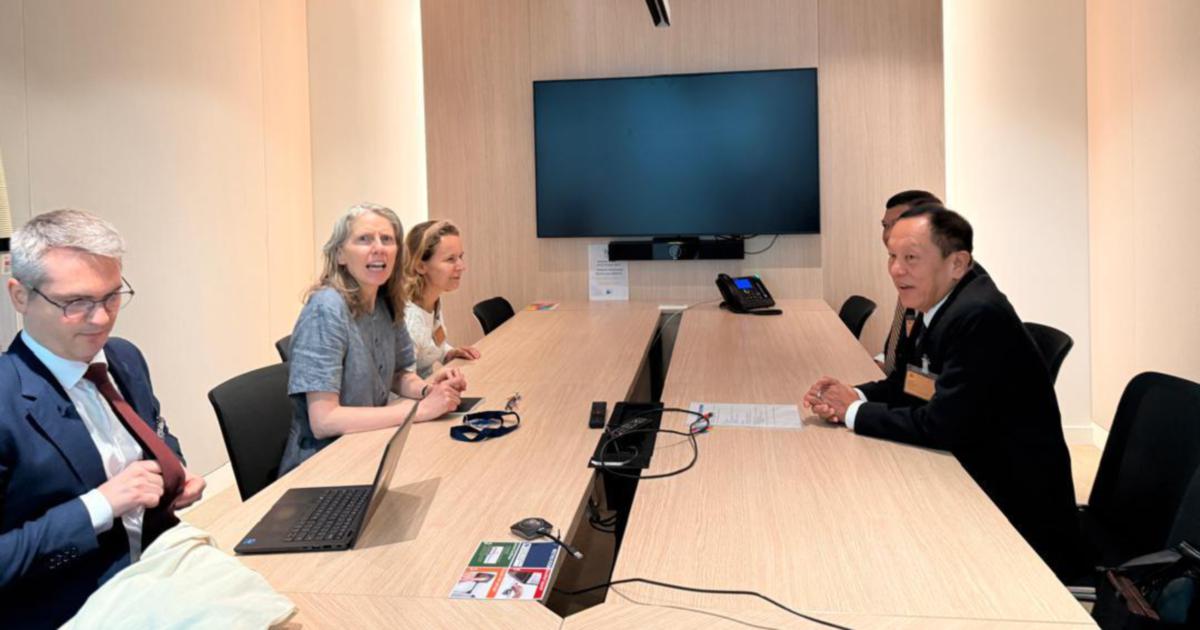
Malaysia's Malaysian Anti-Corruption Commission (MACC) has brought the country's hard-won expertise in recovering assets linked to 1Malaysia Development Bhd (1MDB) to an international anti-corruption forum in Paris, highlighting a pivotal moment when local enforcement agencies are gaining recognition on the global stage for their work in unravelling one of the world's largest financial scandals.
The presentation at the Organisation for Economic Co-operation and Development (OECD) anti-bribery meeting underscores how Malaysia, despite being at the centre of a global fraud network that reached far beyond its borders, has channelled the lessons learned into practical guidance for other nations grappling with similar corruption challenges. The 1MDB scandal, which first erupted publicly in 2015, involved the misappropriation of billions of dollars from a state investment fund and has become a blueprint for understanding how large-scale corruption operates in the modern globalised economy.
The shift from victim nation to knowledge-sharer reflects Malaysia's transformation of a deeply damaging episode into a potential force for strengthening international anti-corruption mechanisms. When the 1MDB scheme initially unravelled, it exposed gaps in how different countries coordinate financial investigations, how assets are traced across jurisdictions, and how domestic law enforcement agencies work with international partners to recover stolen wealth. These deficiencies have now become the focus of systemic reform.
Recovering assets stolen through 1MDB has proven extraordinarily complex, requiring Malaysian authorities to work in tandem with law enforcement agencies, financial regulators, and prosecutors across the United States, Singapore, Switzerland, the United Arab Emirates, and numerous other jurisdictions. Each country has brought its own legal frameworks, procedural requirements, and investigative capacities to the table. Malaysia's experience navigating these multilayered negotiations and coordinating efforts across such diverse systems offers practical insights that other developing nations frequently encounter when pursuing major corruption cases.
The OECD forum provides an especially relevant venue for this knowledge-sharing. The organisation's Anti-Bribery Convention and Working Group on Bribery establish standards and best practices for investigating and prosecuting international bribery cases involving public officials. By presenting Malaysia's 1MDB recovery efforts to this audience, the MACC is positioning the country as an active participant in shaping how the international anti-corruption architecture evolves, rather than remaining defined solely by the scandal itself.
For Malaysia, participation in such high-level forums carries significant diplomatic and institutional benefits. It demonstrates to international partners that the country is serious about enforcement and reform, helping to restore credibility that was damaged during the years when 1MDB-related investigations were perceived as stalled or politically compromised. It also signals to the private sector and foreign investors that Malaysia is committed to the rule of law and transparent governance, factors that directly influence business confidence and capital flows into the economy.
The practical value of Malaysia's contribution extends beyond symbolism. The country has navigated the treacherous terrain of pursuing cases against high-profile political figures and powerful business figures, facing legal challenges and procedural obstacles that many nations will recognise. The techniques used to identify and freeze assets, the methods employed to build prosecutorial cases that withstand international scrutiny, and the diplomatic protocols followed when requesting assistance from other countries—all these elements have been refined through the 1MDB experience and can now inform how other jurisdictions approach similarly sprawling cross-border fraud investigations.
Equally important is the institutional learning that has accumulated within Malaysian agencies. The MACC, the Attorney General's Chambers, the Central Bank of Malaysia, and other bodies have developed expertise in forensic financial analysis, digital investigations, and international legal cooperation that represents a genuine competitive advantage. Sharing this expertise at international forums enhances Malaysia's reputation while creating reciprocal relationships that benefit future investigations, whether involving 1MDB residual matters or entirely new cases.
The presentation also comes at a moment when global attention to corruption recovery is intensifying. The OECD, the United Nations, the World Bank, and regional development banks are all emphasising that asset recovery is not merely a forensic exercise but a development priority. Stolen assets that could have funded schools, hospitals, and infrastructure are permanently diverted when corruption goes unchecked. Malaysia's success in recovering portions of 1MDB funds—though recovery efforts remain incomplete—demonstrates that with sufficient political will and international coordination, substantial amounts can be returned to their rightful owner, the Malaysian people.
However, the framing of Malaysia's experience as a positive contribution to global anti-corruption efforts also reflects a deliberate narrative choice. The 1MDB scandal has been deeply politicised within Malaysia, with accusations that investigations were manipulated for partisan advantage. International forums provide a venue to discuss the technical and institutional achievements in asset recovery while somewhat bracketing the domestic political dimensions that have complicated Malaysia's own accountability processes.
The broader Southeast Asian context is also significant. Several nations in the region face corruption challenges and lack the institutional capacity or international relationships necessary for major asset recovery efforts. Malaysia's presentation at the OECD forum implicitly positions the country as a leader in anti-corruption expertise within the region, potentially opening doors for Malaysia to provide technical assistance, training, and advice to neighbouring countries. This capability-building function strengthens both regional governance standards and Malaysia's diplomatic influence.
Looking forward, Malaysia's participation in international anti-corruption forums is likely to expand. The 1MDB experience, painful as it has been, has inadvertently transformed the country into a centre of expertise on how to investigate, prosecute, and recover assets in cases of large-scale corruption involving state-owned enterprises and cross-border networks. That expertise, shared responsibly at venues like the OECD, positions Malaysia not just as a nation learning lessons but as one capable of teaching them.

