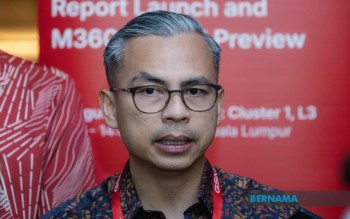
Malaysia has secured a significant regional milestone by becoming the inaugural host nation for M360 ASEAN 2026, an event scheduled for September 9 and 10 in Kuala Lumpur. The distinction of hosting the first-ever ASEAN iteration of this major telecommunications conference represents a strategic opportunity for the country to position itself at the forefront of Southeast Asia's digital transformation agenda, according to Communications Minister Datuk Seri Fahmi Fadzil.
The GSM Association, a leading industry body representing mobile operators and related companies worldwide, will organise the gathering. By bringing this flagship event to Kuala Lumpur for the first time, Malaysia signals its readiness to lead regional conversations on critical technology issues that will shape Southeast Asia's economic future. The selection underscores confidence in Malaysia's capacity to host world-class technology conferences and engage meaningfully with the region's digital ecosystem.
The event will convene a diverse array of stakeholders spanning the technology sector and policy domains. Industry practitioners, equipment vendors, technological experts, investment representatives, university researchers, and government officials from across ASEAN will participate in substantive discussions. This convergence of private sector innovation and public sector oversight creates an ideal environment for forging consensus on regional digital priorities and identifying collaborative opportunities that transcend national borders.
Fahmi emphasised that the conference provides a crucial platform for ASEAN nations to collectively examine the trajectory of their digital sectors. Participants will deliberate on strategies for broadening connectivity infrastructure across the region, a persistent challenge given the geographic diversity and varying development levels of Southeast Asian economies. Equally important will be discussions around responsible artificial intelligence deployment, ensuring that technological advancement does not outpace governance frameworks designed to protect citizens and maintain societal trust.
The economic stakes underlying this event are substantial. According to analysis cited by GSMA, mobile technologies and related services are projected to contribute US$1.4 trillion to the Asia-Pacific economy by 2030, representing a 40 per cent expansion from the current baseline of approximately US$1 trillion. For Malaysia and other ASEAN nations seeking to maximise the economic dividend from digital transformation, understanding how to capture and retain this value creation becomes strategically imperative. The conference will facilitate knowledge exchange on business models, regulatory approaches, and investment strategies that can unlock these opportunities.
However, regional stakeholders face a complex array of interconnected challenges that M360 ASEAN 2026 will address. The rapid proliferation of artificial intelligence represents both tremendous opportunity and considerable uncertainty for ASEAN economies. Nations must develop policy frameworks that encourage AI innovation while managing risks related to employment disruption, algorithmic bias, and data security. The tension between fostering competitive advantage through emerging technologies and protecting societal welfare will demand sophisticated policy responses.
Digital trust has become increasingly precarious across Asia-Pacific markets. Cybersecurity breaches, data privacy violations, and concerns about surveillance have eroded consumer confidence in digital platforms. Rebuilding this trust requires coordinated efforts across industry, government, and civil society to establish transparent standards, enforce accountability mechanisms, and educate users. ASEAN nations must compare experiences and coordinate responses to transnational digital threats that do not respect national boundaries.
The resilience of digital infrastructure has emerged as a critical priority following various regional disruptions. From undersea cable damage to equipment supply chain vulnerabilities, Southeast Asia's digital connectivity depends on robust, redundant infrastructure capable of withstanding both natural disasters and malicious interference. Investment in alternative connectivity pathways, including satellite systems and terrestrial backup routes, will require substantial capital and regional cooperation. The conference will enable operators and policymakers to share best practices and coordinate infrastructure investment strategies.
Digital sovereignty represents an increasingly contentious issue across ASEAN. Nations grapple with questions about data localisation requirements, control over critical digital infrastructure, and protection from external technological dependence. Some countries favour stronger data residency mandates, while others prioritise openness and global standards. Finding equilibrium between national control and regional integration demands nuanced discussion that M360 ASEAN 2026 will facilitate. The outcome could influence how individual ASEAN nations approach digital regulation over the coming decade.
For Malaysia specifically, hosting this inaugural ASEAN event creates opportunities to showcase its technological capabilities and position Kuala Lumpur as a regional technology hub. The conference will attract investment interest, foster bilateral technology partnerships, and demonstrate Malaysia's commitment to leading digital innovation in Southeast Asia. Local technology companies and research institutions gain exposure to regional and international investors, potentially catalysing collaboration and capital flows into Malaysian digital enterprises.
The timing of M360 ASEAN 2026 aligns with a critical juncture in regional development. ASEAN economies are simultaneously grappling with post-pandemic recovery, accelerating digital adoption, and geopolitical pressures around technology standards and supply chain security. The conference provides a venue for ASEAN to articulate a collective vision for digital development that protects regional interests while remaining engaged with global technology ecosystems.
Regional cooperation on digital challenges carries implications extending beyond economic metrics. How ASEAN nations collectively approach AI governance, digital infrastructure investment, and data protection will influence technological trajectories for hundreds of millions of citizens. By hosting M360 ASEAN 2026, Malaysia demonstrates commitment to collaborative problem-solving on issues that fundamentally shape how Southeast Asians will live, work, and participate in the digital economy.

