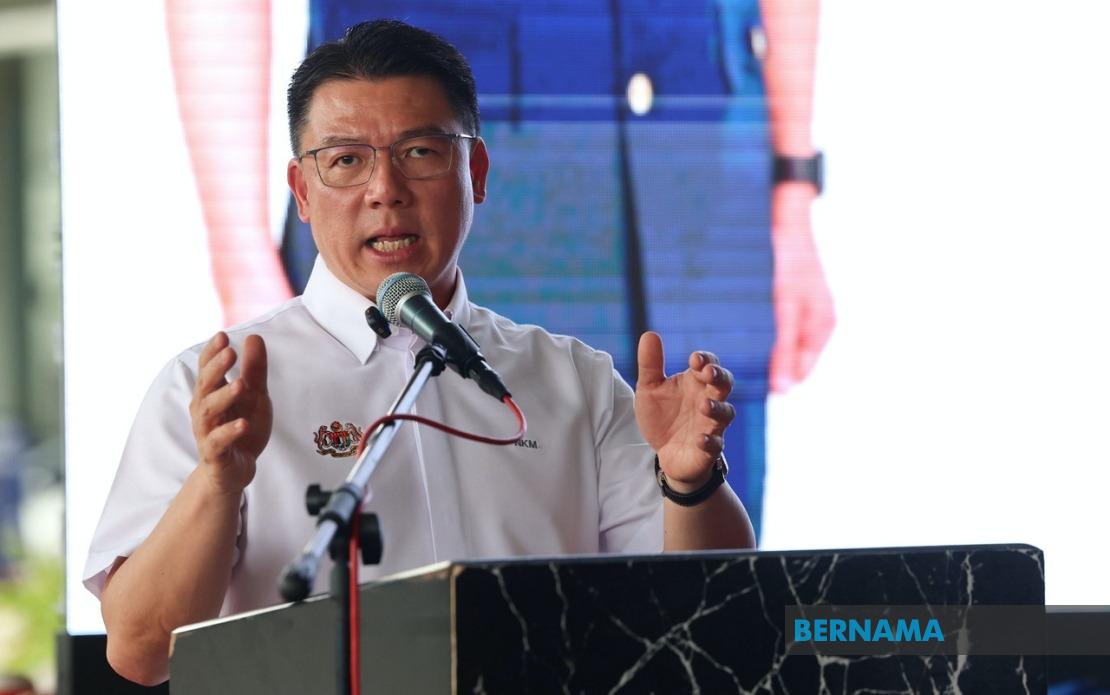
Malaysia is positioning itself to learn from Japan's highly disciplined approach to waste management as the country accelerates its transition towards a circular economy model. Housing and Local Government Minister Nga Kor Ming underscored during a recent meeting with Japanese Ambassador Noriyuki Shikata that Japan's systematic waste separation practices offer crucial insights for Malaysia's environmental transformation agenda. The diplomat's visit to the ambassador's official residence in Kuala Lumpur on August 18 centred on strengthening bilateral cooperation in sustainable waste handling and modernising Malaysia's approach to resource circulation.
Japan's reputation for meticulous waste segregation and a deeply ingrained cultural commitment to cleanliness provides a compelling blueprint for Malaysian policymakers. In Japan, the practice of separating waste at the household level has become so normalised that it forms an integral part of daily life, supported by both social expectations and effective municipal infrastructure. Nga emphasised that this cultural dimension—where environmental responsibility transcends regulatory compliance—represents perhaps the most valuable lesson available to Malaysia. Rather than relying solely on enforcement mechanisms and penalties, the Japanese model demonstrates how systemic change emerges when sustainable practices become embedded in social norms and personal habits from an early age.
The Malaysian government has already laid foundational groundwork for its circular economy ambitions through several initiatives. The National Circular Economy Blueprint provides a strategic framework, while the establishment of the National Circular Economy Council signals institutional commitment to coordinating cross-sector efforts. Additionally, regulatory requirements mandating that shopping malls incorporate recycling facilities into their operations represent tangible policy shifts. The phased elimination of single-use plastic bags further reflects Malaysia's incremental approach to reducing consumption-driven waste. However, these measures remain relatively nascent compared to Japan's mature waste management ecosystem, suggesting significant room for institutional learning and adaptation.
A critical component of Malaysia's strategic approach involves formalising knowledge exchange with Tokyo through a proposed Memorandum of Understanding between the two nations. The Cabinet approved this agreement in July, creating a formal mechanism for collaborative advancement in waste management modernisation and circular economy development. Through this framework, Malaysia anticipates structured access to Japanese technological innovations, administrative best practices, and sectoral expertise that has been refined over decades of implementation. The MoU represents more than ceremonial diplomacy; it establishes pathways for Malaysian officials, engineers, and municipal administrators to study Japanese systems firsthand and adapt methodologies to local contexts.
Nga's remarks highlight a crucial philosophical shift underpinning Malaysia's sustainability strategy: the recognition that behavioural change must originate in foundational education rather than administrative coercion alone. By introducing waste separation and recycling concepts to young Malaysians through school curricula and community programmes, the government aims to cultivate a generation for whom environmental stewardship becomes reflexive rather than burdensome. This approach mirrors Japan's success in creating what amounts to a national cleanliness consciousness, wherein proper waste management reflects personal values rather than mere compliance with regulations. Such cultural transformation typically unfolds across multiple decades, suggesting that Malaysia's current policy window represents the beginning of a long-term civilisational shift rather than a quick institutional fix.
The technological dimension of Japan-Malaysia cooperation deserves particular attention given Malaysia's industrial capacity and manufacturing base. Japanese innovations in waste processing technology, recycling infrastructure, and resource recovery systems represent competitive advantages that could be licensed, adapted, or jointly developed for Southeast Asian markets. Malaysia's position as a regional economic hub means that successful adaptation of Japanese waste management practices could create demonstration effects across the broader Association of Southeast Asian Nations region, potentially positioning the country as a sustainability leader within ASEAN. This regional influence pathway adds geopolitical and economic dimensions to what might otherwise appear as a narrowly technical cooperation arrangement.
The invitation to participate in GREEN×EXPO 2027 in Yokohama extends the cooperation framework beyond bilateral governmental channels into broader showcases of sustainable urban development. International expositions such as this provide networking opportunities, technology demonstrations, and platform access for Malaysian companies and municipalities seeking to engage with global sustainability solutions. Yokohama's own track record as a green city underscores Japan's commitment to actualising circular economy principles at the municipal level, offering Malaysian delegations concrete examples of integrated urban sustainability systems rather than theoretical frameworks. The expo setting facilitates exposure to diverse global approaches, not merely Japanese ones, enabling Malaysia to benchmark its progress against international standards and access a wider innovation ecosystem.
Within Malaysia's broader development context, the circular economy agenda intersects with multiple policy priorities spanning urban planning, manufacturing competitiveness, environmental health, and quality of life. Cities burdened by waste management inefficiencies face aesthetic degradation, public health risks, and operational costs that drain municipal budgets. By importing Japanese organisational and cultural models, Malaysia addresses these immediate urban challenges while simultaneously positioning itself within global sustainability narratives increasingly important to international investors and trading partners. The Japanese partnership therefore serves Malaysia's economic interests alongside environmental objectives, creating political incentives across multiple constituencies for implementing what might otherwise face resistance as culturally foreign impositions.
Implementation success will ultimately depend on Malaysia's ability to navigate the gap between institutional policy frameworks and everyday citizen behaviour. Japan's waste management prowess rests partly on high population density, homogeneous social norms, and institutional capacity that cannot be simply transplanted. Malaysia's more diverse and geographically dispersed population, ranging from dense urban centres to dispersed rural communities, presents implementation challenges requiring contextual adaptation. Municipal governments across Malaysian states and cities operate with varying technical capacity and resource availability, necessitating differentiated rollout strategies rather than uniform national mandates. The proposed MoU's value will be measured not merely by its signature but by how Malaysian officials translate Japanese institutional architecture into locally viable waste management systems.

