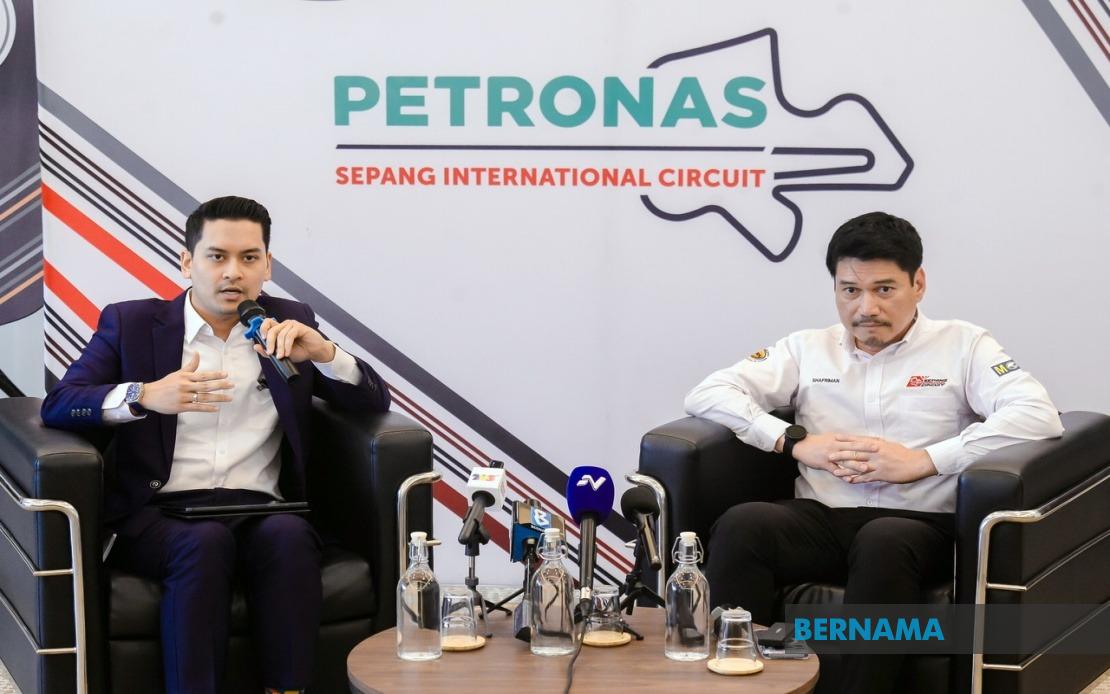
Malaysia has secured its position as a premier motorsport destination on the global stage by extending its contract to host the prestigious Motorcycle Grand Prix through 2031. Youth and Sports Minister Dr Mohammed Taufiq Johari announced the decision at Sepang International Circuit, where the event has been held since 1999. The extension, which received Cabinet endorsement, represents a significant commitment from the government to maintain Malaysia's standing in world-class motorsport competition and comes as the current agreement covering 2024 through this year concludes.
The renewal signals a broader strategic vision beyond simply retaining a marquee sporting event. Dr Mohammed Taufiq characterised the extension as a deliberate policy choice anchored in Malaysia's competitiveness and relevance within the global motorsport ecosystem. Rather than viewing the MotoGP as a standalone festival, the government positions the race as a cornerstone investment that strengthens interconnected industries and creates sustainable economic pathways. This framing reflects a maturing understanding of how mega-events can serve as catalysts for sectoral development across tourism, hospitality, transportation and the broader business landscape.
The economic footprint of the Malaysian MotoGP underscores its significance to the national balance sheet. Data from the 2024 edition demonstrated a tangible return on public investment, generating approximately RM694 million in overall economic impact while creating more than 4,400 employment opportunities. The return on investment ratio of 6.3 times indicates that every ringgit spent yields substantial multiplier effects throughout the economy. For Malaysian policymakers and stakeholders in hospitality and transportation sectors, these figures validate the infrastructure spending and organisational efforts required to host the event at international standards.
Beyond immediate economic metrics, the MotoGP serves as a magnet for tourism revenue and brand visibility. The influx of international competitors, teams, media personnel and spectators generates sustained spending across hotels, restaurants, retail and entertainment venues. Malaysia's positioning on the Asian motorsport calendar also distinguishes it from other regional venues, allowing the country to capture market share among Asian motorsport enthusiasts while attracting European and international fans who view the event as a key fixture in their annual sporting calendar. The tourism ministry and state governments have long recognised this potential for destination marketing.
The contract extension also reflects the government's recognition of motorsport as an instrument for talent identification and technical skill development. Through the Malaysian Motorsport Development programme, structured pathways have emerged to nurture emerging riders and engineers who can represent Malaysia on international stages. Riders including Hakim Danish and Qabil Irfan have leveraged platforms created through this ecosystem to establish international racing credentials. By maintaining the MotoGP as a cornerstone event, Malaysia preserves the visibility and competitive context that motivates local talent development and attracts investment in racing infrastructure and training facilities.
The hosting tenure stretches across more than three decades, establishing Malaysia as one of the event's longest-running venues outside Europe. The Malaysian round first took place in 1991 before transitioning to the purpose-built Sepang circuit in 1999, where modern facilities and geographic accessibility have attracted increasing participation and spectatorship. This continuity offers stability for global motorsport promoters who value predictable annual calendars and provides Malaysian stakeholders with institutional knowledge and established relationships with international racing bodies. The familiarity also benefits vendors, hospitality providers and workers who have built expertise around delivering international event standards.
For Malaysia's small and medium enterprise sector, the MotoGP represents a concentrated opportunity for revenue generation and business partnerships. Local suppliers spanning catering, logistics, security, ground maintenance and merchandise leverage the event's scale to access customer bases and revenue streams unavailable through domestic channels alone. The injection of foreign spending and the promotional exposure associated with global broadcast coverage can accelerate business growth and international market awareness for participating Malaysian enterprises.
The five-year horizon through 2031 also positions Malaysia to plan capital investments in circuit facilities and transportation infrastructure with greater confidence. Event organisers can commit to facility upgrades and safety enhancements knowing the revenue stream extends sufficiently to justify expenditure. State governments can integrate MotoGP-related projects into longer-term urban planning and infrastructure development strategies. The extended timeline reduces the uncertainty that characterises shorter-term contracts, enabling more ambitious and strategic facility planning.
At the regional level, Malaysia's MotoGP hosting capability strengthens Southeast Asia's profile within global motorsport governance and investment. While Singapore hosts the Formula One Grand Prix, Malaysia's MotoGP presence ensures the region maintains multiple flagship motorsport events that collectively elevate the area's competitive standing. This diversification benefits the broader region by attracting sustained international media attention, sponsorship dollars and tourist flows oriented toward motorsport experiences. The extended commitment through 2031 signals confidence in the region's political stability and business environment, factors that influence investment decisions among international sports promoters evaluating locations for major events.
The government's backing of this extension also underscores motorsport's integration into Malaysia's national sporting strategy and public investment priorities. Rather than treating the MotoGP as an ancillary expense, the decision to extend through 2031 reflects deliberate choices about how public resources support economic development and global positioning. This framing carries implications for how policymakers prioritise other infrastructure investments and international sporting partnerships. As Malaysia competes with other developing economies for major events, the government's sustained commitment to motorsport signals intent to compete at the highest levels of international sporting competition and events tourism.
Looking forward, the extension creates a platform for stakeholders across government, business and grassroots motorsport communities to build collaborative initiatives that deepen local engagement with racing culture and technical competence. Fan development programmes, youth racing academies and partnerships between circuit operators and international racing schools can flourish with certainty about the MotoGP's continued presence. Schools and vocational institutions can design curricula aligned with anticipated employment opportunities within the motorsport supply chain, bridging education policy with sectoral talent requirements. The extended timeline thus enables systemic development beyond the annual two-day event itself.

