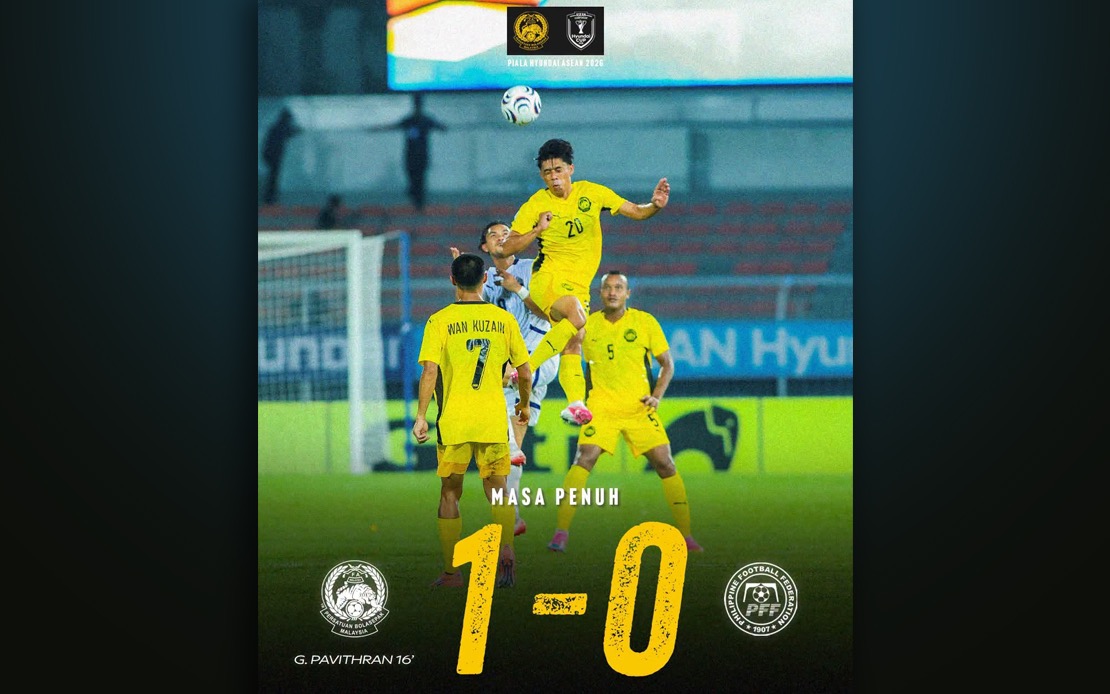
Malaysia's national football team secured passage to the semi-finals of the 2026 ASEAN Cup with a commanding 1-0 victory over the Philippines on August 8 at the Kuala Lumpur Football Stadium in Cheras. Playing in front of an enthusiastic home crowd that filled the 18,000-capacity venue, Harimau Malaya delivered a disciplined performance under interim head coach Tan Cheng Hoe to claim the three points necessary for qualification. The win concluded Malaysia's Group B campaign with nine points, confirming a second-place finish behind Thailand and setting up a heavyweight clash with regional heavyweights Vietnam in the knockout stage.
The breakthrough came relatively early, with G. Pavithran opening the scoring in the 16th minute following a well-executed buildup. Midfielder Wan Kuzain Wan Ahmad Kamal's precise cross into the Philippines penalty area found Pavithran, whose towering header gave Malaysia an early advantage that shifted momentum decisively toward the home side. The goal energised the partisan crowd, whose passionate support throughout the evening reflected the significance of the occasion for Malaysian football. From that moment forward, Malaysia controlled the tempo of the match, dictating play and limiting the Philippines' ability to construct meaningful attacking sequences.
The Philippines, managed by Carles Cuadrat, responded to falling behind by gradually increasing the intensity of their approach, yet found themselves consistently thwarted by Malaysia's organised defensive structure. Despite probing for an opening before the interval, the visitors could not fashion a clear opportunity to level the score. Harimau Malaya's back line, marshalled by captain Paulo Josue, proved resolute and commanding, denying the Philippines any momentum heading into the dressing room. The half-time scoreline represented a fair reflection of proceedings, with Malaysia's early goal and subsequent dominance setting the platform for what would become a successful defensive display.
The second half saw the Philippines emerge with greater urgency, deploying a more aggressive attacking posture in search of an equaliser that might extend their own knockout round aspirations. However, Malaysia's defence remained steadfast, refusing to yield despite sustained pressure from Cuadrat's charges. The disciplinary approach adopted by interim coach Tan Cheng Hoe—prioritising solidity at the back while maintaining just enough threat going forward—proved an effective formula against determined opponents. This pragmatic blueprint reflects the realities of knockout football in tournament competition, where a single goal often proves decisive.
Malaysia came tantalizingly close to doubling their advantage in the 85th minute when Pavithran received a low cross at the edge of the Philippines penalty area but could not convert, with Philippines defender Jaime Rosquillo producing crucial last-ditch defending to deny what would have been a decisive second goal. The miss ultimately proved inconsequential, as Malaysia's solitary goal remained sufficient to preserve victory through the final whistle. The failure to extend the lead underscores how fine margins in football can determine the trajectory of matches, though Malaysia's overall performance justified the result.
Thailand's simultaneous 2-0 victory over Myanmar confirmed the War Elephants as Group B champions with twelve points, establishing them as undefeated group leaders heading into the semi-finals. The comprehensive nature of Thailand's campaign, combined with Malaysia's second-place finish, reflects the quality differential between the tournament's top contenders. Thailand's dominance throughout the group stage signals that they will present a significant obstacle should Malaysia and the Thais meet in any subsequent rounds, though such scenarios remain contingent on both teams navigating their respective semi-final assignments.
The semi-final draw presents Malaysia with a formidable assignment: defending champions Vietnam, who topped Group A with commanding performances throughout the preliminary stage. The two-leg format, with matches scheduled for August 16 and August 19, offers both opportunity and risk, as away-goal advantages and aggregate scoring can produce unpredictable outcomes. Vietnam's status as defending champions reflects their pedigree as a consistent ASEAN Cup threat, making the upcoming encounter one of the tournament's marquee matchups. For Malaysian football, the opportunity to contest such high-stakes football against a neighbouring rival carries significant prestige and narrative weight in regional sporting circles.
Harimau Malaya's qualification represents validation of interim coach Tan Cheng Hoe's tactical acumen and the squad's collective commitment to performing on the regional stage. The home advantage generated by the Kuala Lumpur crowd undoubtedly contributed to Malaysia's controlled approach and defensive solidity. Supporters dressed in black and yellow created an atmosphere conducive to Malaysian success, demonstrating the extent to which domestic backing influences team performance. The energy generated at the Cheras venue reflected genuine popular investment in Malaysian football's continental ambitions, a factor that historically influences outcomes in tournament football throughout Asia.
The advancement to the semi-finals also carries implications for Malaysian football's trajectory and narrative in regional competitions. A squad capable of qualifying from a competitive group, whilst maintaining tactical discipline against technically proficient opponents, suggests organisational improvements and player development that warrant closer monitoring as the tournament progresses. The balance between youthful exuberance and experienced steadiness evident in Malaysia's performance provided a template for sustained competitiveness. Looking ahead, the Vietnam challenge will test whether this foundation proves sufficient to overcome opponents of continental championship calibre, with semi-final success opening pathways toward the tournament final and potential silverware that would elevate Malaysian football's standing considerably.

