The Malaysian government has launched a comprehensive review of Section 97 of the Child Act 2001 (Act 611), aiming to introduce clearer and more defined detention periods for individuals convicted of serious crimes while still children. This legislative reassessment represents a significant shift in how the criminal justice system handles young offenders, particularly in light of Malaysia's international human rights commitments and evolving understanding of rehabilitation principles.
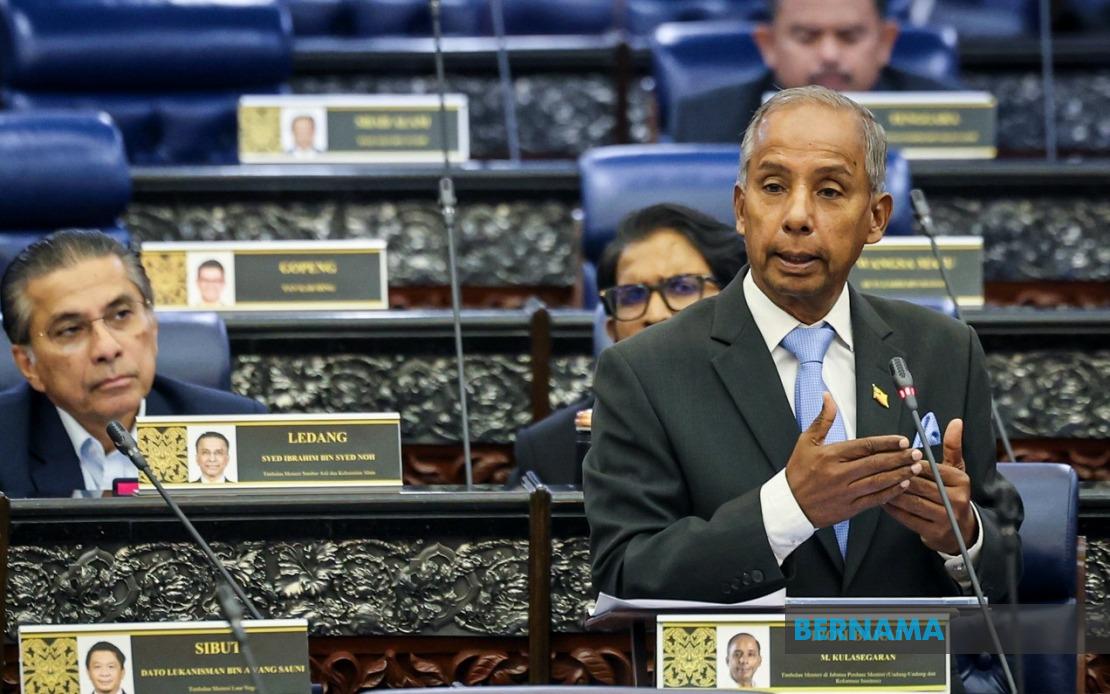
Deputy Minister in the Prime Minister's Department (Law and Institutional Reform) M. Kulasegaran announced the initiative during parliamentary Question Time, explaining that the special committee undertaking the review has convened multiple times since its formation following the abolition of the mandatory death penalty and life imprisonment in 2023. The timing of this review reflects a broader recalibration of Malaysia's approach to sentencing policy, shifting away from purely punitive measures toward frameworks that account for both public protection and offender reformation.
Currently, Section 97 of Act 611 prohibits courts from imposing capital punishment on individuals who were children at the time of their offence. Instead, courts mandate detention at the pleasure of the King or the Yang di-Pertua Negeri, depending on the jurisdiction where the crime occurred. This discretionary framework has created significant uncertainty and inconsistency in how long detainees remain incarcerated, with no clear endpoint or review mechanism established by law.
The human consequences of indefinite detention became starkly apparent when Kulasegaran visited correctional facilities in Semporna and Sandakan. During these visits, he encountered an individual who has spent almost 25 years in custody after entering prison at age 17. Such cases illustrate the profound disconnection that emerges when individuals spend their entire formative adult years behind bars without knowing their release date or conditions for potential parole, leaving them psychologically and socially unprepared for eventual reintegration.
According to government data presented to parliament, 40 individuals currently remain detained under Section 97 provisions. This population represents a vulnerable cohort whose indefinite detention raises serious questions about whether Malaysia's current framework aligns with international standards on children's rights and rehabilitation. The Convention on the Rights of the Child, to which Malaysia is signatory, emphasises that detention of children should be used only as a last resort and for the shortest appropriate period, with rehabilitation as a fundamental objective.
The disparity between Malaysia's international human rights obligations and existing domestic law has prompted this comprehensive legislative review. The government has explicitly committed to ensuring that proposed amendments will maintain equilibrium among three competing considerations: justice for victims of serious crimes, protection of public safety, and respect for the welfare and rehabilitation prospects of child offenders. This tripartite balance reflects growing recognition that purely retributive sentencing creates diminishing returns for social reintegration.
The establishment of fixed detention periods represents perhaps the most significant potential change under consideration. Rather than open-ended custody determined by executive pleasure, statutory detention terms would provide clarity for both incarcerated individuals and prison administrators. Such fixed periods could incorporate mechanisms for sentence review, conditional release, and rehabilitation programme participation, transforming detention from indefinite warehousing into a structured pathway toward eventual reintegration.
For Malaysian policymakers, this review carries broader implications extending beyond the specific provisions of Act 611. It signals willingness to reconsider sentencing approaches across the criminal justice system, potentially influencing how courts address other vulnerable populations and cases involving young perpetrators. The emphasis on rehabilitation aligns with contemporary criminological evidence suggesting that certainty of consequence, rather than severity of punishment, more effectively deters criminal behaviour.
Implementation of amended provisions will require careful coordination among multiple stakeholders, including the judiciary, correctional services, rehabilitation specialists, and victim advocacy groups. The committee's approach must navigate legitimate concerns from victims' families while respecting evidence-based practices that reduce recidivism and facilitate successful reintegration. Regional neighbouring countries including Singapore and Thailand have implemented similar fixed-term detention frameworks with measurable improvements in prisoner outcomes and rehabilitation success rates.
The review also reflects Malaysia's engagement with international criminal justice standards as the country continues developing its human rights framework. By establishing clearer detention periods and rehabilitation pathways for child offenders, Malaysia demonstrates commitment to progressive jurisprudence while maintaining public safety standards. This balance is particularly important for regional leadership, as Southeast Asian nations increasingly face scrutiny regarding juvenile justice systems and children's rights protections.
Culasegaran's parliamentary remarks emphasised that the committee's work remains ongoing, with decisions expected to emerge that will guide specific amendments to Section 97. The deputy minister's personal engagement with detained individuals, combined with the government's stated commitment to human rights compliance, suggests the review process is grounded in both empirical evidence and recognition of individual dignity. The anticipated amendments represent an opportunity to transform how Malaysia addresses young people who commit serious crimes, shifting from indefinite detention toward time-certain sentences with meaningful rehabilitation components.
For individuals currently detained under Section 97, potential amendments could fundamentally alter their prospects and timelines for eventual release. Establishing predictable detention periods and rehabilitation frameworks would provide psychological clarity currently absent, potentially enhancing cooperation with correctional programmes and mental health services. The review process thus carries profound implications not only for legislative coherence but for the lived experiences of 40 individuals whose indefinite detention has placed them in legal and temporal limbo.

