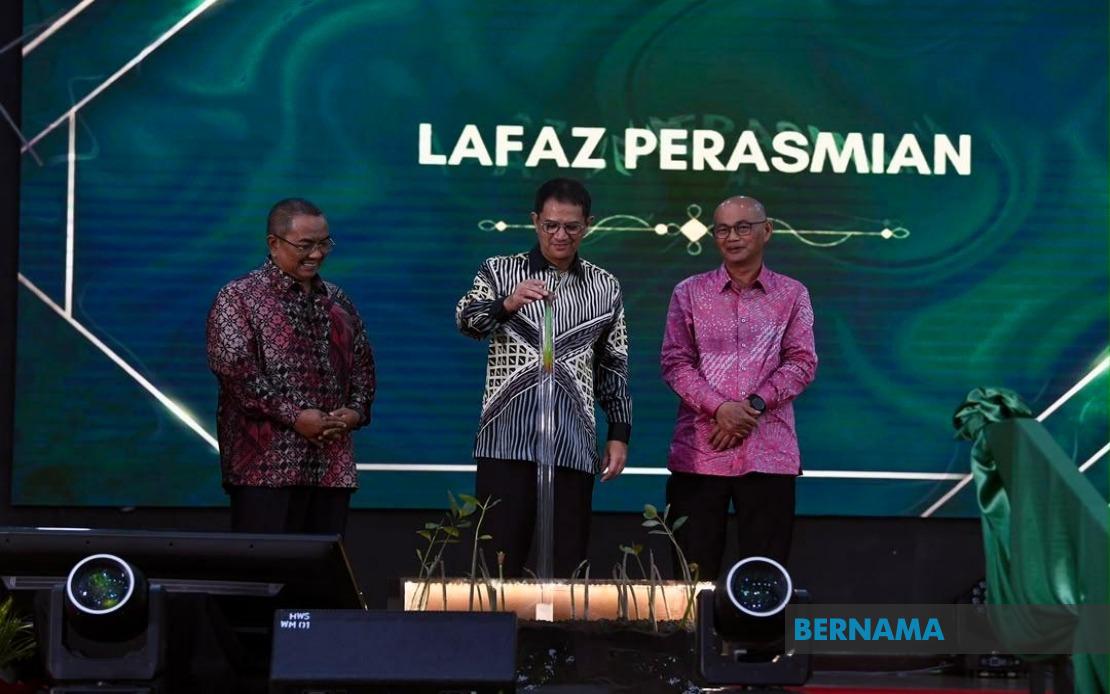
Malaysia's mangrove restoration efforts have reached a significant milestone with nearly 4,000 hectares of coastal forest recovered across the nation through the planting of more than 9.3 million mangrove and coastal species trees. This achievement was highlighted by Natural Resources and Environmental Sustainability Minister Datuk Seri Arthur Joseph Kurup during the National-level International Day for the Conservation of the Mangrove Ecosystem 2026 celebration in Alor Setar, where Kedah Raja Muda Tengku Sarafudin Badlishah Ibni Sultan Sallehuddin presided over the proceedings.
The restoration programme represents a substantial financial commitment from the government, with RM71.3 million allocated through 2025 under the National Coastal Mangrove and Suitable Species Tree Planting Programme. These funds have supported not only the physical planting and maintenance of trees but also crucial research, monitoring initiatives, and public awareness campaigns designed to build long-term community support for mangrove conservation. The scale of investment underscores recognition within Malaysian policymaking circles that mangrove ecosystems provide irreplaceable services extending far beyond their ecological boundaries.
Looking ahead, the government has designated an additional RM2 million within the 13th Malaysia Plan (13MP) for continued mangrove and coastal area conservation efforts throughout 2026. This forward allocation spans Peninsular Malaysia, Sabah, and Sarawak, indicating a coordinated nationwide approach that acknowledges the shared responsibility across federal and state administrations. The geographic breadth of the programme reflects understanding that mangrove ecosystems present regionally specific challenges and opportunities that demand tailored management strategies.
The restoration initiative operates through a collaborative framework involving multiple governmental agencies including Forestry Peninsular Malaysia (JPSM), the Sabah Forestry Department, the Sarawak Forest Department, and the Forest Research Institute Malaysia (FRIM). This institutional architecture ensures that technical expertise, research capacity, and field implementation experience are integrated rather than fragmented across bureaucratic silos. The involvement of these diverse agencies suggests a recognition that successful large-scale ecosystem restoration demands coordination beyond what any single organisation can accomplish.
Crucially, the programme's success depends significantly on partnerships with non-governmental organisations and local communities, whose participation in environmental education, public awareness, and ecosystem protection activities provides essential grassroots momentum. During the Alor Setar ceremony, Tengku Sarafudin presented certificates of appreciation to four NGOs and community groups contributing to mangrove conservation, institutionalising recognition of civil society's role in sustaining long-term environmental stewardship. This approach acknowledges that governmental action alone, however well-resourced, cannot generate the sustained behavioural and cultural shifts necessary for ecosystem preservation.
The framing of mangrove conservation within a "blue economy sustainability" narrative reveals important strategic positioning within Malaysia's broader economic planning. Rather than presenting environmental conservation as economically burdensome, this framing connects mangrove protection to productive economic activity, potentially generating political support from constituencies that might otherwise prioritise development. Mangrove ecosystems support fisheries, provide coastal protection, sequester carbon, and offer tourism potential—benefits that resonate across economic stakeholder groups including fishermen, coastal businesses, and investors in climate mitigation projects.
The concurrent National Mangrove and Coastal Ecosystem Seminar 2026, organised jointly by JPSM and FRIM, demonstrated the knowledge-sharing dimension of the restoration agenda. The seminar featured twelve research papers, fifteen technical posters, and nine exhibition booths addressing various aspects of mangrove management, research, and conservation practices. This convening function serves multiple purposes: it generates evidence-based understanding of what restoration approaches work most effectively, creates professional networks among researchers and practitioners, and ensures that government policy benefits from current scientific understanding rather than institutional inertia.
For Malaysian readers, this restoration achievement carries significance extending beyond environmental metrics. The programme demonstrates how governmental resources, scientific expertise, and community mobilisation can collaborate on landscape-scale ecological recovery in Southeast Asia's context. Given that mangrove forests provide critical nursery habitat for commercially important fish species, coastal erosion protection for populated areas, and carbon storage capacity relevant to climate change mitigation, their restoration represents investment in both livelihood security and environmental resilience.
The 3,965-hectare restoration to date represents substantial progress, yet places the initiative within longer-term context. Mangrove loss in Southeast Asia continues due to aquaculture expansion, urban development, and agricultural conversion, suggesting that maintenance of restored areas and expansion of restoration efforts remain necessary. The sustained RM2 million annual allocation through 2026 indicates governmental recognition of restoration as ongoing commitment rather than one-time project, though whether current funding levels prove sufficient for reversing region-wide mangrove loss trends remains uncertain.
Regionally, Malaysia's mangrove restoration framework offers potential lessons for neighbouring countries confronting similar coastal ecosystem degradation. The integration of multiple government agencies, incorporation of civil society participation, connection to economic sustainability narratives, and emphasis on research and monitoring represent best-practice components that other Southeast Asian nations could adapt to their specific contexts. As maritime economies throughout the region increasingly recognise blue economy opportunities, mangrove restoration positions itself at the intersection of environmental protection and economic development objectives that appeal across traditional political divides.
The programme's success ultimately depends on sustained political commitment beyond the current ministerial tenure, adequate and reliable funding allocation, effective coordination across multiple bureaucratic actors, and maintained community engagement. These implementation challenges represent the true test facing mangrove restoration in Malaysia, determining whether the 3,965 hectares already recovered and planted remain healthy, productive ecosystems decades hence.

