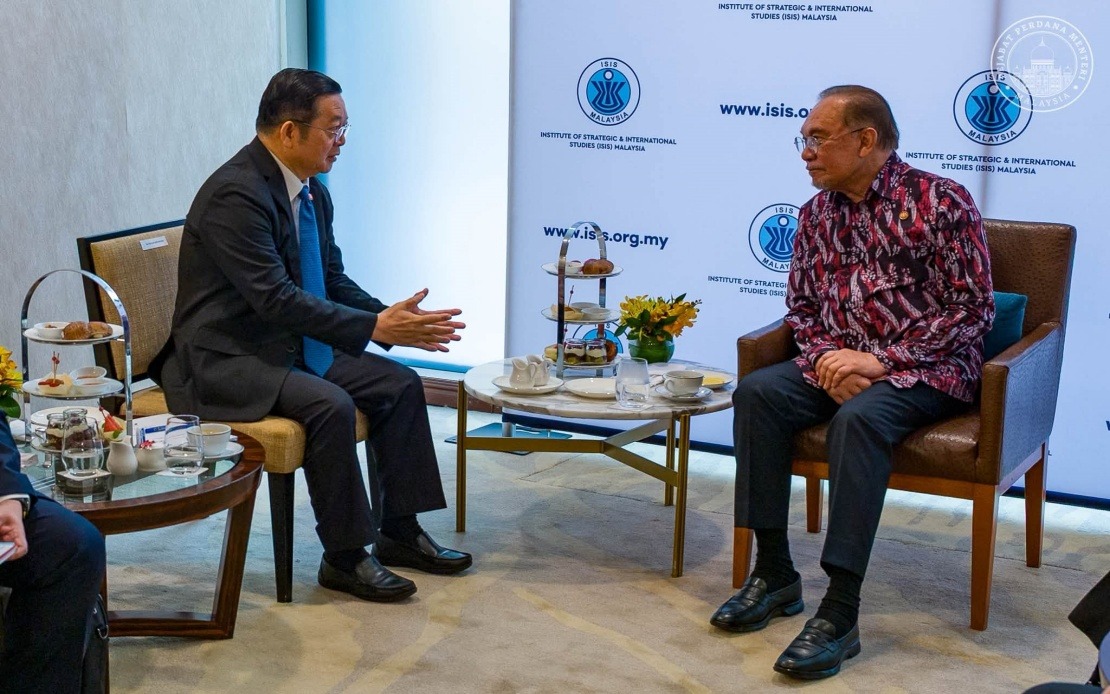
Prime Minister Datuk Seri Anwar Ibrahim has reiterated Malaysia's unwavering commitment to playing a constructive role in consolidating ASEAN as a cohesive and inclusive regional community that can effectively address the needs and aspirations of Southeast Asian populations. The statement came during a meeting with ASEAN Secretary-General Dr Kao Kim Hourn, who made a courtesy call on the premier following Anwar's keynote address at the 39th Asia-Pacific Roundtable in Kuala Lumpur. This high-level engagement underscores Malaysia's continued diplomatic engagement with regional institutions at a time when Southeast Asia faces mounting geopolitical and economic headwinds.
The bilateral discussion provided both leaders with a valuable platform to deliberate on pressing regional matters and examine ASEAN's strategic priorities as the bloc navigates an increasingly complex international environment. Beyond ceremonial niceties, the conversation delved into substantive issues that will shape Southeast Asia's trajectory in coming years. Malaysia's prominent role in these discussions reflects its traditional position as an influential ASEAN member and a key voice in regional consensus-building efforts. Anwar's dual portfolio as both Prime Minister and Finance Minister also positions him uniquely to address the intersection of political strategy and economic considerations affecting the bloc's cohesion.
The Myanmar situation featured prominently in their exchange, a reflection of the persistent instability that has troubled ASEAN since the military coup in February 2021. The internal conflict continues to generate refugee flows, disrupt regional connectivity projects, and test ASEAN's consensus-based approach to crisis management. For Malaysia, which shares land and maritime borders with Myanmar and hosts significant populations of Myanmar nationals, the ongoing turmoil carries direct security and humanitarian implications. The discussions also touched on the escalating tensions in the South China Sea, where overlapping territorial claims and military modernisation have created friction among claimant states and external powers. Malaysia's own maritime interests in this contested region make it a particularly invested stakeholder in maintaining freedom of navigation and preventing militarisation that could destabilise regional trade and security.
Artificial intelligence emerged as a notable agenda item, signalling ASEAN's recognition that technological advancement and digital transformation represent both opportunities and challenges requiring coordinated regional responses. The rapid proliferation of AI applications across finance, governance, and national security demands that ASEAN establish common frameworks and safeguards to harness benefits while mitigating risks. Malaysia, as a developing economy with growing tech ambitions, has obvious interests in ensuring that regional AI governance does not disadvantage smaller or less technologically advanced members.
The integration of Timor-Leste as ASEAN's newest full member following its 2023 accession continues to occupy significant bandwidth in regional deliberations. The post-accession phase requires careful management to ensure the young nation is effectively incorporated into ASEAN structures, decision-making processes, and community initiatives. Timor-Leste's accession fundamentally alters ASEAN's demographic composition and geopolitical reach, extending the bloc's presence deeper into the Indo-Pacific and bringing fresh perspectives on key issues. For Malaysia, supporting successful Timorese integration strengthens regional unity and demonstrates ASEAN's capacity to expand and adapt.
Implementation of the ASEAN Community Vision 2045 remains a cornerstone of the bloc's long-term strategic planning. This ambitious framework aims to create a people-oriented community emphasising sustainable development, digital connectivity, and inclusive growth. However, translating this vision into concrete member-state actions requires robust political will and equitable burden-sharing. Malaysia, as a middle-income nation with experience in regional initiatives, plays a crucial role in bridging the capability and development gaps among member states, ensuring that ASEAN's collective ambitions remain achievable rather than aspirational.
The ramifications of the West Asia conflict on Southeast Asia have increasingly captured regional attention as missile strikes, naval disruptions, and great power competition threaten to spill into the Indo-Pacific. ASEAN's vulnerabilities in this context include heavy dependence on Middle Eastern energy supplies, reliance on global shipping lanes that could be disrupted, and the risk of being drawn into proxy competitions between major powers. For Malaysia, with significant energy imports and an economy heavily integrated into global trade networks, the strategic calculus around the West Asia situation directly affects national economic security and foreign policy positioning.
Anwar emphasised that ASEAN must remain steadfast in upholding the foundational principles of unity, centrality, and robust cooperation to safeguard regional peace, stability, and prosperity. The principle of ASEAN centrality, which positions the bloc as the core driver of regional architecture and decision-making, faces mounting pressure from great power competition and differing member-state strategic alignments. Malaysia's advocacy for these core principles reflects a commitment to preserving ASEAN's agency and preventing the region from becoming fragmented along competing geopolitical lines. Unity in diversity remains ASEAN's defining characteristic, yet maintaining this equilibrium requires constant diplomatic effort and occasional compromise.
Malaysia's positioning in this discourse is particularly significant given its historical role as an ASEAN founder and consistent advocate for regional multilateralism. The country's emphasis on constructive engagement signals its preference for dialogue-based solutions over confrontation, an approach that resonates with ASEAN's foundational non-interference doctrine and consensus-seeking mechanisms. As Southeast Asia confronts interconnected challenges spanning security, economics, climate change, and pandemics, Malaysia's reaffirmation of commitment to ASEAN strengthening provides reassurance that major regional players remain invested in collective problem-solving rather than zero-sum competition.
The broader context of these discussions reflects recognition within ASEAN leadership that the bloc's relevance and effectiveness depend on proactive engagement with emerging challenges. The organisation cannot rely solely on past diplomatic victories or institutional inertia. Instead, ASEAN must continually demonstrate its capacity to deliver tangible benefits to member states and populations while adapting its structures and strategies to contemporary circumstances. Malaysia's contribution to this endeavour, through leadership from its Prime Minister and active participation in regional forums, strengthens the collective voice and reinforces ASEAN's position as an indispensable institution in regional governance.

