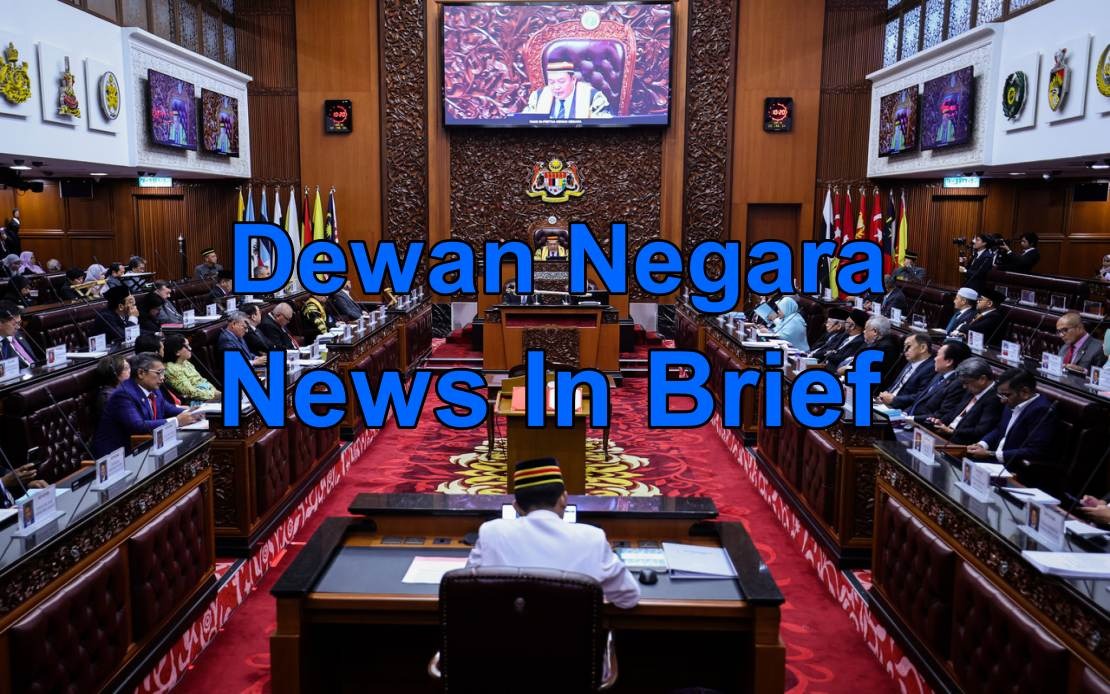
The Malaysian government has intensified its response to the El Niño phenomenon through a sustained programme of atmospheric intervention, implementing 35 cloud seeding operations at strategically selected locations across the country over a five-month period spanning February to June. The Deputy Natural Resources and Environmental Sustainability Ministry, Syed Ibrahim Syed Noh, disclosed this defensive strategy during parliamentary Question Time in the Dewan Negara, framing the initiative as a critical component of the administration's broader approach to resource management and climate adaptation as the region faces prolonged dry conditions extending potentially through 2027.
The cloud seeding exercises target multiple concurrent challenges posed by El Niño, functioning simultaneously as a drought mitigation tool, a mechanism to restore dwindling dam levels, and an instrument to suppress haze episodes that periodically afflict the region. Syed Ibrahim explained that each operation must satisfy strict atmospheric prerequisites before proceeding, requiring collaboration between the Natural Resources Ministry, the National Disaster Management Agency, and the Royal Malaysian Air Force to coordinate timing and airspace logistics. The approach reflects an acknowledgment that traditional water resource management faces strain when rainfall patterns deviate significantly from historical norms, necessitating technological intervention to artificially enhance precipitation where natural conditions fall short.
Parallel economic developments signal the government's commitment to labour market reform, with the Progressive Wage Policy demonstrating measurable success in narrowing wage differentials for lower-income workers. Economy Minister Akmal Nasrullah Mohd Nasir reported that entry-level workers have experienced a 15.79 percent surge in median monthly earnings, climbing from RM1,900 to RM2,200, a trajectory that already surpasses the original participation target of 50,000 workers through the enrolment of 51,363 employees to date. This wage expansion carries particular significance for Malaysia's service sectors and labour-intensive industries, where entry-level compensation has historically lagged productivity growth and inflation rates, creating persistent household income pressures among the most economically vulnerable segments of the workforce.
The policy's reach extends beyond entry-level positions, with non-entry-level workers recording median wage increases of 10.86 percent, translating to a monthly gain of RM238.86 and bringing their median earnings to RM2,438. The disparity in percentage gains—15.79 percent for entry-level versus 10.86 percent for others—suggests deliberate policy prioritisation of wage compression at the bottom end of the income distribution, addressing a structural labour market weakness that has characterised Malaysian employment for decades. The government has mobilised RM300 million in budgetary support for the 2025-2027 period to sustain the initiative, while 4,025 employers have committed to participation, indicating notable corporate buy-in despite the administrative burden of wage restructuring.
Ministry officials are currently undertaking a comprehensive impact assessment to evaluate whether the policy's demonstrated effectiveness warrants expansion beyond its current scope, a forward-looking consideration that signals potential for the programme to evolve into a permanent labour market intervention. The assessment will examine employment displacement effects, whether higher wage floors have prompted mechanisation or workforce contraction, and whether consumer spending gains from higher entry-level wages offset any corresponding price pressures in labour-intensive sectors. For Malaysia's lower-income households, the policy represents a tangible income floor improvement that arrives amid persistent inflation and rising living costs, though its long-term sustainability depends on achieving favourable cost-benefit calculations across participating firms.
Cultural heritage recognition has emerged as another parliamentary priority, with the Tourism, Arts and Culture Ministry signalling openness to designating Malaysian Tamil music and songs as National Heritage under the 2005 National Heritage Act. Deputy Minister Chiew Choon Man outlined the formal requirements for such recognition, stipulating that candidate works must undergo rigorous research, documentation, and evaluation benchmarked against artistic, cultural, and historical significance criteria established within the Act's framework. The decision reflects growing governmental acknowledgment that Malaysia's multicultural artistic legacy constitutes a national resource warranting formal institutional protection and archival preservation, particularly as globalisation and digital media reshape traditional musical transmission channels.
The recognition process, Chiew Choon Man indicated, demands substantive evidentiary work linking Tamil musical traditions to Malaysia's broader historical narrative and demonstrating their enduring cultural value to contemporary society. This requirement for documented connection to national history appears designed to establish objective criteria for heritage designation, preventing the process from becoming merely symbolic or political. For Tamil cultural communities, securing heritage status carries both practical implications—including potential funding for preservation initiatives and archival work—and symbolic significance affirming the legitimacy and permanence of their contributions to Malaysia's national identity. The initiative follows decades of Tamil community advocacy for institutional recognition of their cultural institutions and artistic traditions within Malaysia's official heritage frameworks.
Financial inclusion policy has also drawn parliamentary scrutiny, with Finance Minister II Datuk Seri Amir Hamzah Azizan addressing concerns regarding the one percent merchant discount rate levied on participating retailers under the Sumbangan Asas Rahmah initiative. The SARA programme distributes government assistance to eligible recipients by channelling funds through participating merchants who absorb transaction processing costs through the merchant discount rate, a design that operationalises financial aid distribution while minimising direct government expenditure on administration. Amir Hamzah committed to periodic evaluation of the one percent rate, acknowledging that small traders and retailers potentially face proportionally greater burden from the fee structure compared to larger establishments benefiting from operational scale efficiencies.
The revenue from merchant discount charges flows directly to Yayasan MyKasih to defray SARA programme operational expenses, encompassing system development, technical infrastructure maintenance, merchant training, transaction monitoring, and complaint management infrastructure. This cost-recovery mechanism effectively transfers programme financing burden from consolidated government revenue onto participating merchants and, arguably, to SARA beneficiaries who experience marginally reduced purchasing power relative to unreduced assistance. The government's willingness to review the rate reflects recognition that policy sustainability requires balancing merchant cooperation with programme equity, particularly as small retailers face mounting competitive pressures and margin compression in contemporary retail environments. The periodic review commitment suggests ongoing adjustment mechanisms may materialise, though the substantive parameters of any future rate modifications remain uncertain.
These parliamentary developments collectively illustrate the Malaysian government's simultaneous engagement across environmental management, labour market reform, cultural preservation, and financial inclusion domains. The cloud seeding operations represent technological interventionism responding to climate variability, while the Progressive Wage Policy demonstrates state-directed labour market restructuring aimed at reducing earnings inequality. Cultural heritage recognition efforts reflect federalist acknowledgment of Malaysia's multicommunal composition, whilst SARA merchant rate reviews highlight the ongoing challenge of designing inclusive financial systems without imposing excessive burdens on participating private actors. Together, these initiatives constitute a expansive policy agenda attempting to address interconnected challenges spanning natural resource management, income distribution, cultural identity, and economic inclusion within Malaysia's increasingly complex development landscape.

