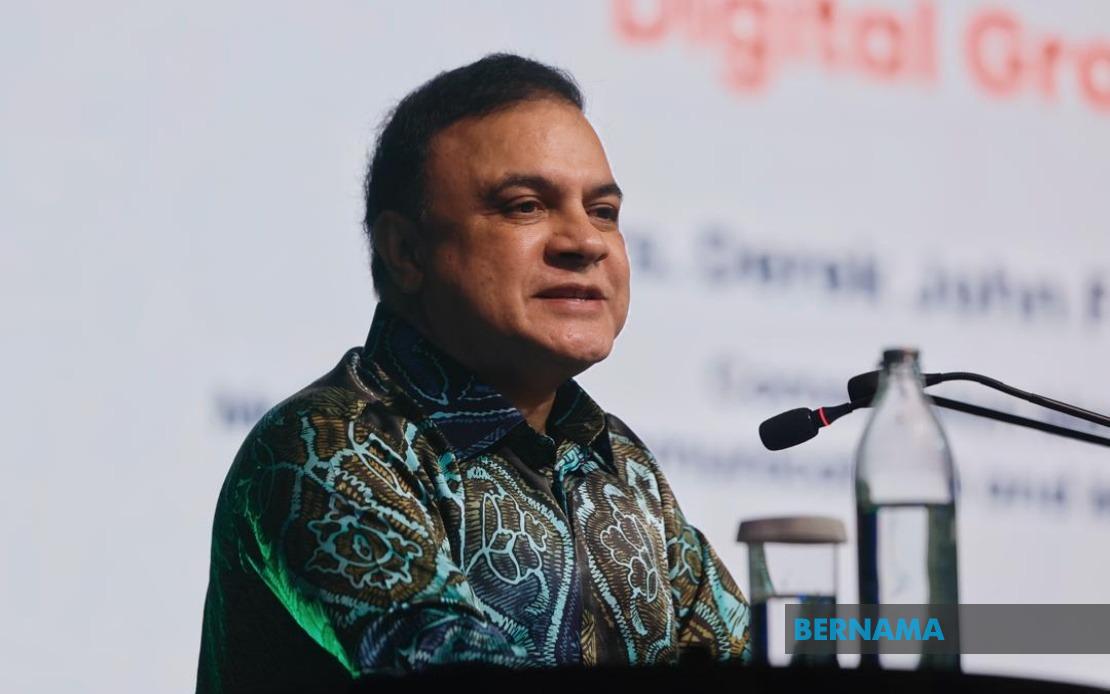
Malaysia's communications watchdog has identified a critical gap in the nation's regulatory architecture: the inconsistency between how laws protect citizens in the physical realm versus the digital sphere. At the International Regulatory Conference 2026 in Kuala Lumpur, Malaysian Communications and Multimedia Commission member Derek John Fernandez highlighted this disparity as a fundamental weakness that criminals are actively exploiting, arguing that achieving parity between these two legal domains is essential to stemming the tide of online harm targeting minors and other at-risk populations.
The regulatory challenge, as Fernandez outlined, stems from a long-standing principle applied across societies worldwide: age-based restrictions on activities deemed inappropriate for children. Cinemas enforce age limits on film screenings, shops restrict access to certain publications, and legal systems recognise developmental thresholds for criminal culpability. Yet the digital environment remains largely unregulated by equivalent safeguards, creating what amounts to a parallel legal universe where such protections are inconsistently applied or absent altogether. This asymmetry between worlds has become increasingly untenable as technology deepens its integration into daily life.
The vulnerability arises because criminals recognise and deliberately exploit the regulatory gap. Anonymity, weaker enforcement mechanisms, and the perception that digital transgressions carry lower consequences than physical-world offences have emboldened a new generation of online perpetrators. The combination of loose legal frameworks and the borderless nature of the internet provides ideal conditions for those seeking to evade accountability. Unlike a shopkeeper who can verify a customer's age, digital platforms often lack mechanisms to confirm user identity or age, leaving children exposed to content and interactions that would be prohibited in equivalent physical settings.
Malaysia has responded to this threat landscape with several legislative initiatives. The government has strengthened the Communications and Multimedia Act 1998 and introduced the Online Safety Act 2025, which took effect on January 1 this year, alongside amendments to the Penal Code. These measures represent a deliberate effort to establish digital equivalents of protections long taken for granted offline, including requirements for platforms to implement user identity and age verification systems. Communication Minister Datuk Seri Fadhmi Fadzil officiated the conference, underscoring the government's commitment to this regulatory evolution.
The scale of online harm in Malaysia justifies the urgency. The MCMC receives between two to three reports daily involving child sexual abuse material alone, while the commission executes approximately 1,700 takedowns of harmful content every single day. These figures reveal not merely isolated incidents but a systematic problem embedded within digital platforms. The convergence of rapid artificial intelligence advancement, social media proliferation, and increasingly sophisticated digital technologies has created an ecosystem where scams, fraud, cyberbullying, and child exploitation flourish with unprecedented ease and scope.
What distinguishes digital threats from traditional harms is their pervasive, boundary-free nature. In the physical world, parents retain a degree of environmental control—they know where their children are and can exercise supervision. The digital world obliterates such parental authority. A child in a locked bedroom with internet access faces 24-hour exposure to predators, inappropriate content, and exploitation schemes that recognise no time zone or geographical limit. This fundamental difference in how risk operates demands a correspondingly different regulatory response, one that accounts for the unique vulnerabilities that digital connectivity creates.
Data itself has become a weapon in this new threat landscape. Personal information, once valued primarily for legitimate commercial purposes, is now routinely weaponised by criminals for scams, fraud, and child exploitation. The digital economy's reliance on extensive data collection—the business model underpinning many technology giants—creates a constant tension between commercial objectives and child safety imperatives. Regulators must navigate the delicate balance between enabling innovation and protecting vulnerable populations from the predictable harms that unregulated data collection can facilitate.
Fernandez acknowledged that regulatory approaches to this challenge vary internationally, yet he argued that disagreement over specific governance mechanisms should never extend to the foundational principle of child protection. This distinction matters significantly for Malaysian policymakers: it allows for pragmatic discussion about how rules should function while maintaining consensus on why they matter. On this point, technology companies, advocates, civil society, and government agencies must find common ground, regardless of their positions on broader platform regulation questions.
The international dimension of online harm underscores the need for coordinated responses. An increasing number of countries are implementing age-based restrictions on social media access, reflecting a global recognition that the status quo is untenable. Malaysia's introduction of ONSA 2025 positions the nation alongside these jurisdictions, yet Fernandez cautioned that verification mechanisms alone are insufficient. Instead, he advocated for a comprehensive, multi-layered strategy integrating legislation, technology deployment, enforcement capacity, and international cooperation. This approach acknowledges the reality that online harm cannot be addressed through any single intervention.
The International Regulatory Conference's theme—"Shaping the Next Digital Era: Regulation, Resilience and Trust"—captures the philosophical shift Malaysia is attempting to achieve. The nation is transitioning from treating digital regulation as secondary to physical-world frameworks toward recognising it as equally fundamental. The ONSA 2025, derived from this reorientation, represents Malaysia's assertion that it will determine its own regulatory path rather than merely adopting imported solutions. For Southeast Asian nations watching Malaysia's approach, this framework may serve as a template for balancing rapid technological change with the imperative to protect vulnerable citizens.
Implementing this vision will require substantial institutional capacity. The MCMC's daily execution of 1,700 content takedowns already demonstrates significant operational investment; scaling identity and age verification systems across platforms will demand further resources. Technology companies operating in Malaysia must integrate these safeguards into their products, a transition that involves both cost and design complexity. Yet Fernandez's argument suggests that the cost of inaction—measured in child exploitation, fraud, and eroded public trust in digital systems—far exceeds the investment required for comprehensive regulation.
The broader implication extends beyond child safety to Malaysia's digital sovereignty. By establishing legal frameworks that apply consistently across physical and digital domains, the nation asserts its capacity to protect its citizens and shape how technology operates within its borders. This stands in contrast to a regulatory vacuum where global technology companies effectively set the rules by default. As digital technologies become increasingly central to economic activity, education, and social interaction, the ability to govern them effectively becomes an essential attribute of state capacity and legitimacy.

