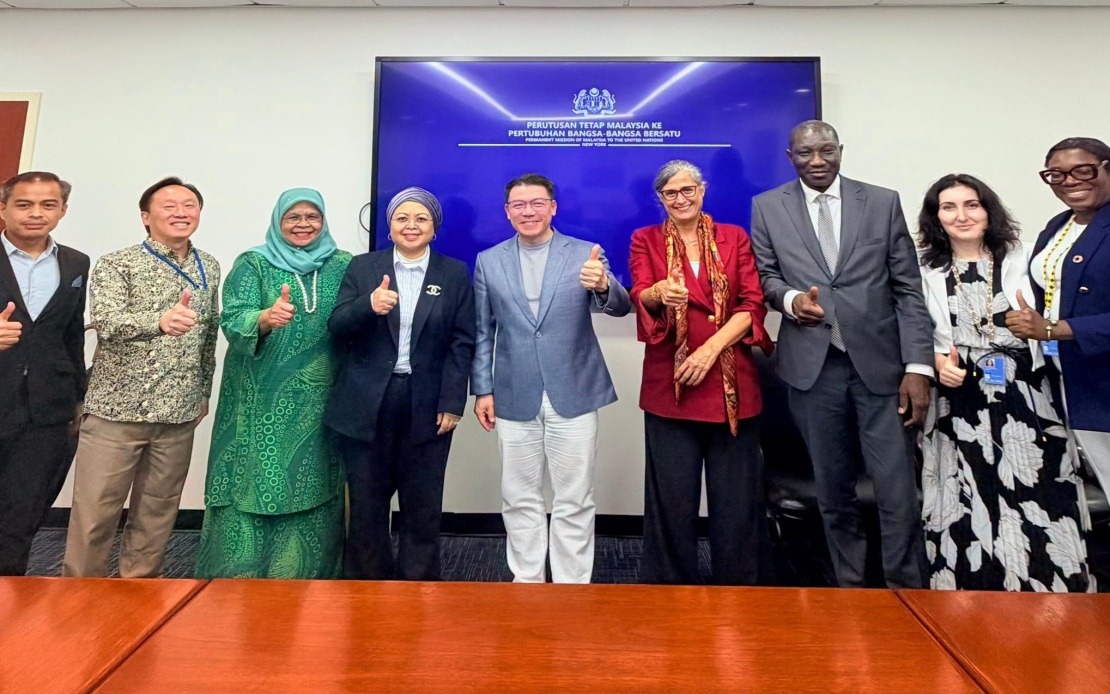
Malaysia has made a forceful plea for the global community to translate pledges into concrete action on sustainable urban development, warning that merely documenting shortcomings will not suffice as the world races toward 2030. Housing and Local Government Minister Nga Kor Ming delivered this message during the High-Level Meeting on the Midterm Review of the New Urban Agenda at the United Nations Headquarters in New York, emphasising that the review must serve as a turning point rather than a box-ticking exercise. With only four years remaining until the 2030 deadline, Nga stressed that member states cannot afford to squander this critical opportunity to reshape cities for the billions of people who inhabit them.
In his capacity as President of the UN-Habitat Assembly, Nga articulated a vision of urban development that addresses three interconnected challenges facing rapidly urbanising regions: the persistent global housing shortage, the technology gap in urban areas, and the pressing need to build climate-resilient infrastructure. His framing reflects Malaysia's broader understanding that sustainable urbanisation is not a luxury but an urgent necessity, particularly for developing nations in Asia-Pacific that are experiencing unprecedented migration to cities. The minister underscored that progress on the New Urban Agenda must be measured not merely by policy announcements but by improvements in the lived experience of urban communities, especially those in underserved and marginalised areas.
Malaysia's positioning at the forefront of this conversation carries particular weight in the Asian context. By assuming the presidency of UN-Habitat Assembly, the country has signalled its commitment to being a thought leader on urbanism and sustainable development. Nga's emphasis on ensuring no community is left behind speaks to a recognition that rapid urban growth, if not carefully managed, can exacerbate inequality and social fragmentation. This is especially relevant for Malaysia and neighbouring countries, where urbanisation has historically concentrated wealth and opportunity in major metropolitan areas whilst peripheral regions struggle with inadequate services and economic opportunities.
A cornerstone of Malaysia's approach to advancing the global urban agenda is its promotion of the Asia-Pacific Urban Action Platform in partnership with regional governments. This mechanism represents a pragmatic strategy for translating international commitments into region-specific action, acknowledging that urban challenges and solutions vary significantly across different geographical and development contexts. The platform facilitates knowledge exchange among countries facing similar urbanisation pressures and enables them to learn from one another's experiences in implementing sustainable development goals. This collaborative approach is particularly valuable for Southeast Asia, where countries share common challenges in housing affordability, infrastructure deficits, and climate vulnerability.
Nga emphasised that meaningful urban transformation depends fundamentally on three pillars: unwavering political commitment from national governments, solutions designed and driven by local communities rather than imposed from above, and active partnership among governmental bodies, international development partners, and grassroots organisations. This model of governance recognises that urban problems are often local in nature and thus require local expertise and buy-in to solve effectively. The minister's articulation of this principle suggests Malaysia understands that sustainable cities cannot be built through top-down mandates alone but require the active participation and ownership of residents, municipal authorities, and civil society organisations.
Malaysia has begun translating these principles into measurable outcomes. The country has already constructed more than 500 million square feet of green-index buildings, with expansion plans accelerating toward 2030. This achievement demonstrates that Malaysia is not merely rhetorical in its commitment to sustainable urban development but is investing capital and regulatory effort into environmental performance standards. Green buildings reduce energy consumption, lower operating costs, and improve indoor air quality, directly benefiting occupants whilst contributing to climate change mitigation. The scale of this commitment suggests that Malaysia views green infrastructure as integral to its economic competitiveness and urban livability agenda.
The ministerial call for increased member state investment in climate-resilient infrastructure addresses a critical vulnerability in urban planning, particularly in Southeast Asia. Cities in the region face growing threats from flooding, extreme heat events, and other climate-related hazards that can devastate infrastructure, disrupt economic activity, and displace populations. Resilient infrastructure—whether flood management systems, urban green spaces, or climate-adapted transportation networks—requires upfront investment but yields substantial long-term economic and social returns by preventing far costlier disaster recovery and reconstruction efforts. This logic should resonate with finance ministries across the region considering competing budgetary priorities.
Nga's appeal to member states to leave the high-level meeting with more than merely renewed declarations carries an implicit critique of international governance processes that produce rhetorical flourishes without corresponding implementation mechanisms or accountability measures. The minister appears to be signalling that the urban development community has moved beyond the point where aspirational language suffices. Instead, nations must return home with specific, measurable commitments, dedicated funding mechanisms, and clear timelines for achievement. This demand for concrete deliverables reflects impatience with the pace of progress and recognition that global challenges demand accelerated response.
The timing of this midterm review is strategically significant. With the original New Urban Agenda adopted in 2016, the decade mark approaches. The review provides an opportunity to assess whether the initial vision is materialising on the ground or whether implementation gaps suggest the need for revised strategies and resource allocation. For Malaysia and other developing nations, this review could influence how international climate finance, development assistance, and technical cooperation resources are directed toward urban development programmes over the next several years. The outcomes of negotiations and commitments made at this gathering will shape policy frameworks and investment priorities well into the next decade.
Malaysia's emphasis on localising the Sustainable Development Goals through regional mechanisms like the Asia-Pacific Urban Action Platform reflects a sophisticated understanding of global governance. Rather than waiting for universal frameworks to be implemented uniformly, this approach acknowledges that region-specific adaptations often prove more effective. Southeast Asian countries face distinct urban challenges compared to Africa or Latin America, and solutions optimised for local conditions tend to generate greater ownership and sustainability. This regionalist approach, championed by Malaysia, may prove increasingly influential as member states recognise that one-size-fits-all global mandates often produce limited results.
The minister's acknowledgment of diverse stakeholders—from UN leadership to grassroots communities—underscores the complexity of implementing the urban agenda. Sustainable cities cannot be built by governments alone; they require active engagement from private developers, financial institutions, civil society organisations, and residents themselves. Malaysia's inclusive framing suggests the country views urban development as fundamentally a multi-sector endeavour requiring coordination across traditional silos. This integrative perspective is particularly important in the developing Asian context, where informal settlements, informal economic activity, and community self-organisation play significant roles in urban life alongside formal government structures.
As the world confronts accelerating urbanisation, climate change, and resource constraints, the stakes of this conversation could not be higher. UN-Habitat estimates that by 2050, two-thirds of humanity will live in urban areas. How cities are planned, financed, and governed over the next decade will largely determine whether urbanisation becomes a driver of sustainable prosperity or a multiplier of inequality, environmental degradation, and social instability. Malaysia's forceful intervention at this moment suggests the country recognises that Asian nations must play a more assertive role in shaping global urban development frameworks rather than passively adopting prescriptions designed elsewhere. The test of whether Nga's call for action translates into meaningful change will come not from New York declarations but from implementation on the ground in cities across the region over the coming years.

