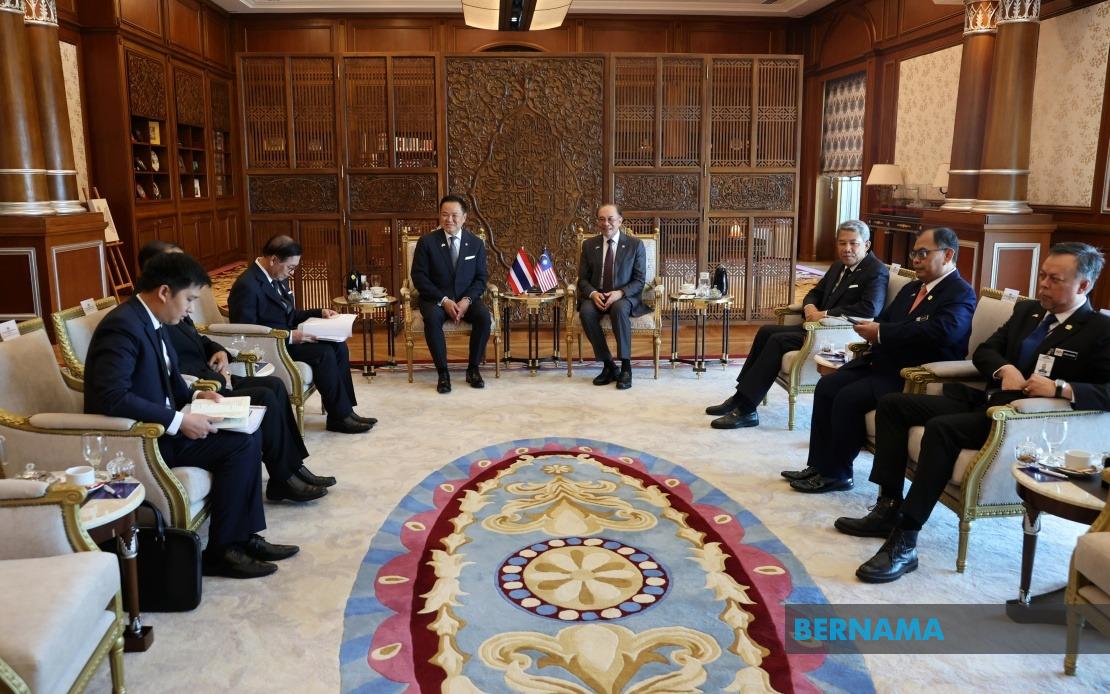
Malaysia has restated its diplomatic stance on the Myanmar crisis, with Prime Minister Datuk Seri Anwar Ibrahim emphasising that engagement and dialogue represent the most viable path forward for resolving the nation's political turmoil. Speaking during a joint media appearance with visiting Thai Prime Minister Anutin Charnvirakul in Putrajaya on Thursday, Anwar articulated Malaysia's conviction that Myanmar's future must be shaped by its own people, not imposed external solutions. This position reflects the broader Malaysian view that sustainable peace in Myanmar requires inclusive dialogue rather than coercive measures or isolated approaches.
Thailand's geographic and diplomatic proximity to Myanmar places it in a unique position within Southeast Asia to facilitate reconciliation efforts. Anwar specifically highlighted Thailand's potential as a trusted intermediary, given Bangkok's longstanding ties with Myanmar and its standing within ASEAN. The Prime Minister's remarks suggest Malaysia views Thailand not merely as a fellow ASEAN member, but as a nation with particular leverage and credibility that could unlock progress on a conflict that has resisted resolution since the February 2021 military coup. By publicly acknowledging Thailand's role, Anwar appears to be encouraging Bangkok to intensify its mediation efforts while also signalling Malaysia's willingness to support such initiatives.
The Myanmar crisis has occupied a central position in ASEAN's agenda for over three years, testing the regional bloc's ability to influence member states' internal affairs. ASEAN's Five-Point Consensus, agreed in April 2021 shortly after the military takeover, established a framework centred on dialogue, humanitarian assistance, and non-interference in Myanmar's sovereignty. However, implementation has stalled repeatedly due to the Myanmar military junta's resistance to meaningful political negotiations and persistent conflict between armed forces and resistance movements. Malaysia's reiteration of the engagement strategy underscores how difficult regional consensus remains, even as individual nations like Thailand seek to maintain channels of communication with all parties.
Anwar's comments arrive at a time when Myanmar's humanitarian crisis has deepened substantially, with armed conflict expanding beyond Yangon and Naypyidaw into rural regions and ethnic minority areas. Hundreds of thousands have been displaced, and civilian casualties continue mounting. For Malaysia and other ASEAN neighbours, the spillover effects—including refugee flows, transnational organised crime, and regional destabilisation—represent increasingly urgent concerns. Thailand, sharing a porous border with Myanmar, faces these pressures more acutely than most ASEAN members, managing both refugee populations and cross-border security challenges. This context makes Thailand's willingness to engage diplomatically particularly valuable for regional stability efforts.
During the same bilateral meeting, Anwar also addressed the Thailand-Cambodia border dispute, praising Anutin's commitment to maintaining peace and stability in that longstanding territorial disagreement. Malaysia's diplomatic posture reflects its role as a regional balancer, keen to support peaceful resolution of multiple regional conflicts simultaneously. By acknowledging Thailand's efforts on the Cambodia border while encouraging deeper engagement on Myanmar, Anwar positioned Malaysia as aligned with Bangkok's broader peacemaking agenda. The Malaysian government's emphasis on trusting regional leaders to resolve disputes through wisdom rather than external pressure demonstrates deference to the principle of non-interference that undergirds ASEAN's founding charter.
Anutin's visit marked his first bilateral trip to Malaysia since his reappointment as Thailand's Prime Minister in March 2026, signalling the importance both nations place on their bilateral relationship. The two-day official visit provided an opportunity for substantive discussions on regional security matters, bilateral trade and investment, and coordinated ASEAN positions. The emphasis on Myanmar in their public statements suggests this topic was central to their private discussions as well, indicating that both Bangkok and Kuala Lumpur see renewed urgency in pursuing diplomatic solutions. Malaysia's willingness to defer to Thailand's regional expertise on Myanmar hints at a division of labour within ASEAN, where different members take lead roles on different regional crises based on their proximity and influence.
The practical manifestation of Malaysia-Thailand cooperation came on the second day of Anutin's visit, with both prime ministers scheduled to officiate the opening of a critical cross-border infrastructure project. The jointly inaugurated road connecting the Immigration, Customs, Quarantine and Security (ICQS) Complex in Bukit Kayu Hitam, Kedah, with the Customs, Immigration and Quarantine (CIQ) Complex in Sadao, Thailand, represents more than mere logistical convenience. This border facility symbolises the deepening integration and cooperation between the two nations, facilitating smoother trade, movement of people, and coordinated border management. Enhanced cross-border infrastructure also improves both nations' capacity to address transnational challenges, including organised crime and human trafficking—issues exacerbated by Myanmar's instability.
Malaysia's diplomatic approach to Myanmar reflects a broader regional pattern wherein ASEAN members attempt to balance principle with pragmatism. The emphasis on engagement and allowing Myanmar to determine its own future acknowledges that military intervention or aggressive external pressure would violate ASEAN's non-interference doctrine and risk destabilising the entire region. Yet this measured approach has produced limited tangible progress, with the Myanmar junta consolidating control despite international isolation and facing increasing armed resistance from numerous insurgent groups. For Malaysia and Thailand, the challenge lies in sustaining diplomatic channels and encouraging dialogue without appearing complicit in the status quo or rewarding the military's intransigence.
The intersection of Malaysia's Myanmar policy with its broader Southeast Asian diplomacy reveals how interconnected regional security challenges have become. Border disputes between Thailand and Cambodia, Myanmar's internal conflict, refugee crises, and transnational organised crime all emanate from or interact with the Myanmar situation. By positioning itself as a supporter of Thailand's mediation efforts while maintaining independent diplomatic channels, Malaysia seeks to preserve regional cohesion while avoiding the appearance of taking sides in complex internal conflicts. Anwar's statements suggest Malaysia believes that sustained, patient engagement offers the only viable path to eventual resolution, even as that path remains unclear and potentially lengthy.
For Malaysian readers and Southeast Asian observers, the significance of Anwar's remarks extends beyond symbolic diplomatic gestures. Malaysia's economic interests in regional stability—encompassing trade routes, investment security, and workforce mobility—depend heavily on peaceful resolution of conflicts affecting its neighbours. Thailand's ability to influence Myanmar's trajectory matters directly to Malaysia's own security environment and economic prospects. By publicly endorsing Thailand's role as a mediator while committing Malaysia to supporting engagement-based approaches, Anwar signals continuity in Malaysia's regional foreign policy while acknowledging the particular strengths and vulnerabilities that different ASEAN members bring to the ongoing crisis. This nuanced diplomacy, combining rhetoric of regional unity with practical recognition of differentiated roles, characterises ASEAN's response to its most pressing contemporary challenge.

