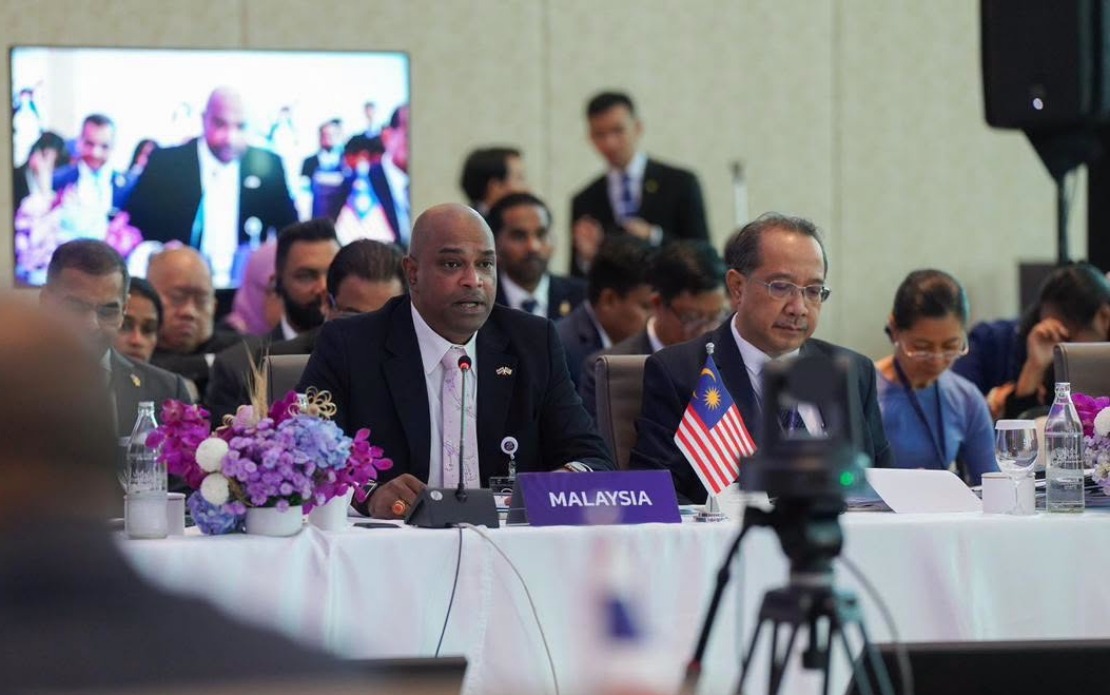
Malaysia has made a strong pitch for ASEAN nations to establish common frameworks for recognising workforce skills and professional qualifications, positioning the initiative as vital to the region's economic future. Speaking at the 14th ASEAN Plus Three Labour Ministers' Meeting in Bangkok, Thailand, Human Resources Minister Datuk Seri R. Ramanan outlined how standardised credential systems could unlock opportunities for the region's estimated 700 million workers to pursue careers beyond their home countries while meeting the increasingly complex demands of multinational employers.
The Malaysian position reflects growing anxiety across Southeast Asia about talent retention and workforce mobility. As competing economic blocs adopt protectionist measures and skills become the primary driver of national competitiveness, ASEAN leaders recognise that fragmented qualification systems place the region's workers at a disadvantage. A technician certified in Thailand may lack formal recognition in Vietnam, and vocational graduates from the Philippines struggle to prove equivalent competencies in Singapore. These barriers cost workers years of retraining and cost businesses millions in lost productivity from skills mismatches.
Ramanan identified three concrete pillars for regional action. First, ASEAN must jointly develop certification standards and harmonise Technical and Vocational Education and Training (TVET) qualifications across member states. This would create mutual recognition agreements allowing a certified electrician or nurse to work throughout the bloc without duplicative examinations. Second, the region should expand technology transfer initiatives and invest heavily in upskilling vocational instructors, ensuring trainers themselves remain current with global best practices. Third, ASEAN should establish centres of excellence in emerging sectors including artificial intelligence, electric and autonomous vehicles, and advanced robotics, positioning Southeast Asian workers to compete for high-value roles in industries worth trillions globally.
The inclusion of China, Japan and South Korea in these discussions signals Malaysia's strategic vision. These three economies dominate applied technology sectors where ASEAN workers aspire to employment, and their participation offers direct access to cutting-edge training methods and industry standards. By creating knowledge-sharing partnerships with these advanced economies, ASEAN can compress the innovation cycle, avoiding the traditional lag where Southeast Asian curricula trail global industrial practice by five to ten years. Japanese precision engineering standards, South Korean digital expertise, and Chinese manufacturing innovation become accessible benchmarks for regional training programmes.
For Malaysia specifically, this agenda serves multiple interests. As a middle-income nation with a maturing domestic labour market, Malaysia requires both upskilled workers for advanced manufacturing and service sectors, and pathways for lower-skilled citizens to upgrade qualifications. Harmonised ASEAN standards would allow Malaysian workers greater regional mobility while attracting talent from neighbouring countries with vetted, comparable credentials. The initiative also positions Malaysia as a thought leader on workforce development within ASEAN structures, enhancing its diplomatic influence in regional economic forums.
The broader context for this initiative reflects structural shifts in Southeast Asian economies. Manufacturing is migrating toward automation and specialisation, reducing demand for basic assembly-line labour while creating acute shortages of technicians, engineers and maintenance specialists. Simultaneously, service sectors from healthcare to information technology face recruiting challenges as demographics shift and education levels rise. Without harmonised skills frameworks, individual ASEAN nations will compete against each other for talent, bidding up wages without ensuring workers possess genuinely comparable capabilities. Unified standards would create genuine labour market integration, where regional companies can recruit confidently across borders.
Ramanan emphasised that this framework extends beyond administrative convenience or paper qualifications. He articulated a vision where ASEAN-certified skills carry genuine market value and employer trust, transforming regional credentials from second-tier certificates into benchmarks recognised by multinational corporations and international agencies. This distinction matters profoundly. A Malaysian vocational certificate currently carries limited weight in Tokyo or Seoul boardrooms. A credential earned through ASEAN-harmonised standards backed by Chinese, Japanese and South Korean validation would signal genuine competency to global employers, fundamentally shifting how international companies assess Southeast Asian talent.
The strategic timing reflects accelerating regional economic integration. ASEAN's collective economy exceeds US$3 trillion, yet labour mobility remains extraordinarily low compared to the European Union, MERCOSUR, or other integrated blocs. Workers cannot freely move between member states even when skills are desperately needed. Harmonised qualification recognition represents a practical step toward deeper economic integration without requiring comprehensive free movement agreements that remain politically sensitive in several member states.
Implementing this agenda presents substantial challenges. ASEAN members range from upper-middle to lower-income nations with vastly different training infrastructure and quality standards. Consensus-based decision-making, a defining feature of ASEAN processes, moves deliberately. Creating truly equivalent standards requires not just policy agreement but sustained investment in instructor development, equipment, and quality assurance mechanisms across a dozen countries with competing budget priorities. Powerful domestic constituencies including labour unions, training providers and nationalist politicians may resist frameworks perceived as diluting local control or admitting cheaper foreign labour.
Yet the economic imperative appears compelling. Southeast Asia cannot compete with developed economies through cost alone as China and India offer cheaper labour pools. Regional competitive advantage increasingly depends on reliable access to workers with sophisticated, verified skills. Without internal harmonisation, ASEAN risks fragmentation into separate labour markets, with workers trapped in lower-wage countries regardless of capability, while employers in advanced Southeast Asian economies struggle recruiting qualified staff. The Malaysian initiative acknowledges this reality and proposes a regional solution appropriate for a bloc that cannot replicate the institutional depth of the EU but must still generate competitive advantages.
The conversation also reflects rising awareness that workforce development cannot remain a purely domestic concern. In an interconnected manufacturing economy where a component made in Vietnam is assembled in Thailand and distributed from Singapore, skills gaps anywhere create inefficiencies everywhere. Investment in vocational excellence in lower-income ASEAN nations directly benefits manufacturers in higher-income members, creating shared interest in raising standards throughout the region. This recognition underpins Malaysia's framing of the initiative as collective regional advancement rather than charity or concession.
Moving forward, implementation will likely proceed through pilot projects and bilateral agreements before region-wide frameworks crystallise. Malaysia, with its relatively developed TVET infrastructure and central geographic position, may assume leadership in piloting harmonised certification with neighbours like Thailand and Vietnam. Success in these bilateral tests could create momentum for broader ASEAN adoption. Additionally, engagement with China, Japan and South Korea provides leverage against domestic resistance, as participating in global value chains increasingly requires adherence to international standards regardless of local preferences.
Ultimately, Malaysia's advocacy represents sophisticated regional leadership calibrated to Southeast Asia's development stage. By focusing on practical skills harmonisation rather than utopian free movement, by engaging wealthy northeast Asian partners who benefit from reliable Southeast Asian talent, and by framing the initiative in economic terms of competitiveness rather than liberal ideology, Ramanan has positioned an ambitious agenda as pragmatic necessity. The outcome will shape whether ASEAN's vast workforce becomes a collective regional asset or remains fractured into isolated national labour markets unable to realise their combined potential.

