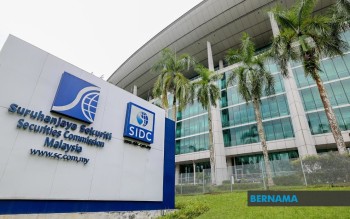
Malaysia is embarking on an ambitious strategy to attract Russian investors into its Islamic finance sector, signalling a significant shift in how the country intends to leverage its expertise in shariah-compliant financial services to deepen ties with emerging markets beyond traditional Middle Eastern partners. The government, working alongside the Securities Commission Malaysia, has outlined plans that extend far beyond simple capital attraction, instead positioning Islamic finance as a vehicle for broader economic and diplomatic engagement with Russia and the wider Central Asian region.
The Securities Commission has taken the lead in shaping this internationalisation agenda, with plans to conduct an exploratory mission to Central Asia scheduled for 2026 or 2027. This expedition represents more than a routine regulatory visit; it signals Malaysia's determination to understand market conditions, identify potential partners, and begin laying groundwork for a interconnected Islamic finance ecosystem that spans from Kuala Lumpur eastward to Moscow and beyond. Such a venture would require careful navigation of geopolitical sensitivities, yet Malaysia's neutrality and its standing as a respected Islamic finance authority provide strategic advantages in this regard.
Central to Malaysia's outreach has been recent interest from the Republic of Tatarstan, whose leadership expressed openness in May 2025 to adopting Malaysia's Islamic finance development model. This represents a validation of decades of Malaysian expertise in constructing shariah-compliant regulatory frameworks, developing sophisticated Islamic banking products, and building institutional capacity around Islamic financial services. For Russia, particularly its Muslim-majority regions like Tatarstan, such a partnership offers a pathway to modernise their financial systems while maintaining religious and cultural alignment.
Beyond direct investment attraction, Malaysia is positioning itself as an exporter of specialized knowledge and professional services. The Ministry of Finance has identified shariah advisory services, management consultancy, training programmes, and capacity-building initiatives as revenue-generating opportunities that can accompany any Russian or Central Asian engagement with Malaysia's financial ecosystem. This approach allows Malaysia to generate economic value even before large-scale capital flows materialise, creating networks and dependencies that can facilitate deeper future integration.
The groundwork for this Russian engagement has been laid methodically over recent years through high-level regulatory dialogue. The Securities Commission has conducted bilateral meetings with Russia's Central Bank in 2023 and 2025, establishing lines of communication with key decision-makers in Moscow's financial sector. Parallel engagement with the Saint Petersburg International Mercantile Exchange, one of Russia's principal commodity trading platforms, suggests Malaysia may be exploring opportunities to create Islamic finance mechanisms for commodity trading—an area of substantial interest to resource-rich Russia.
Malaysia's broader capital markets agenda provides institutional support for this Russian initiative. The Capital Market Masterplan 2026-2030 commits the Securities Commission to strengthening regulatory frameworks, fostering product innovation, and expanding international collaboration. Within this framework, Russian partnerships represent one pillar of a diversified internationalisation strategy designed to make Malaysia's financial infrastructure more globally competitive and less dependent on any single source of capital or investor base.
The timing of this initiative coincides with Malaysia's efforts to reinforce its position as the world's premier Islamic finance centre. With traditional Islamic finance hubs facing various competitive and regulatory pressures, Malaysia has seized the opportunity to expand its influence by offering countries without established Islamic finance infrastructure a comprehensive development model. This transformation of Malaysian expertise into an exportable commodity reflects sophisticated understanding of how financial services can become a soft power tool and a driver of sustained competitive advantage.
For Russian investors and financial institutions, Malaysia's Islamic finance ecosystem offers access to a mature, well-regulated market with sophisticated products and extensive international networks. Russia's own Muslim population and its geopolitical interests in Central Asia create natural demand for halal-compliant financial services. By partnering with Malaysia, Russian entities can tap into established distribution networks, learn from proven regulatory models, and position themselves as gateways to Islamic finance for their domestic and regional constituencies.
Malaysia's government has been careful to emphasise that it welcomes Russian investment subject to domestic legal requirements and international standards, a formulation that acknowledges both Malaysia's openness and its commitment to maintaining regulatory integrity amid geopolitical complexities. This balanced approach is essential for maintaining investor confidence among Malaysia's existing stakeholder base while signalling reliability to potential Russian partners who may themselves face international scrutiny.
The strategic vision outlined by the Ministry of Finance extends beyond transactional finance relationships. By framing Malaysian Islamic finance as a bridge connecting Russian investors with global markets within a framework aligned with Maqasid al-Shariah—the objectives and principles underlying Islamic jurisprudence—Malaysia is positioning its financial ecosystem as serving moral and ethical purposes alongside commercial ones. This philosophical framing appeals to investors and policymakers who view Islamic finance not merely as a niche product category but as an alternative paradigm for sustainable, inclusive, and transparent financial systems.
For Southeast Asia more broadly, Malaysia's Russian initiative carries implications beyond bilateral relations. The region's Islamic finance development remains concentrated in Malaysia and Indonesia, with other countries playing supporting roles. By successfully establishing Russian engagement pathways, Malaysia could catalyse demand for Islamic finance expertise across Central and Eastern Europe, creating spillover opportunities for the broader Southeast Asian financial services industry and potentially positioning the region as a bridge between Asian and European financial ecosystems.
The success of this strategy will depend on Malaysia's ability to maintain regulatory credibility, demonstrate tangible benefits to Russian partners, and navigate international relations with sophistication. Should the initiative gain traction, it could reshape the geography of Islamic finance, extending its reach far beyond traditional strongholds and creating new networks of Muslim-majority and Muslim-friendly jurisdictions connected through shariah-compliant financial infrastructure. This transformation, while still in early stages, may ultimately prove as significant for Malaysia's economic future as the original development of its Islamic banking sector four decades ago.

