Malaysia's government is pursuing formal diplomatic mechanisms to address financial claims arising from its decision to cancel the procurement of the Naval Strike Missile system from Norway's Kongsberg Defence & Aerospace AS, according to Defence Minister Datuk Seri Mohamed Khaled Nordin. The announcement underscores the complexity of navigating defence procurement disputes when substantial sums and international contractor relations are at stake, particularly for a Southeast Asian nation balancing fiscal constraints with security commitments.
The Defence Ministry and Foreign Ministry have jointly notified the Norwegian government of Malaysia's negotiating position and intended strategy, establishing an official framework for addressing what could become a protracted legal and financial dispute. This coordinated approach signals that the Malaysian government views the matter as sufficiently serious to warrant ministerial-level engagement across multiple government agencies, rather than relegating it to lower-level contract management discussions.
Khaled Nordin emphasised the government's commitment to achieving resolution through structured channels, explaining that the early issuance of formal notices was deliberately calculated to set the stage for productive negotiations. By formally engaging the Norwegian government itself, Malaysia is effectively requesting that it act as an intermediary between the Defence Ministry and Kongsberg Defence & Aerospace, leveraging diplomatic relationships to facilitate settlement discussions that might otherwise remain adversarial or protracted.
The Foreign Ministry has specifically requested Norway's assistance in facilitating and mediating between Malaysian defence officials and the contractor, recognising that bilateral government engagement can often unlock pathways to compromise that direct commercial negotiations might not achieve. This approach acknowledges a diplomatic reality: countries often prove more willing to pressure their domestic companies toward reasonable settlements when official relations and broader bilateral interests are factored into the equation.
The compensation claim emerged following Malaysia's decision to terminate its commitment to acquire the Naval Strike Missile system, a sophisticated anti-ship weapon platform manufactured by Kongsberg Defence & Aerospace. Terminating such contracts typically triggers contractual obligations for compensation or damages, particularly if the cancellation occurs after substantial development work, tool preparation, or manufacturing commitments have been made by the contractor. The precise magnitude of Malaysia's financial exposure remains undisclosed publicly, though cancellation penalties for advanced defence systems routinely run into hundreds of millions of ringgit.
The Public Accounts Committee subsequently convened for a special briefing from the Defence Ministry on the matter, indicating that parliamentary oversight bodies are monitoring the government's handling of this contentious issue. The PAC's subsequent recommendation that the government strengthen its mitigation and diplomatic efforts while protecting fiscal sovereignty reflects concern that Malaysia might face excessive financial penalties if negotiations proceed poorly or if the dispute escalates to international arbitration.
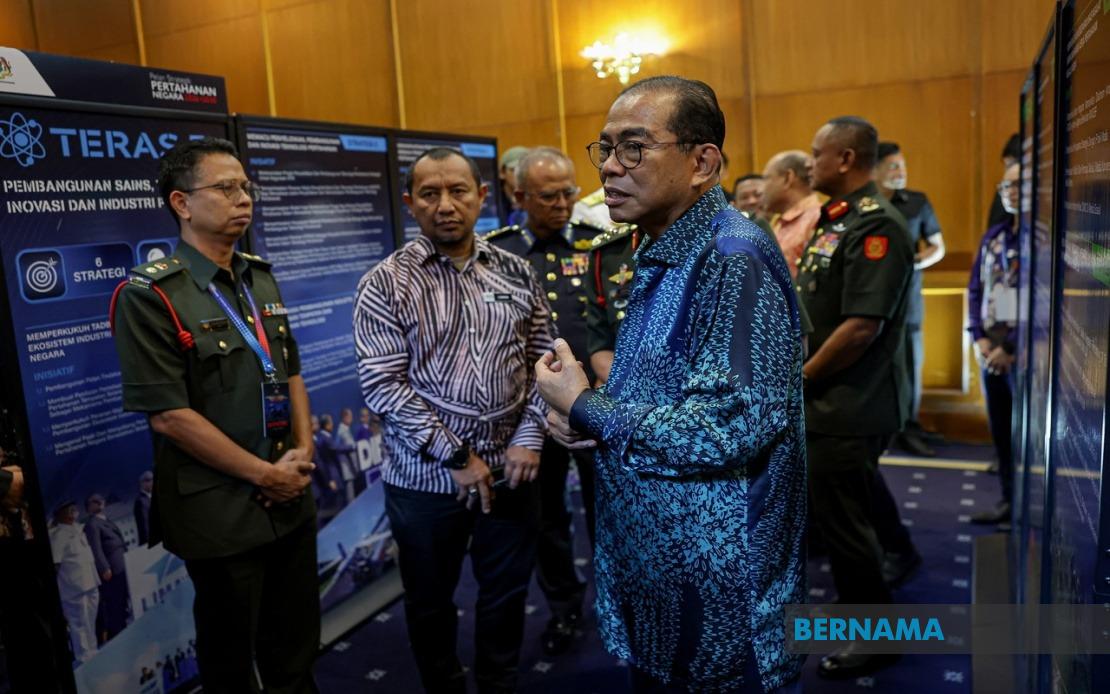
The timing of the announcement coincided with the launch of the National Defence Strategic Plan and Defence Capability Blueprint 2026-2030, suggesting the government is attempting to reframe its missile procurement decision within a broader strategic context. Chief of Defence Force General Tan Sri Malek Razak Sulaiman's attendance at the launch ceremony indicates that the military hierarchy has accepted or endorsed the government's direction on this matter, at least publicly. The strategic plan likely reflects Malaysia's evolving assessment of its naval and air defence requirements, which may have prompted a reassessment of whether the Norwegian missile system aligned with updated defence priorities or budgetary realities.
For Malaysian defence procurement specialists, this episode illustrates the substantial financial and diplomatic complexity inherent in terminating advanced weapons system contracts with established defence contractors. Unlike simple commercial transactions, defence procurement involves intellectual property, technology transfer protocols, manufacturing exclusivity, and broader geopolitical relationships that complicate straightforward cancellations. A contractor like Kongsberg Defence & Aerospace cannot simply redirect cancelled work elsewhere or recoup costs through alternative customers in the same manner that a commercial supplier might.
The diplomatic approach pursued by Malaysia—enlisting Norway as a facilitator rather than confronting the contractor directly—reflects sophisticated international practice in defence disputes. Norway, as a NATO member and established defence exporter, has structural interests in maintaining reasonable relationships with military buyers throughout the world, and it may therefore exert constructive pressure on Kongsberg Defence & Aerospace to negotiate settlements that avoid expensive international arbitration or litigation.
Regionally, Malaysia's approach carries implications for other Southeast Asian nations contemplating similar procurement decisions or facing contract termination disputes with international defence suppliers. The precedent of leveraging bilateral government relationships and diplomatic channels may prove instructive for countries seeking to manage the fiscal consequences of defence policy shifts without incurring the maximum possible financial penalties.
The government's emphasis on mitigation strategies and fiscal sovereignty protection signals awareness that international arbitration over defence contracts can produce unpredictable outcomes. By pursuing negotiated settlement through diplomatic channels before disputes potentially escalate to arbitration, Malaysia aims to retain greater control over the final financial and political outcome, even if such settlements require accepting some level of compensation payment.
As these negotiations proceed behind closed doors through official diplomatic channels, the broader question of why Malaysia cancelled the Naval Strike Missile procurement in the first place remains the subject of speculation. Whether the decision reflected changing strategic assessments, budgetary constraints, technological concerns, or shifts in maritime policy priorities will likely remain undisclosed officially, though the new defence capability blueprint may offer subtle clues about Malaysia's recalibrated security requirements and procurement philosophy for the coming decade.

