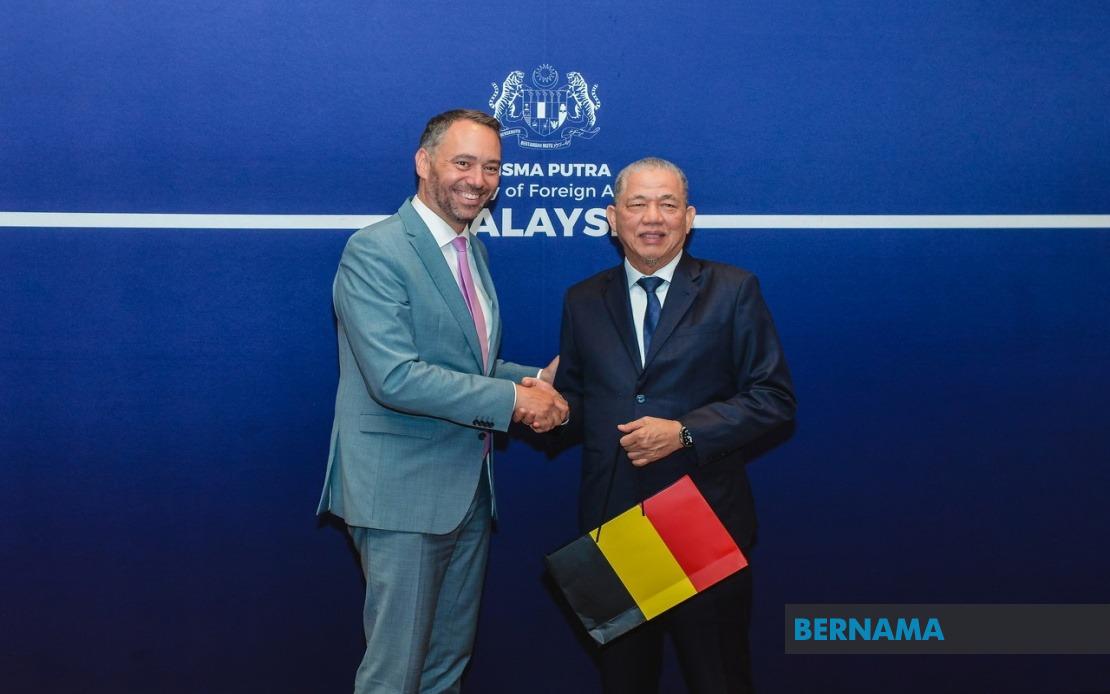
Malaysia has given Belgium firm assurances that the South China Sea will remain open to international maritime traffic, reflecting Kuala Lumpur's effort to calm international concerns about potential disruptions to one of the world's most critical shipping corridors. Deputy Prime Minister Datuk Seri Fadillah Yusof conveyed this message during bilateral talks with Belgium's Deputy Prime Minister and Minister of Foreign Affairs, Maxime Prévot, who arrived for a two-day working visit on Thursday, marking his first trip to Malaysia since taking office in February 2025.
The undertaking by Malaysia carries particular weight given the heightened global anxieties over maritime security and the prospect of shipping lanes falling into turmoil similar to incidents witnessed in the Strait of Hormuz. Prévot had specifically inquired about Malaysia's assessment of regional security dynamics and sought clarity on whether comparable disruptions could jeopardise commerce through Southeast Asian waters. Fadillah responded by emphasizing that ASEAN member states remain steadfast custodians of open navigation and freedom of transit, principles foundational to the bloc's regional philosophy.
Fadillah's pledge underscores a delicate diplomatic balancing act that Malaysia and other ASEAN nations must perform. The South China Sea remains contested territory with overlapping territorial claims involving multiple powers, yet it handles approximately one-third of global maritime trade and serves as an economic lifeline for the region and beyond. Malaysia's reassurance to a major European trading partner such as Belgium demonstrates the country's awareness that economic confidence in regional stability directly influences foreign direct investment and bilateral commerce.
Beyond maritime security, the bilateral engagement revealed ambitious plans to deepen Malaysia-Belgium cooperation across multiple dimensions. The two governments discussed opportunities to expand ties through governmental channels, business partnerships, and grassroots people-to-people engagement. Prévot specifically committed Belgium to enhancing bilateral trade volumes, signalling the European nation's interest in tapping into Southeast Asian markets and establishing deeper economic footprints in the region.
A noteworthy development emerged regarding Belgium's travel advisory for Sabah. Prévot indicated willingness to revisit the advisory's current status, suggesting potential recalibration based on updated security assessments. Such adjustments hold significance for Malaysian tourism and business sectors, particularly in East Malaysia, where travel warnings can substantially impact visitor arrivals and investment confidence. This willingness reflects Belgium's recognition of improvements in regional stability and Sabah's attractiveness as a destination.
Halal standards emerged as an unexpected but strategically important area of cooperation. Belgium proposed that Malaysia's established halal ecosystem and certification frameworks be examined as potential models for broader adoption across the European Union. This development positions Malaysia as a thought leader in Islamic commerce and regulatory standards, potentially opening doors for Malaysian halal businesses to expand into European markets. The proposal also suggests growing European recognition of Malaysia's expertise in this specialised field, an advantage that could translate into competitive advantage for Malaysian companies operating in the continent.
Energy transition and technological cooperation formed another pillar of the discussions. With Malaysia undertaking significant energy transformation initiatives and Belgium possessing substantial expertise in renewable technologies and advanced materials, both nations identified compelling opportunities for knowledge exchange and investment. Belgian companies expressed interest in contributing to Malaysia's energy transition agenda, while Malaysia signalled openness to leveraging European technological innovations to accelerate its own sustainability objectives. This alignment reflects broader global trends toward decarbonisation and the search for partnerships that can accelerate the green energy transition.
The timing of Prévot's visit carries geopolitical undertones beyond the bilateral dimension. Belgium's engagement with Malaysia reflects European Union interest in deepening ties with Southeast Asia and positioning European stakeholders as reliable partners within a region facing competing influence from various global powers. By securing Malaysian assurances regarding freedom of navigation and exploring expanded economic collaboration, the EU is effectively hedging its bets and maintaining strategic relevance in an increasingly complex Indo-Pacific landscape.
For Malaysia, such high-level diplomatic engagements serve multiple objectives simultaneously. They reinforce Malaysia's positioning as a responsible custodian of regional stability, capable of providing reassurance to international partners concerning maritime security and economic prospects. They also create platforms for advancing Malaysian interests in European markets and attracting investment from developed economies seeking to diversify their regional exposure and reduce concentration risk in supply chains.
The dialogue reflected broader ASEAN philosophy regarding regional governance and international engagement. Rather than aligning firmly with any particular global power, Malaysia and its regional peers present themselves as neutral arbiters committed to maintaining the existing international rules-based system while resisting coercive behaviour. This posture appeals to multiple international stakeholders, from Western democracies to Asian powers, all seeking reassurance that Southeast Asia will remain open and accessible.
Looking forward, the outcomes of this bilateral engagement will likely set templates for Malaysia's broader engagement with other European and Western partners. As global tensions persist and competition for strategic positioning intensifies, Malaysia's ability to offer reassurance while simultaneously advancing national economic interests becomes increasingly valuable. The discussions on halal standards, energy cooperation, and maritime security demonstrate that there exist multiple channels through which Malaysia can engage constructively with developed nations, benefiting from technological expertise and market access while maintaining its independent foreign policy orientation. The success of this engagement may well influence how future interactions with other important partners evolve in the months ahead.

