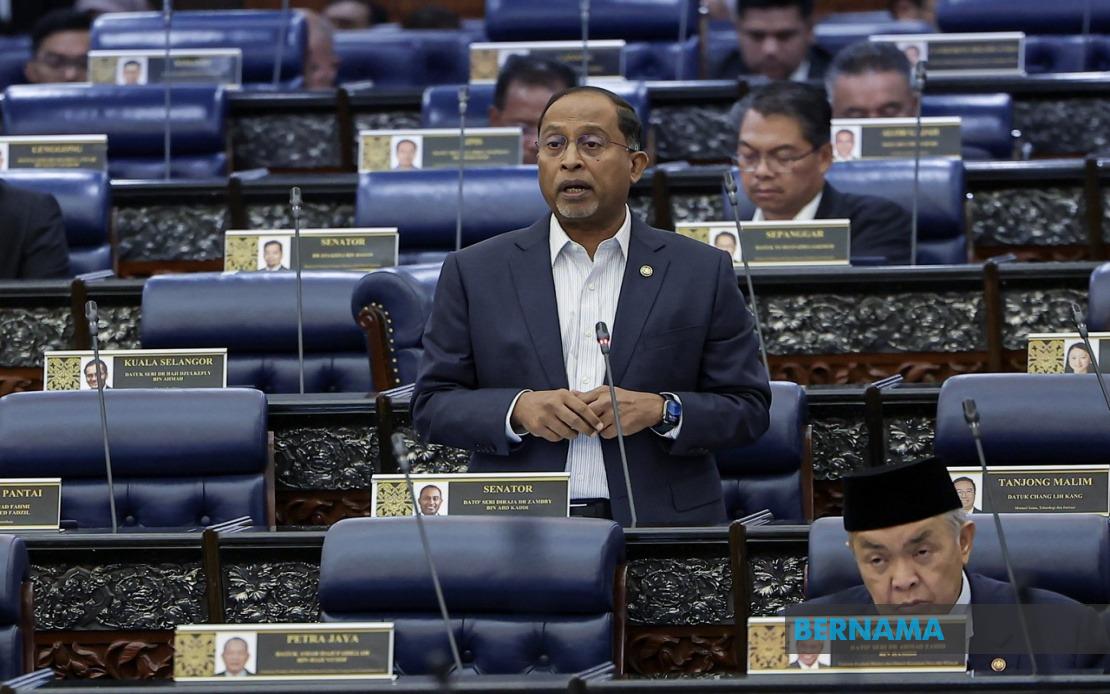
Malaysia's approach to university research is undergoing a significant transformation. Higher Education Minister Datuk Seri Dr Zambry Abd Kadir has outlined a comprehensive strategy to bridge the persistent gap between academic discovery and commercial application, acknowledging that translating research into marketable products remains a critical weakness in the country's innovation ecosystem. This shift represents a recognition that publishing papers alone does not drive economic growth or competitive advantage, and that Malaysia must do more to capture the commercial potential of work conducted within its higher education institutions.
The fundamental change involves reorienting how universities measure research success. Rather than prioritising publication counts and academic citations—the traditional metric that has guided research institutions globally—MOHE is now emphasising whether research outcomes can be directly applied by industry partners and whether they generate tangible economic returns. This represents a departure from decades of academic culture where prestige flowed from peer-reviewed journal articles rather than from products reaching market. The shift demands a recalibration of incentive structures, funding mechanisms, and institutional priorities across the entire public university system.
Over the past three years, the Ministry has documented concrete results from this new strategic direction. More than 200 products developed by public universities have been successfully commercialised, while 286 distinct technologies and knowledge assets were licensed to industry partners between 2022 and 2024. These figures suggest that the ecosystem changes are beginning to yield measurable outcomes, though they must be contextualised within the enormous research output of Malaysia's public institutions. The licensing activity indicates growing engagement between universities and commercial entities, though the question remains whether these arrangements represent breakthrough innovations or incremental improvements to existing products.
The research universities have been positioned as the primary engines for this transformation. Five institutions have been designated as focal points for world-class research in strategically important sectors including food security, green technology, artificial intelligence, and advanced engineering. These priority areas reflect Malaysia's economic interests and regional competitive positioning. Food security addresses ASEAN's vulnerability to global supply disruptions, while green technology and AI represent growth sectors where Malaysia seeks to establish indigenous capabilities rather than remaining dependent on foreign solutions or technology licensing.
To operationalise this strategic vision, MOHE has established several concrete mechanisms designed to facilitate researcher-industry engagement. The Malaysian Laboratories for Academia-Business Collaboration (MyLAB) creates dedicated physical and organisational spaces where university researchers and company professionals can work jointly on problems identified by industry. The Industry Matching Grant programme provides financial incentives for projects that bring academic and commercial partners together, reducing barriers to initial collaboration. The Public-Private Research Network (PPRN) explicitly aims to wean universities off government funding dependency by channelling research resources from commercial sources that inherently demand practical applicability.
Measurement and accountability have been integrated into this framework through the Malaysian Research Assessment, which evaluates the effectiveness of the entire R&D and innovation pipeline. Rather than relying solely on publication metrics, this assessment mechanism incorporates measures of commercialisation, industry partnerships, and economic impact. This represents a significant cultural shift for universities accustomed to assessment systems that reward research output volume rather than application outcomes. The transition poses challenges for academics whose career progression has traditionally depended on publication records, requiring parallel changes to promotion criteria and research evaluation standards.
The commercial licensing data points to a maturing technology transfer ecosystem, though Malaysia's performance remains modest compared to leading innovation economies. Universities in countries like Singapore, South Korea, and Switzerland routinely generate thousands of licensing deals annually, often from concentrated portfolios of high-value intellectual property. Malaysia's 286 licenses over three years suggests a still-developing capacity for identifying, protecting, and commercialising intellectual property. This indicates opportunities for substantial growth as universities become more sophisticated in managing their research assets and as industry becomes more actively engaged in identifying university innovations worthy of commercialisation investment.
The planned University Research, Innovation and Investment Summit scheduled for September represents an escalation of these efforts. By explicitly bringing investors into dialogue with researchers and university administrators, the Ministry aims to reduce the distance between knowledge creation and capital deployment. Investors increasingly recognise that breakthrough innovations often originate in academic settings, but they require mechanisms to identify promising research early and negotiate access before competitors recognise the opportunity. Summit participants from venture capital firms, angel investors, and established corporations will encounter a curated portfolio of university research deemed commercially promising, potentially catalysing new venture formation and licensing arrangements.
For Malaysia's position within the broader Asian technology ecosystem, these moves signal an effort to transition from a nation focused on manufacturing and service provision toward one generating indigenous intellectual property. Singapore has successfully executed this transformation, building a thriving ecosystem where research from the National University of Singapore and Nanyang Technological University underpins venture formation and attracts multinational R&D investment. Thailand and Indonesia are pursuing comparable strategies through different institutional arrangements. Malaysia's ability to execute similar transitions will significantly influence whether the country can sustain middle-income growth or risks stagnation if unable to develop knowledge-intensive sectors.
The emphasis on reducing government funding dependence carries both strategic and fiscal dimensions. Strategically, funding linked to commercial viability aligns research with market demand and ensures that taxpayer investment generates returns. Fiscally, as government budgets face pressures from demographic shifts and infrastructure requirements, shifting research financing toward industry partnerships and venture capital reduces demands on the public purse. However, this approach risks undersupporting research in areas where market incentives are weak but social benefits are substantial, such as tropical disease research or environmental remediation technologies. Successful implementation requires maintaining some proportion of publicly-funded blue-sky research alongside commercially-oriented work.
The transformation also requires navigating genuine tensions between academic and commercial cultures. Universities value open knowledge sharing, long research timelines, and freedom to pursue intellectual curiosity. Industry prioritises proprietary advantage, rapid development cycles, and solutions to defined problems. Managing these tensions productively demands institutional structures that permit researchers to maintain academic identity while engaging commercially, protect university culture against corruption by commercial pressures, and ensure that commercialisation activities strengthen rather than cannibilise fundamental research capacity. Institutions successfully managing these tensions typically maintain clear separation between funded research activities and core academic functions.
For multinational corporations seeking to locate R&D activities in Southeast Asia, Malaysia's strengthened university-industry ecosystem represents an increasingly attractive proposition. Rather than establishing entirely internal research units, firms can tap university expertise, benefit from government incentives for innovation partnerships, and leverage trained researcher networks developed through collaborative projects. This creates virtuous cycles where company presence attracts researcher talent, which strengthens university programmes, which further enhances the ecosystem's attractiveness to additional investment. Singapore's success in this domain demonstrates the potential, while Malaysia's larger population and lower costs offer distinct competitive advantages if execution proves effective.
The road ahead requires sustained institutional commitment and cultural evolution across universities, government, and industry. Success will be measured not merely by licensing counts or commercialisation statistics, but by whether the ecosystem generates innovations that achieve genuine commercial success, establish new companies, create high-value employment, and position Malaysian firms competitively in global markets. The initiatives announced represent coherent strategic thinking and appropriate policy instruments. Execution—translating these mechanisms into everyday practice within conservative academic institutions while simultaneously reshaping researcher incentives—represents the genuine challenge ahead.