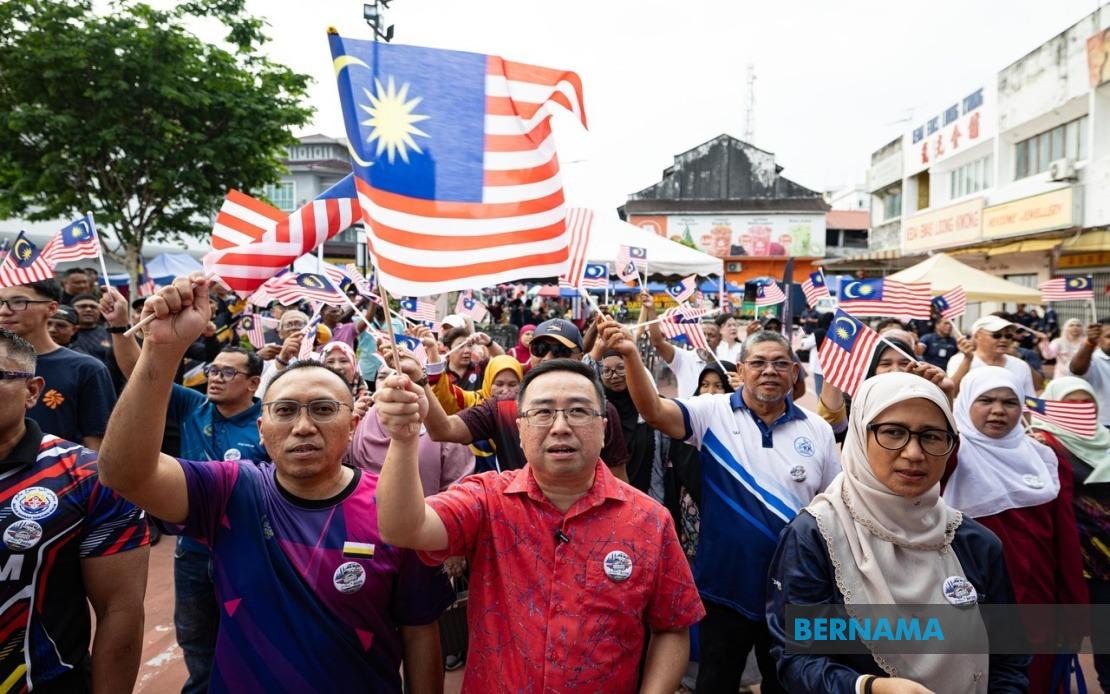
Malaysia must evolve beyond divisive identity politics towards a more mature conception of nationhood that embraces all citizens regardless of ethnicity, faith or political persuasion, according to Science, Technology and Innovation Minister Datuk Chang Lih Kang. Speaking on the eve of Malaysia Day, the Tanjong Malim MP argued that lasting national unity cannot be forged through coercion, fear or enforced silence, but rather through genuine inclusion and equitable institutions that inspire citizens to see themselves as stakeholders in the nation's future.
In an article titled "This Is My Country, Too!", Chang outlined a vision where institutional strength, professional standards and impartial justice form the bedrock of a cohesive society. He contended that good governance serves as the most effective protection against societal fragmentation, operating as a counterweight to the weaponisation of sensitive identity markers for political mobilisation. The minister's intervention arrives at a time when Malaysian public discourse remains deeply fractured along communal lines, with race and religion frequently deployed as mobilising tools in electoral competition.
Chang highlighted the dangers of instrumentalising identity for parochial political advantage, warning that such tactics artificially construct zero-sum competition between communities and breed perceptions of unfair distribution of national resources. This framing reflects growing concerns among moderate political voices about the sustainability of Malaysia's multi-ethnic social contract when politics increasingly relies on heightened communal consciousness and constructed grievances. The minister's emphasis on proportionality and context-sensitive governance suggests a deliberate pushback against hardline approaches that treat all infractions with uniform severity.
A particularly significant aspect of Chang's argument concerns how Malaysia approaches patriotic expression and national symbols. He advocated for treating the Jalur Gemilang with respect while simultaneously cautioning against enforcement regimes so stringent that honest mistakes become treated as grave offences warranting arrest or public condemnation. This nuanced position acknowledges that excessive policing of patriotic display can paradoxically undermine genuine attachment to national symbols, transforming them into objects of apprehension rather than pride among ordinary citizens.
The minister argued that intent, context and proportionality must inform official responses to alleged transgressions. Rather than reflexively pursuing punitive measures, government agencies should prioritise education and guidance when addressing genuine errors, reserving stringent consequences for deliberate provocations designed to inflame communal sentiment. This distinction between inadvertent mistakes and calculated incitement represents a sophisticated approach to managing pluralistic societies where diverse expressions inevitably occur.
Chang's position draws conceptual support from recent remarks by Sultan Perak Sultan Nazrin Shah at the 8th World Conference on Islamic Thought and Civilisation, which distinguished between unity organically developed from shared belonging versus unity mechanically imposed through coercive state apparatus. This philosophical framework positions voluntary, consensus-based cohesion as more durable and legitimate than unity achieved through restriction of expression or threat of sanctions. For Malaysian readers familiar with ongoing debates about freedom of speech and limits of state authority, this represents an important articulation of how governance can operate without surrendering security concerns.
The minister's vision repositions cultural, linguistic, religious and traditional diversity not as threats requiring management but as assets that strengthen the national fabric when citizens genuinely experience equal belonging. This reframing challenges zero-sum conceptualisations where accommodation of minority rights appears as dilution of majority prerogatives. Instead, Chang suggests that genuine inclusion produces more resilient national unity than exclusionary frameworks that privilege particular communities whilst marginalising others.
Looking forward to future Merdeka observances, Chang reoriented the national conversation away from volumetric declarations of patriotic sentiment towards substantive questions about what Malaysia is creating for succeeding generations. This shift from performative nationalism towards foundational governance reflects recognition that sustainable social cohesion requires institutional legitimacy rather than emotional rhetoric. For Southeast Asian observers, Malaysia's trajectory in navigating these tensions carries implications beyond its borders, particularly for regional democracies similarly grappling with identity fragmentation and institutional trust deficits.
The minister explicitly rejected the instrumentalisation of state machinery for narrow political ends, cautioning against heavy-handed deployment of government institutions in service of particular factions. This admonition addresses documented concerns about selective application of laws and administrative actions across Malaysian politics, where accusations of partisan enforcement erode public confidence in institutional impartiality. His emphasis on leadership accountability and restraint signals awareness that those occupying positions of power must consciously resist institutional capture and competitive temptations.
Chang's intervention contributes to an emerging moderate discourse within Malaysian politics that privileges institutional robustness, procedural fairness and inclusive citizenship over identity-based mobilisation strategies. This positioning acknowledges that long-term national stability depends less on winning short-term electoral advantage through communal polarisation than on building institutions that command multi-community trust and confidence. As Malaysia navigates demographic change, economic pressures and evolving generational expectations, the minister's articulation of mature nationhood offers an alternative vision to increasingly fractious identity politics that threatens social cohesion.

