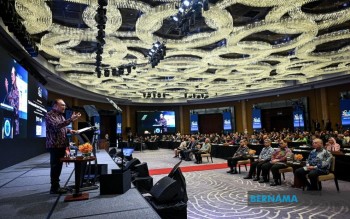
Prime Minister Datuk Seri Anwar Ibrahim has underscored Malaysia's urgent need to develop sovereign cloud infrastructure capable of protecting critical national security data and personal information, even as the country positions itself as an attractive destination for international digital investment. Speaking at the 39th Asia-Pacific Roundtable in Kuala Lumpur, Anwar articulated a strategic vision that balances defensive data governance with openness to global economic participation—a tension increasingly defining digital policy across Southeast Asia.
The impetus for this position stems from what Anwar characterised as problematic provisions within the US Cloud Act, which grants American technology companies legal authority to access data stored on their platforms regardless of where those servers are physically located or which country's citizens the information belongs to. The Prime Minister pointed specifically to statements made by US President Trump asserting that companies incorporated in the United States retain extraterritorial data access rights, a claim that has triggered security concerns among governments worldwide concerned about the vulnerability of their sensitive information to foreign intelligence and commercial interests.
Anwar's proposed solution—a domestically controlled sovereign cloud architecture—reflects growing global recognition that critical information assets require institutional safeguards beyond standard encryption or contractual protections. By establishing firewalls and data infrastructure entirely within Malaysian jurisdiction and governance, the government would theoretically prevent foreign legislation from being applied to sensitive national and personal records. This approach represents a middle path between complete digital isolationism and unconditional reliance on foreign cloud providers, allowing Malaysia to retain control over information while acknowledging practical limitations inherent in interconnected global systems.
The Prime Minister's remarks underscore a fundamental tension in contemporary digital governance. Malaysia, like most Southeast Asian economies, depends increasingly on cloud computing for everything from financial services to healthcare delivery to government administration. Yet this dependence creates vulnerability to foreign policy decisions and legislation that national governments cannot control. The sovereignty question is not merely technical; it is political, involving questions about which authorities can compel disclosure of sensitive information and under what circumstances.
Crucially, Anwar did not present the sovereign cloud initiative as a move toward digital protectionism or isolation from the global economy. Instead, he framed it as compatible with Malaysia's continued attraction of substantial investments from the United States, China, and Germany—the three largest sources of foreign capital for digital infrastructure in the region. This distinction matters because it signals that Malaysia seeks technological autonomy without economic retrenchment, a positioning that distinguishes Malaysian policy from more nationalist approaches adopted elsewhere.
The Prime Minister also addressed the darker dimensions of digital openness, acknowledging that the same platforms enabling free information exchange have become vectors for abuse. Political manipulation, economic fraud, personal harassment, and sexual exploitation increasingly occur through social media and digital channels, requiring government intervention that respects democratic principles whilst protecting citizens. Anwar indicated that legitimate safeguards targeting such abuses would form part of Malaysia's broader digital governance framework, suggesting that data protection extends beyond state security concerns to encompass individual safety and dignity online.
Anwar's emphasis on protecting young people from digital abuse reflects a particular Southeast Asian vulnerability. The region has among the world's highest rates of youth social media engagement combined with relatively limited digital literacy education and cyber-safety infrastructure. Malaysia, with a young population and rapidly expanding internet penetration in rural areas, faces specific challenges in managing the intersection of digital opportunity and digital risk.
The conversation around sovereign cloud also illuminates Malaysia's broader positioning as a middle power seeking influence through regional cooperation rather than individual great-power status. Anwar explicitly rejected framing Malaysia as a great power, instead emphasizing that the country's strength derives from collective ASEAN capacity and coordinated regional strategy. This positioning has practical implications for digital governance; a regionally coordinated approach to data protection and digital infrastructure could create economies of scale and negotiating power that individual Southeast Asian nations cannot achieve alone.
The implications for Malaysian businesses and citizens are substantial. A sovereign cloud infrastructure could enhance data security for government services, banking systems, and sensitive corporate records whilst potentially creating new opportunities for domestic technology companies. However, implementation would require significant capital investment, technical expertise development, and ongoing maintenance—costs that would ultimately be distributed across the economy through taxation or service pricing.
Anwar's proposal also arrives amid broader ASEAN discussions about digital sovereignty and technology independence. Singapore, Indonesia, and Thailand have pursued related initiatives, though with varying approaches reflecting different strategic priorities and economic structures. A Malaysian sovereign cloud would need to address questions of interoperability with neighbouring economies, particularly for cross-border digital commerce and finance, which are crucial to Southeast Asian integration.
The timing of these remarks reflects intensifying geopolitical competition between the United States and China for technological dominance in Asia. By proposing a third path—neither dependent on American cloud infrastructure nor subordinate to Chinese technology platforms—Malaysia attempts to preserve autonomy while maintaining partnerships with both powers. Whether this balancing act proves sustainable will depend on Malaysia's ability to build technically robust domestic alternatives whilst continuing to attract international investment.
Ultimately, the sovereign cloud initiative represents recognition that digital infrastructure has become as strategically important as physical infrastructure, requiring national investment and protection. For Malaysia and Southeast Asia more broadly, the challenge lies in developing technological self-sufficiency without sacrificing the economic benefits of global digital integration. Anwar's framing suggests policymakers understand this complexity, though translating the vision into operational reality will demand sustained political commitment and substantial technical investment over coming years.

