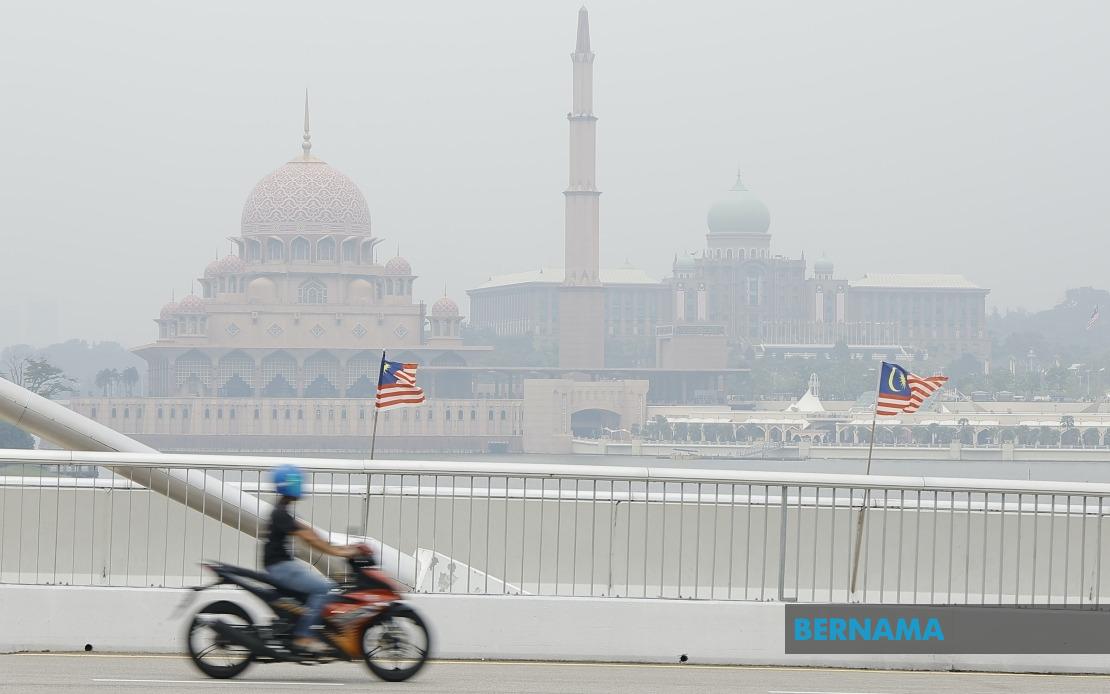
Malaysia's approach to managing seasonal haze has been largely reactive, addressing air pollution crises as they unfold rather than anticipating them. But an environmental researcher at Universiti Sultan Zainal Abidin is now making a compelling case for a fundamental shift in strategy. Associate Professor Dr Azman Azid, director of UniSZA's Besut Campus and a specialist in air quality and environmental research, argues that the country possesses sufficient data to construct an early warning system that could detect haze risks days in advance, potentially sparing thousands from respiratory distress.
The impetus for change is underscored by recent health data that reveals the human cost of Malaysia's delayed response mechanisms. During epidemiological weeks 32 and 33, the Ministry of Health documented a stark 259 per cent increase in asthma cases, rising from 61 to 219 incidents. This surge represents more than statistical fluctuation—it signals that as air quality deteriorates across the nation, the demand on healthcare facilities and the suffering of vulnerable populations intensifies markedly. Yet current monitoring practices remain focused primarily on tracking the Air Pollutant Index and observing smoke movement, metrics that essentially describe conditions already unfolding rather than those on the horizon.
What Azman proposes is a methodological transformation in how Malaysia conceptualises its relationship with haze. Rather than operating within a cycle of monitoring, warning, and acting after pollution events materialise, the country should embrace a framework centred on forecasting, prevention, protection, and action. This shift mirrors how meteorological institutes successfully predict rainfall and typhoons; Malaysia's weather forecasting infrastructure already demonstrates the nation's technical capability in this domain. The missing piece is the parallel development of a haze forecasting system calibrated to public comprehension and designed to provide decision-makers with actionable intelligence before pollutants saturate the atmosphere.
The technical foundation for such a system already exists within Malaysia's existing institutional and data collection apparatus. Azman identifies the essential components: hotspot data revealing active fire locations, satellite imagery capturing smoke plumes in real time, meteorological information detailing wind patterns and atmospheric conditions, air trajectory models estimating the origin and projected movement of pollution masses, current API readings, documented respiratory disease patterns, and fine particulate measurements of PM2.5. Integrating these datasets through advanced modelling would enable forecasters to predict whether specific regions will experience hazardous air quality within 48 to 72 hours—a window substantial enough for meaningful preparation.
The practical benefits of such forecasting extend throughout the healthcare and education sectors. Hospitals and clinics could elevate their preparedness protocols in anticipation of incoming patient surges, stockpiling essential medications and scheduling additional respiratory specialists. Schools would gain the capacity to reschedule outdoor activities and sports days for periods of cleaner air, protecting children whose developing lungs face particular vulnerability to pollution. Rather than discovering that air quality has deteriorated only after residents have already breathed contaminated air, institutions could position themselves to shield populations from exposure before it occurs.
Crucially, Azman emphasises that an early warning mechanism need not displace existing API systems. Instead, the two frameworks should operate in complementary roles. The API provides essential information about current air quality conditions—a real-time snapshot of what people are breathing today. An early haze warning system addresses a different temporal dimension: it reveals what communities will be breathing tomorrow and next week. From a risk management perspective, the current approach of waiting for API readings to spike before mobilising responses amounts to therapeutic intervention after the pathological process has already commenced. A predictive overlay would reposition Malaysia from constantly extinguishing fires to preventing ignition.
The challenge extends beyond Malaysia's borders, however. The nation sits within a regional atmospheric system where air and smoke demonstrably disregard political boundaries. Malaysia's involvement in the ASEAN Agreement on Transboundary Haze Pollution reflects institutional recognition of this reality, yet Azman contends that regional cooperation has remained largely superficial, confined to data sharing and reactive measures. Meaningful progress would require deepening collaboration in areas such as coordinated fire source mapping, transnational smoke trajectory forecasting, technology sharing arrangements, and pre-arranged firefighting assistance protocols that activate before regional crises crystallise. The current model of sharing information after fires are already burning falls short of what atmospheric physics demands.
Domestically, Azman stresses that technological and forecasting advances must be accompanied by stronger enforcement of existing regulations governing open burning, bush fires, and peatland management. Legal frameworks already exist, but their implementation has historically lacked the stringency necessary to deter violations or prevent fires from igniting in the first place. The conversation about early warning systems must therefore nest within a broader discourse about land use practices, agricultural methods, and industrial activities that generate the hotspots that satellites detect and models predict.
Addressing Malaysia's haze vulnerability ultimately requires integration across multiple domains. Technology provides the forecasting capability; diplomacy enables regional coordination; enforcement ensures that regulations function as intended. Yet even comprehensive implementation cannot guarantee that every smoke plume will be deflected from Malaysian airspace—atmospheric systems possess inherent unpredictability, and neighbouring countries' domestic policies remain beyond direct Malaysian control. Nevertheless, the combination of improved fire prevention, sophisticated atmospheric modelling, coordinated regional action, and more sustainable land use patterns could substantially reduce both the frequency and severity of pollution episodes while protecting public health in the shorter term.
The transition from crisis management to crisis prevention represents a maturation in how Malaysia engages with its environmental challenges. Most nations initially respond to problems only after they become visible and urgent; the advance lies in developing the institutional capacity and political will to address threats before they fully materialise. For a country where seasonal haze has become almost normalised, where residents expect respiratory difficulties and schools plan closures around pollution forecasts, the shift toward genuine prevention offers a pathway toward a fundamentally different relationship with air quality and public health.

