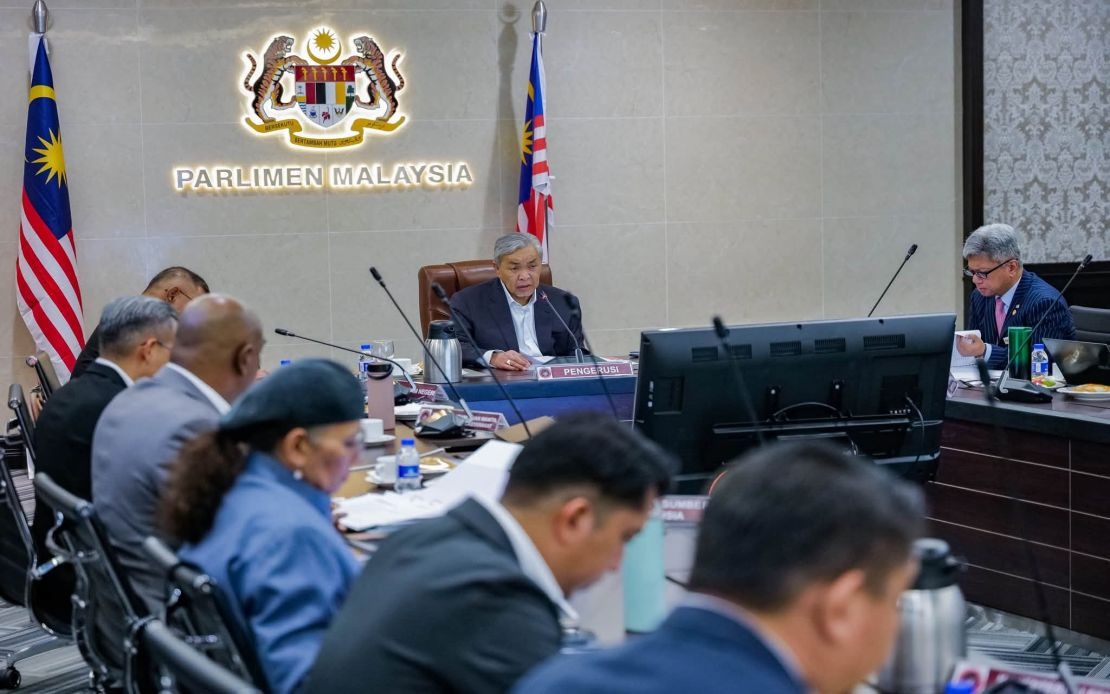
Deputy Prime Minister Datuk Seri Dr Ahmad Zahid Hamidi has underscored the critical importance of fortifying Malaysia's approach to refugee management, arguing that the nation must navigate the tension between fulfilling its humanitarian commitments and protecting its borders and sovereignty. Speaking after chairing a high-level committee meeting focused on refugee affairs, Ahmad Zahid contended that as global displacement reaches unprecedented levels, Malaysia cannot afford to treat this issue as merely an administrative concern but must embed security considerations into every policy decision.
The context for Ahmad Zahid's remarks is stark. Across the globe, an estimated 122 million people have been forcibly displaced through conflict and widespread instability, creating one of the most pressing humanitarian challenges of our time. This figure encompasses refugees fleeing war zones in the Middle East, Eastern Europe, and Africa, as well as those displaced internally within their home countries. The sheer scale of this crisis has placed immense pressure on neighbouring countries in Southeast Asia, where Malaysia's geographic location and relative stability have made it a destination for displaced populations seeking safety and opportunity.
Malaysia's position is particularly delicate. As a nation that has hosted significant refugee populations over decades—including Vietnamese boat people during the Cold War and more recently Rohingya from Myanmar—the country has built up institutional experience in managing displaced communities. However, this responsibility has grown increasingly complicated as the numbers swell and international support structures remain inadequate. Ahmad Zahid's intervention signals that the government is conscious of these mounting pressures and is attempting to recalibrate policy frameworks accordingly.
The Deputy Prime Minister's emphasis on "national security" and "sovereignty" reflects broader regional and global conversations about the intersection of refugee policy and border management. Several countries in Southeast Asia have struggled with balancing open humanitarian responses against domestic concerns about resource strain, social integration, and security vetting procedures. Ahmad Zahid appears to be signalling that Malaysia will not abandon its humanitarian traditions but will simultaneously strengthen gatekeeping mechanisms to ensure that refugee flows are properly managed and monitored.
A significant initiative discussed at the High-Level Committee on the Management of Refugees and Asylum Seekers was the implementation and review of the Refugee Registration Document, commonly known as the DPP. This credential serves as a foundational tool for identifying and tracking refugees within Malaysia's territory, allowing authorities to distinguish between registered asylum seekers and undocumented migrants. Strengthening this system is crucial for security purposes, as it enables background checks and ongoing monitoring while simultaneously providing refugees with documentation that can facilitate access to services and legal protection.
Equally important are ongoing efforts to clarify guidelines governing refugees' access to education and healthcare. These sectors present genuine administrative challenges, as schools and hospitals must balance the humanitarian imperative to provide care with concerns about capacity, funding, and legal frameworks. By streamlining these guidelines and ensuring they are legally compliant, the government aims to prevent ad hoc decisions that might create inconsistencies or expose authorities to legal challenges. Better coordination between health and education ministries, as well as with immigration and security agencies, should theoretically reduce bottlenecks and improve service delivery while maintaining proper oversight.
The reference to ensuring decisions are "guided by the interests of the people" carries particular weight in Malaysia's political context. Refugee populations, particularly larger communities such as the Rohingya, have occasionally become subjects of domestic political debate, with some segments of the population expressing concerns about competition for resources, employment, or housing. Ahmad Zahid's framing suggests that the government recognises these sensitivities and is positioning its refugee policy as one that prioritises Malaysian citizens' welfare whilst maintaining international humanitarian standards.
For Malaysia and other Southeast Asian nations, this balancing act has become increasingly urgent. The region hosts millions of displaced persons, including substantial populations in Thailand, Indonesia, and Bangladesh, yet lacks the international support that developed nations sometimes receive. The Myanmar crisis alone has generated over a million refugees and internally displaced persons, many of whom have sought shelter across borders. Malaysia's approach to managing these populations therefore sets a precedent that influences how other countries in the region formulate their own policies.
The institutional architecture that Ahmad Zahid references—the High-Level Committee structure and coordinated policy frameworks—suggests a recognition that refugee management cannot function effectively if scattered across multiple agencies without clear coordination. In practice, this means that immigration authorities, security services, healthcare providers, educators, and social services must work in concert to process asylum claims, prevent fraud, deliver services, and identify individuals who pose genuine security threats. This coordination is particularly challenging in Malaysia's federal system, where responsibilities are divided between national and state authorities.
Looking forward, the challenge for Malaysian policymakers will be ensuring that enhanced security measures do not become barriers that effectively prevent genuine refugees from obtaining protection. Overly stringent vetting procedures or restrictive access to services can inadvertently push refugee populations towards informal economy participation or underground networks, potentially undermining the very security objectives that such measures are designed to protect. Conversely, insufficient safeguards could allow individuals with questionable backgrounds to integrate into communities with inadequate monitoring.
The global refugee crisis shows little sign of abating. Ongoing conflicts in Ukraine, Syria, Yemen, and Afghanistan continue generating displacement, while climate change and economic collapse in certain regions threaten to create new waves of forced migration. Malaysia's decision to revisit and strengthen its refugee framework appears prescient, positioning the nation to handle potential future increases in asylum applications whilst maintaining public confidence in the integrity of its immigration system. Ahmad Zahid's emphasis on this dual commitment—humanitarian responsibility alongside security protection—captures the essential tension that will define refugee policy in Southeast Asia for years to come.

