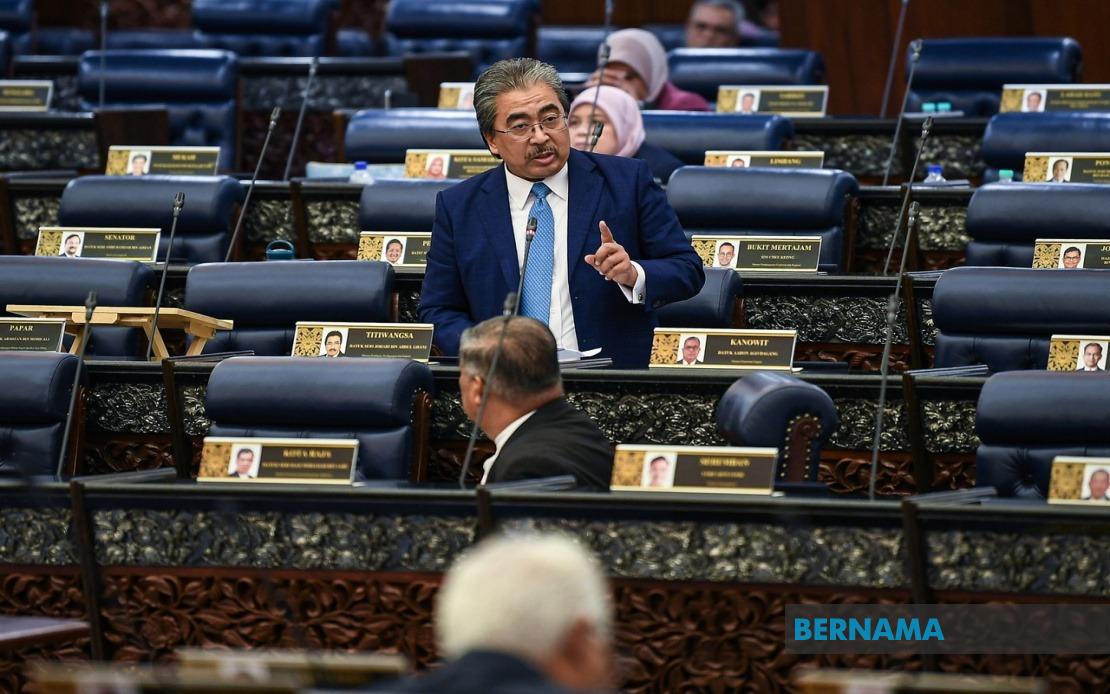
Malaysia is moving to establish a comprehensive mechanism barring the importation of goods manufactured using forced labour, positioning itself to meet stricter international trade compliance standards demanded by major trading partners. Investment, Trade and Industry Minister Datuk Seri Johari Abdul Ghani unveiled the initiative during parliamentary proceedings, signalling the government's commitment to addressing labour rights concerns that have increasingly influenced global trade relationships and market access.
The initiative stems from the government's acknowledgement that Malaysia currently lacks specific legal frameworks or regulatory mechanisms to prevent the entry of forced-labour-produced goods into its markets. This regulatory gap has exposed the country to scrutiny from trading partners, particularly the United States, which has intensified its focus on labour standards compliance as part of its broader trade enforcement strategy. The absence of such protections contradicts the expectations of Malaysia's major trading partners and risks isolating Malaysian exporters from lucrative markets that now demand evidence of ethical supply chains.
To address this challenge, the government has formally established the Inter-Agency Task Force on Forced Labour, headquartered within Johari's ministry. This collaborative structure brings together multiple government agencies reflecting the complexity of the issue. The task force includes representation from the Ministry of Finance, the Ministry of Foreign Affairs, the Ministry of Home Affairs, the Ministry of Human Resources, and the Ministry of Transport, each contributing sector-specific expertise to the policy development process.
Beyond the core ministries, the task force draws on specialised agencies with direct enforcement capacity. These include the Attorney-General's Chambers, which provides legal guidance; the Royal Malaysian Customs Department, responsible for border enforcement; the Malaysian Border Control and Protection Agency; the Royal Malaysian Police; the Malaysian Investment Development Authority, which works with foreign investors; and the Malaysian External Trade Development Corporation, which supports exporters. This breadth of participation underscores the government's recognition that combating forced labour requires coordinated action across law enforcement, trade facilitation, and development sectors.
The timing of Malaysia's initiative reflects immediate pressure from US regulatory investigations. On June 2, 2026, the United States released preliminary findings from a sweeping investigation into 60 countries, assessing their compliance with forced labour import restrictions. Malaysia was identified among 54 nations that lack specific legal measures to restrict the entry of such goods, placing it in a vulnerable position relative to trading competitors who have already embedded such protections into their legal frameworks. Six other countries were found to possess relevant laws but failed to enforce them adequately, indicating that legislative existence alone provides insufficient protection against US scrutiny.
The US investigation encompasses two distinct strands that carry different implications for Malaysian trade policy. The forced labour investigation is described as nearly completed, with preliminary indications of consequences for non-compliance. The US has communicated that after July 24, it intends to impose an indicative tariff of 10 per cent on Malaysia specifically related to forced labour concerns. This tariff would add significant costs to Malaysian exporters and potentially disrupt supply chains, particularly affecting sectors reliant on time-sensitive delivery to US markets.
Simultaneously, a separate US investigation into market access issues remains ongoing. This investigation addresses broader trade barriers and market opportunities, separate from the forced labour dimension but equally consequential for Malaysia's trade relationship with the United States. The coexistence of these parallel investigations suggests that Malaysia faces a complex agenda in satisfying US trade expectations, with multiple fronts requiring attention and coordination.
The threatened 10 per cent tariff represents a concrete economic consequence that Malaysia's policymakers cannot ignore. For a country heavily dependent on trade and whose manufacturing sector serves global supply chains, such tariffs would ripple through the economy, affecting exporters' competitiveness and potentially triggering job losses in affected industries. The symbolic importance of the tariff also matters: it would signal to Malaysia's other trading partners that the country remains non-compliant with emerging international standards on labour practices, potentially inviting similar measures from other nations.
Malaysia's situation reflects a broader global shift in trade enforcement priorities. Developed nations, particularly the United States under renewed trade policy scrutiny, increasingly view labour standards and supply chain ethics as legitimate trade concerns rather than purely humanitarian matters. This evolution reflects consumer pressure in developed markets, corporate responsibility initiatives, and geopolitical considerations regarding which countries meet international norms. For Southeast Asian nations like Malaysia, which position themselves as integration points in global supply chains, alignment with these emerging standards has become essential for market access.
The government's task force approach suggests a recognition that Malaysia must move quickly to develop both substantive legal reforms and operational enforcement capacity. Creating the mechanism is only the first step; translating it into effective border enforcement, ensuring customs officials can identify forced-labour products reliably, and establishing clear procedures for rejecting such goods all require detailed planning and resource allocation. The involvement of the Attorney-General's Chambers indicates that legislative amendments may be necessary to create statutory authority for these enforcement actions.
Beyond the immediate US tariff threat, Malaysia's move addresses broader competitive considerations within regional trade networks. Countries that demonstrate robust labour compliance frameworks may attract investment from multinational corporations increasingly sensitive to reputational risks associated with supply chain labour violations. By establishing such mechanisms now, Malaysia positions itself as a reliable partner for companies seeking to maintain ethical supply chain credentials while manufacturing in Southeast Asia.
For Malaysian businesses, the initiative carries dual implications. In the short term, those exporting to the United States face urgency in demonstrating compliance or risk tariffs retroactively applied or suspended operations. Longer term, those integrated into global supply chains will benefit from operating in a regulatory environment that aligns with international expectations, potentially enhancing their competitiveness and market access. The mechanism also creates compliance obligations for importers sourcing from overseas, requiring due diligence procedures to verify that imported goods were not produced through forced labour, adding operational complexity but also risk management value.
The July 24 deadline creates an artificial but real pressure point. Whether Malaysia can substantively demonstrate compliance through newly created mechanisms in this timeframe remains uncertain. The US may be willing to defer tariff implementation conditional on demonstrated progress, or it may proceed with the threatened tariffs while allowing Malaysia to seek tariff reductions upon proving compliance. Either way, Malaysia's window for action has closed significantly, making the task force's work a time-sensitive priority with substantial economic consequences riding on its execution.