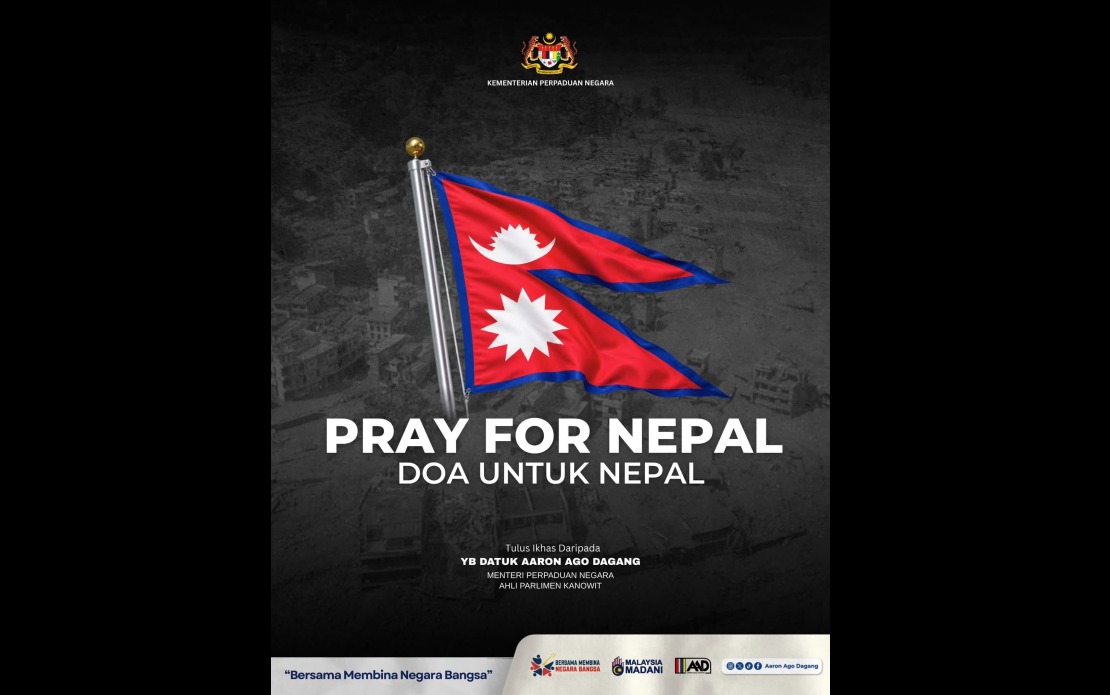
The Malaysian government has swung into action following a devastating flood disaster that struck Nepal's Rasuwa district, with authorities racing to account for dozens of citizens believed to be in the affected area. Minister of National Unity Datuk Aaron Ago Dagang has publicly expressed his sorrow over the calamity, calling on Malaysians to join him in prayers for the safety and well-being of the Nepali population grappling with the humanitarian crisis.
In an official statement released through social media on Wednesday, Datuk Aaron underscored Malaysia's solidarity with Nepal during what he characterised as an exceptionally challenging period. Beyond the immediate concern for Nepali victims, his remarks highlighted the government's parallel concern for the Malaysian diaspora, with the minister specifically praying for the safety of all Malaysians currently in Nepal and expressing hope that they would be located and reunited with their families and the relevant authorities as quickly as possible.
The urgency of the situation became evident when the Foreign Ministry disclosed that 57 Malaysians remained uncontactable following the major flood event that devastated the region. This tally, released as of 11 pm on August 27, was compiled from reports submitted by concerned family members, friends, and employers who had lost contact with their relatives and colleagues in Nepal. The figure underscores the scale of the challenge facing Malaysian authorities attempting to verify the welfare of citizens scattered across an affected area with damaged communications infrastructure.
Responding to the mounting crisis, Prime Minister Datuk Seri Anwar Ibrahim issued direct instructions to all relevant government departments to immediately commence identification and contact operations targeting Malaysians impacted by the flooding. These directives were channelled through the National Security Council and the Ministry of Foreign Affairs, two agencies positioned to coordinate the country's international disaster response and consular operations respectively. Such swift governmental mobilisation reflects Malaysia's established protocols for citizens caught in foreign emergencies and the premium placed on consular protection.
The coordination between Malaysia's diplomatic apparatus and crisis management agencies demonstrates the integrated approach authorities are adopting to address what constitutes both a humanitarian crisis in a neighbouring nation and a potential consular emergency for Kuala Lumpur. The involvement of the National Security Council alongside the foreign ministry suggests that the scope of the response extends beyond standard consular assistance to encompass broader national security considerations and information-gathering operations.
For Malaysia, the Nepal floods underscore the inherent risks faced by its citizens working, studying, or travelling abroad, particularly in countries prone to natural disasters. The region's geographic and climatic vulnerability to seasonal flooding means that such catastrophes, while devastating, are not unprecedented. However, each major incident prompts renewed examination of how Malaysian missions abroad maintain updated registries of nationals and how quickly communication networks can be restored following infrastructure damage.
The situation also reflects broader patterns of Malaysian engagement with Nepal, where significant communities of workers, students, and tourists maintain presence. Many are employed in hospitality, education, and other service sectors, while others are pursuing higher education at Nepali universities. The unaccountable 57 individuals likely represent a cross-section of this diaspora, scattered across different locations within the affected region and potentially cut off from conventional communication channels by widespread damage to mobile networks and internet infrastructure.
Datuk Aaron's invocation of prayer and solidarity serves a dual purpose in Malaysian political communication—it acknowledges the humanitarian dimension of the disaster while simultaneously reassuring the domestic audience that the government is attentive to citizen welfare abroad. Such expressions of sympathy are particularly significant in Malaysia's multi-religious context, where carefully calibrated language around international disasters helps maintain social cohesion by demonstrating inclusive concern for all affected parties.
The government's rapid mobilisation of its security and diplomatic machinery reflects lessons learned from previous regional disasters. Malaysia has established mechanisms for rapid response following the 2004 Indian Ocean tsunami, the 2015 Nepal earthquakes, and other transnational crises that have affected its nationals. These institutional frameworks enable faster identification of affected citizens and more coordinated communication with international partners and local authorities in affected countries.
As rescue and recovery operations proceed in Nepal, the focus for Malaysian authorities remains bifurcated between supporting the broader humanitarian response and ensuring that all unaccounted citizens are located. The Foreign Ministry's public disclosure of the 57 uncontactable individuals represents a deliberate transparency measure intended to solicit additional information from the public while signalling governmental engagement with the crisis. This approach encourages Malaysians with knowledge of missing persons to contact authorities proactively, thereby expanding the information pool available to rescue coordination efforts.
The coming days will prove critical in determining the ultimate outcome for Malaysian nationals in Nepal. As communication infrastructure is gradually restored and rescue operations intensify, authorities expect that contact with many of the unaccounted individuals will be re-established. However, the acknowledgement of 57 missing persons also implicitly confronts the possibility that some may have been caught directly in the flooding or its immediate aftermath, underscoring the human stakes involved in natural disasters affecting densely populated regions with limited early warning systems.

