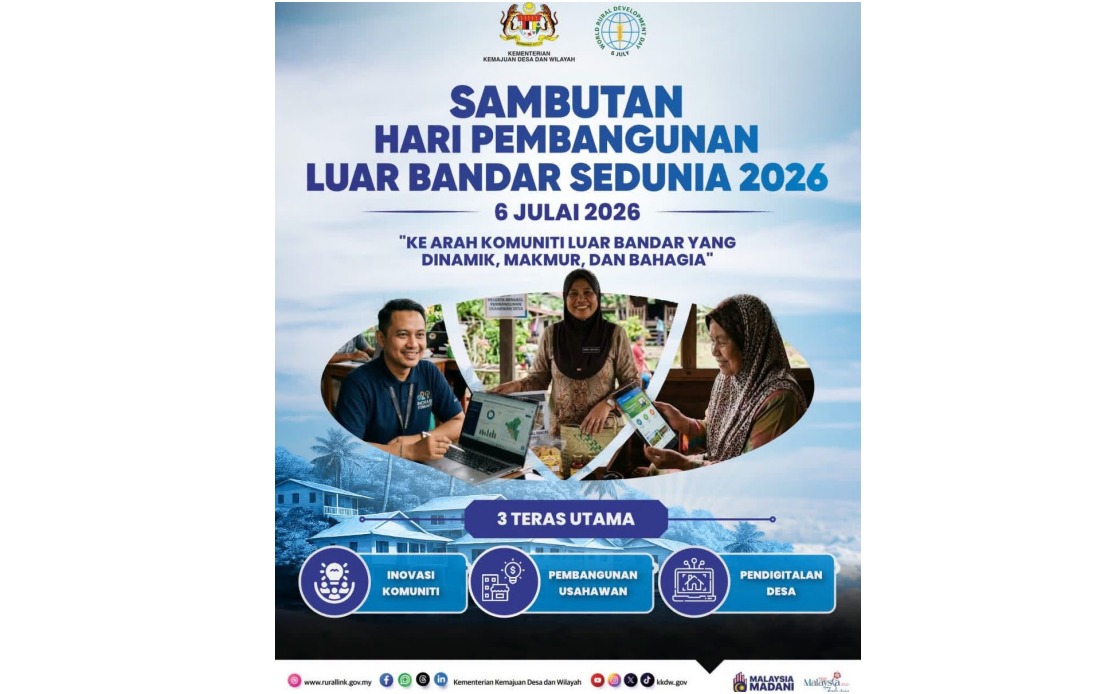
Malaysia is making history by hosting its inaugural World Rural Development Day celebration on July 6, positioning itself among the first wave of nations to formally observe the newly established international commemoration. The event takes place at Tun Abdul Razak Stadium in Jengka, near Maran in Pahang, with Deputy Prime Minister and Minister of Rural and Regional Development Datuk Seri Dr Ahmad Zahid Hamidi set to officiate the proceedings. This milestone reflects growing governmental attention to rural communities, which form a substantial portion of Malaysia's population yet often face developmental disparities compared to urban centres.
The United Nations General Assembly officially designated July 6 as World Rural Development Day in September 2024, deliberately choosing this date to commemorate the establishment of the Centre on Integrated Development for Asia and the Pacific (CIRDAP), an organisation instrumental in advancing regional development initiatives. The global community first observed this commemorative day on July 6, 2025, and Malaysia has now aligned itself with this international calendar, beginning official celebrations from 2026 onwards. This synchronisation with global development movements signals Malaysia's commitment to international development frameworks and the broader Sustainable Development Goals agenda.
The overarching theme, "Toward Vibrant, Prosperous and Happy Rural Communities," encapsulates the government's vision for rural transformation beyond mere economic metrics. The Ministry of Rural and Regional Development (KKDW) has structured the celebration around three strategic pillars designed to address persistent rural challenges. Community innovation represents an acknowledgment that rural populations possess valuable indigenous knowledge and entrepreneurial potential that, when properly supported and resourced, can drive sustainable local development. Rural digitization addresses the persistent digital divide that has historically marginalised agricultural and rural communities from accessing e-commerce platforms, digital financial services, and information technology infrastructure essential for competing in a knowledge-based economy. The third pillar, rural entrepreneur development, recognises that job creation and economic resilience in rural areas depend on fostering a new generation of rural-based business leaders capable of establishing enterprises that retain wealth within their communities.
These three thrusts translate into concrete initiatives designed to tangibly expand economic participation among rural populations. By broadening economic opportunities, the government seeks to reduce rural-urban migration patterns that have depleted rural areas of young talent and human capital. Enhanced digital technology access fundamentally alters the competitive landscape for rural entrepreneurs, enabling direct market access to consumers nationwide and internationally without reliance on urban-based intermediaries. Empowering communities to adopt progressive attitudes and competitive practices represents a cultural shift, moving beyond traditional subsistence-oriented mindsets toward entrepreneurial orientations that generate surplus value and sustainable livelihoods.
The inaugural celebration incorporates several significant announcements and award ceremonies that reward exemplary rural development achievements. The Rural Aspiration Award MADANI recognises individuals and organisations demonstrating exceptional commitment to rural progress, while the Felda Plan Excellence Award honours outstanding performance within Malaysia's established Federal Land Development Authority schemes. The launch of the My Rural Insight Journal provides a platform for documenting rural development narratives and best practices, creating institutional memory and knowledge-sharing mechanisms for future initiatives. Announcement of Felcra Bhd's interim distributable profit distribution for the 2026 cycle demonstrates tangible benefits flowing to participating rural stakeholders, reinforcing the financial viability of established rural cooperative structures.
For Malaysian rural communities, this celebration carries particular significance given the sector's ongoing transition from primarily agricultural foundations toward more diversified economic bases incorporating agro-tourism, value-added agricultural processing, and rural services. Rural areas in Malaysia have historically experienced infrastructure deficits, limited access to quality healthcare and education, and restricted market linkages that constrain income generation. The deliberate focus on digitization addresses a critical vulnerability exposed during recent economic disruptions, demonstrating how rural populations lacking digital infrastructure and literacy face compounded disadvantages during crises. By emphasising innovation and entrepreneurship, the government implicitly acknowledges that sustainable rural prosperity cannot depend solely on land-based activities increasingly vulnerable to climate variability, commodity price fluctuations, and generational succession challenges.
The event's emphasis on linking rural development to the Sustainable Development Goals reflects Malaysia's international development commitments while grounding them in local contexts. The SDGs framework provides a universally recognised vocabulary for measuring progress on poverty alleviation, income inequality reduction, and environmental sustainability—domains where rural Malaysia requires substantial advancement. This explicit connection also signals that rural development constitutes a governmental priority worthy of international-standard accountability metrics, elevating rural policy beyond patronage-based approaches toward evidence-driven, results-oriented programming.
Public participation in the celebration carries symbolic weight beyond the immediate event, inviting rural communities themselves to engage with development narratives rather than remaining passive recipients of government initiatives. The exhibition booths operated by KKDW and partner agencies provide information channels through which rural residents can access details on available programmes, extension services, and support mechanisms. Such engagement opportunities, while seemingly modest, contribute toward building the social capital and institutional awareness necessary for rural populations to effectively utilise government resources and development initiatives.
Malaysia's hosting of this inaugural celebration positions the nation as actively engaged with contemporary international development discourse while demonstrating governmental prioritisation of rural constituencies whose votes and livelihoods remain central to national stability and prosperity. The timing and scale of the celebration suggest renewed political commitment to rural development, potentially signalling expanded budgetary allocations and policy attention directed toward addressing accumulated rural deficits across infrastructure, services, and economic opportunities in coming fiscal cycles.

