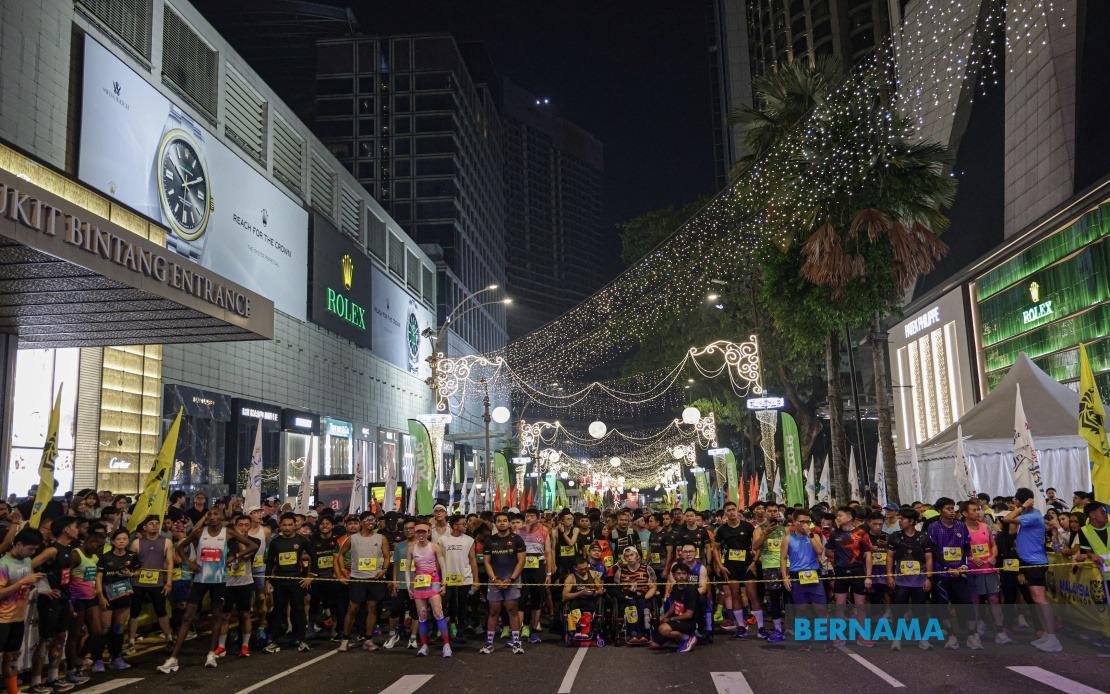
Malaysia Marathon 2026 commenced in the predawn hours of August 30, launching a landmark running event that brought together 25,000 local and international participants across four distinct categories. The spectacle, orchestrated to coincide with the nation's 69th National Day observance, began with the flag-off of the demanding 42-kilometer Full Marathon course at 12:30 am, officiated by Tourism, Arts and Culture Minister Datuk Seri Tiong King Sing at Pavilion Kuala Lumpur. This opening saw 2,000 elite and recreational runners commence their early morning journey through the capital, setting the tone for what would become a day-long celebration of athletics and national pride.
The staggered start times reflected the organisers' strategic approach to crowd management and route logistics. The 21-kilometer Half Marathon division attracted 8,000 competitors and began their course at 2:00 am, while the 10-kilometre category, scheduled for 3:30 am with 5,000 entrants, represented a middle ground for participants seeking a moderate endurance challenge. The 5-kilometre Fun Run, designed for broader public participation and family involvement, kicked off at 7:30 am with 10,000 runners, extending the event's reach beyond serious athletes to include casual fitness enthusiasts and community members seeking a celebratory morning run.
A significant departure from convention marked this inaugural event: the Kuala Lumpur City Centre (KLCC) precinct replaced the customary Dataran Merdeka as the finishing line for all four categories. This strategic repositioning showcases one of the capital's most iconic commercial and tourism landmarks, elevating the event's profile and providing a symbolic convergence point where national celebration meets urban modernity. The choice underscores efforts to position Kuala Lumpur as a major international events destination while integrating running culture into the city's broader tourism narrative.
The Full Marathon course presented substantial physical demands, particularly through its inclusion of a 900-metre elevation gain as participants traversed the Ampang-Kuala Lumpur Elevated Highway (AKLEH). This demanding topographical feature distinguishes Malaysia Marathon 2026 from typical urban marathon routes, testing competitors' cardiovascular capacity and mental resilience. The route's engineering, incorporating major urban thoroughfares including Jalan Bukit Bintang, Jalan Ampang, Jalan Sultan Ismail, Jalan Raja Chulan, and the SUKE highway system, required sophisticated coordination between race organisers and municipal authorities to balance athlete safety with minimal disruption to the broader urban ecosystem.
A defining novelty emerged through the participation of an HONOR-made humanoid robot competing in the 10-kilometre category alongside international runners from Japan, Nigeria, and other nations. This technological integration represents a creative fusion of sports innovation and artificial intelligence, capturing global attention and positioning the event at the intersection of athletics and emerging technology. The robot's participation signals Malaysia's aspirations to host forward-thinking sporting events that transcend traditional competition frameworks, appealing to tech-savvy audiences and demonstrating the nation's technological capabilities on an international platform.
Traffic management constituted a critical operational component, with Kuala Lumpur Police implementing phased road closures and diversions commencing the evening before the race and extending through the afternoon following its conclusion. The closure strategy encompassed major arterial routes and elevated highways essential to the marathon course, reflecting the logistical complexity of hosting such a large-scale event within a densely populated metropolitan area. Coordination between law enforcement, traffic management agencies, and event organisers aimed to minimise commuter disruption whilst ensuring participant safety and maintaining the event's operational integrity.
World Athletics accreditation provided international legitimacy and competitive credibility to the championship. This recognition from the global athletics governance body validated the event's organisational standards and course measurement protocols, enabling the competition to attract serious distance runners for whom officially-sanctioned courses and recognised times hold significant value. The accreditation also facilitates the event's integration into international running circuits, potentially establishing Malaysia Marathon 2026 as a recurring feature on the international athletics calendar.
The timing of Malaysia Marathon 2026 represents a deliberate strategic choice, embedding athletic competition within the National Day narrative. Running marathons inherently embodies endurance, perseverance, and collective national spirit—values aligned with independence celebrations. By positioning 25,000 participants as symbolic contributors to a national commemoration, the event elevates running beyond recreational fitness into a form of patriotic participation. This connection between athletic achievement and national observance resonates particularly in Southeast Asian contexts, where sporting events increasingly serve dual functions as entertainment and national identity reinforcement.
For Malaysian runners accustomed to smaller domestic events, hosting such a large-scale, internationally-recognised marathon represents an opportunity to compete against global standards without international travel. Southeast Asian running communities, traditionally underrepresented in major marathons, gain accessible entry to a World Athletics-sanctioned event, potentially nurturing talent pipelines and elevating the region's competitive athletics profile. The inclusion of international competitors from diverse nations transforms Malaysia Marathon 2026 into a cross-cultural sporting dialogue, positioning Kuala Lumpur as a welcoming destination for global running communities.
The event's scale—encompassing 25,000 participants across multiple distance categories—demonstrates growing mainstream interest in marathon running throughout Malaysia and the broader region. The breakdown of participant numbers, with the Fun Run attracting twice as many entrants as the Full Marathon, suggests that recreational running and community fitness engagement drive event participation more than competitive distance running. This democratisation of marathon participation extends running culture beyond elite circles, positioning marathons as accessible wellness activities for diverse demographic groups seeking structured fitness experiences and community connection.

