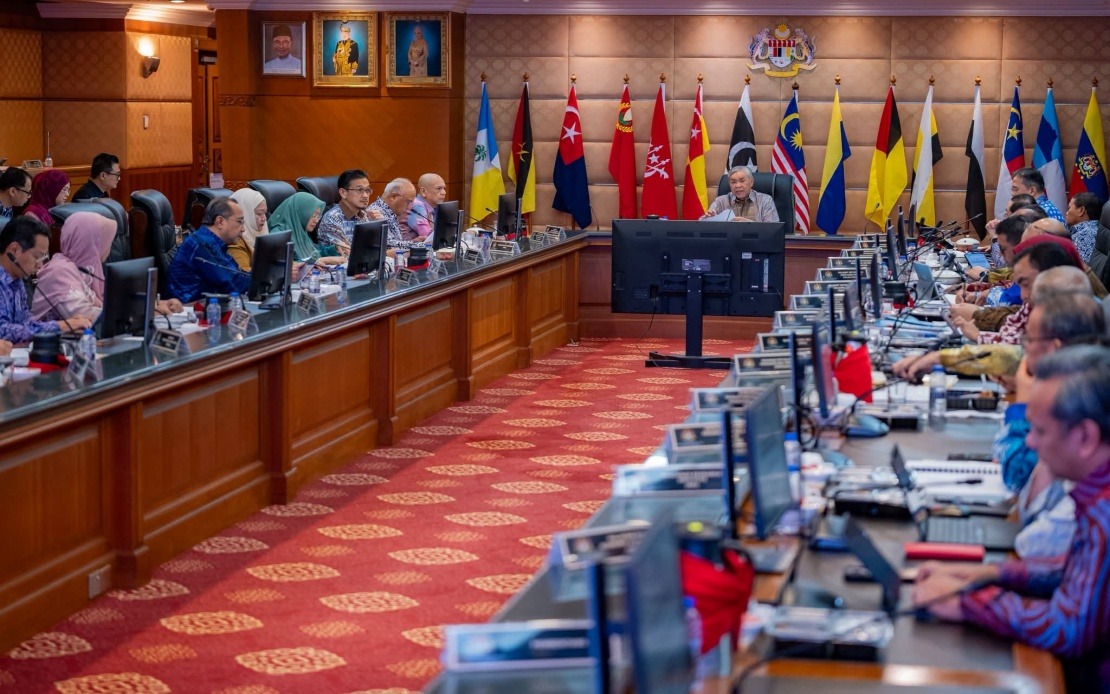
The Malaysian government is pursuing a carefully calibrated approach to managing domestic rice supplies whilst shielding low-income households from price shocks, according to discussions at the 18th Executive Committee meeting of the National Cost of Living Action Council (NACCOL) held in Putrajaya on August 13. Deputy Prime Minister Datuk Seri Dr Ahmad Zahid Hamidi, who presided over the session, underscored that addressing cost-of-living pressures demands a far broader canvas than simply monitoring retail prices in supermarkets, extending instead to the underlying economics of food production, the efficiency of logistics networks, nutritional security, and the structural challenges facing healthcare and education systems.
The deputy prime minister articulated a fundamental tension that policymakers must navigate: balancing consumer affordability against the economic viability of Malaysia's farming communities. Local rice producers face mounting operational expenses, and any sharp price controls risk undermining their capacity to invest and sustain production. To navigate this dilemma, the committee has endorsed a graduated transition mechanism centred on subsidised rice supplies specifically targeted at households categorised as vulnerable. This phased approach aims to protect the purchasing power of lower-income Malaysians during an interim period whilst longer-term policy adjustments gain traction, preventing sudden market disruptions that could destabilise both consumer behaviour and farm-gate economics.
Beyond rice, the committee has recommended that the Sumbangan Asas Rahmah (SARA) assistance scheme be enlarged to encompass fresh fruits, vegetables, and fresh protein sources. This expansion reflects a conceptual shift in how the government frames food security—moving beyond merely providing cash or subsidies to bolster household incomes toward actively facilitating access to nutritionally superior options. The proposal now proceeds to the main NACCOL forum chaired by Prime Minister Datuk Seri Anwar Ibrahim for formal consideration, signalling that nutrition and dietary quality have ascended the policy agenda alongside affordability.
The government's assessment of external pressures on the agricultural and food sector is notably comprehensive. Officials have flagged geopolitical volatility, particularly instability in West Asia, as a source of uncertainty affecting input costs, supply-chain logistics, and ultimately consumer prices. Additionally, the bureaucratic and financial burden of ensuring imports comply with Malaysia's regulatory standards adds another layer of cost pressure transmitted through the supply chain. The committee has directed relevant agencies to maintain vigilant oversight of these international developments and their domestic ramifications, recognising that inflationary currents originating abroad can overwhelm domestic price-stabilisation efforts if left unaddressed.
Accelerating support mechanisms for primary producers forms another pillar of the committee's deliberations. Farmers and fishermen, as the foundation of Malaysia's food supply, require targeted assistance programmes tailored to their distinct circumstances—whether through input subsidies, credit access, technology adoption, or market-linkage initiatives. By refining these mechanisms, the government aims to bolster producer resilience whilst maintaining the incentive structures necessary for sustained agricultural output. This focus on the production side complements consumer-focused measures and acknowledges that long-term food security depends on the viability of those who grow and harvest the nation's food.
On healthcare, the committee examined the implementation trajectory of 11 initiatives contained within the RESET strategy, a framework designed to moderate escalating private-sector medical costs whilst simultaneously widening the quality and scope of treatments accessible through public facilities. As private healthcare expenditures continue to rise—a trend affecting both middle-class households and expatriate communities—this strategic review attempts to prevent the healthcare sector from becoming a driver of broader cost-of-living pressures. The RESET strategy reflects recognition that healthcare affordability is inseparable from overall economic security for Malaysian families.
The government's commitment to education affordability received particular emphasis, with officials citing data showing that 62,937 Form Six and university students received financial assistance totalling RM589.6 million during the preceding year through 13 distinct tertiary education aid schemes. This substantial investment underscores the principle that educational opportunity should not be contingent on family wealth. The deputy prime minister stressed that these allocations require reinforcement to ensure equitable access to higher learning across all socioeconomic strata, framing education not merely as a consumer good but as a foundational investment in national human capital.
The NACCOL framework itself represents an institutional innovation—a coordinated mechanism designed to address cost-of-living pressures across multiple sectors simultaneously rather than through isolated, uncoordinated interventions. This integrated approach, operationalised through the Cost of Living Action Plan 2030, acknowledges that price pressures permeate education, healthcare, food systems, housing, transport, and utilities simultaneously, and that addressing them requires horizontal coordination among agencies rather than vertical silos. By mapping interconnections across sectors, policymakers can identify spillover effects and unintended consequences more effectively.
For Malaysian businesses and farmers, the committee's deliberations signal policy direction without imposing immediate shock. The emphasis on transition mechanisms and phased adjustments suggests the government is attempting to avoid sudden redistributions of costs that could trigger cascading market adjustments. However, the underlying policy trajectory toward subsidy rationalisation and cost discipline in public spending remains evident. Producers operating in rice, agriculture, and food-related sectors should anticipate that protection will be graduated rather than permanent, incentivising efficiency improvements and diversification strategies. The committee's attention to import compliance costs and global supply-chain volatility also signals that Malaysian enterprises should strengthen their resilience to external shocks.
Regional observers may discern in Malaysia's approach a template for managing food security and cost-of-living pressures in an era of geopolitical uncertainty and climate variability. The emphasis on balancing consumer welfare against producer viability, combined with targeted support for vulnerable populations and investment in longer-term structural improvements, reflects pragmatic policymaking that avoids both free-market fundamentalism and unsustainable subsidy expansion. As Southeast Asian governments grapple with similar pressures, Malaysia's experience with NACCOL and integrated cost-of-living frameworks may offer instructive lessons, particularly regarding the coordination challenges inherent in multi-sector policy implementation.

