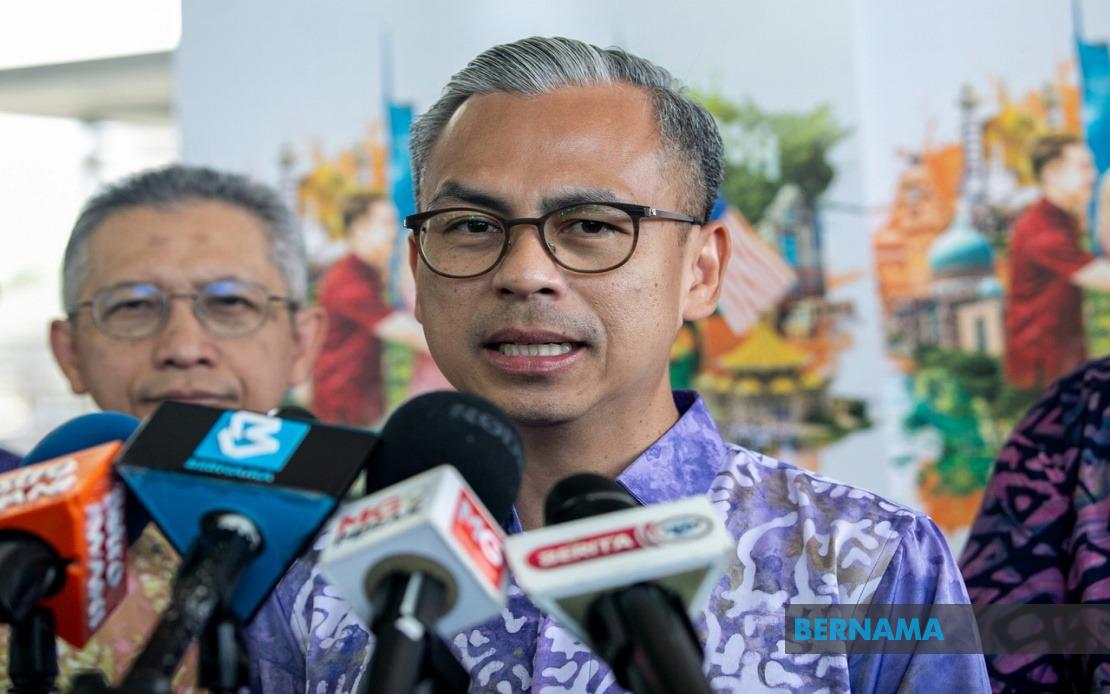
The government has unveiled the overarching theme for next year's National Day and Malaysia Day festivities, positioning shared prosperity at the heart of its national celebrations. Announced at a ceremony in Ipoh, the phrase 'Malaysia MADANI: Kesejahteraan Dinikmati' encapsulates the administration's fundamental pledge to distribute the gains of national progress equitably across all segments of Malaysian society, regardless of demographic background or geographic location.
Communications Minister Datuk Seri Fahmi Fadzil articulated the theme during the official launch of the 2026 National Month campaign and the accompanying flag-flying initiative, held at the Sultan Azlan Shah Ministry of Health Training Institute in Tanjung Rambutan. The event drew participation from Prime Minister Datuk Seri Anwar Ibrahim, who officiated proceedings, alongside National Unity Minister Datuk Aaron Ago Dagang and Perak Menteri Besar Datuk Seri Saarani Mohamad, underscoring the multi-ministry commitment to the vision.
Fahmi's articulation of the theme extended beyond mere economic metrics, emphasising that genuine shared prosperity encompasses qualitative improvements in living standards, the creation of equal opportunities across society, and the systematic distribution of development benefits. This framing suggests a deliberate pivot from purely GDP-focused development narratives towards a more holistic conception of progress that addresses inequality and social mobility. For Malaysian policymakers, this represents an attempt to operationalise the MADANI framework—introduced earlier in the administration's tenure—into tangible outcomes that voters and citizens can recognise in their daily lives.
The minister stressed that the government's foundational commitment rests on ensuring that no Malaysian faces exclusion from the nation's developmental trajectory, emphasising that this principle transcends traditional dividing lines of ethnicity, faith, geography, and socioeconomic origin. This inclusive rhetoric proves particularly significant in Malaysia's context, where historical debates around equitable development, affirmative action, and resource distribution have occasionally generated communal tensions. By framing the 2026 celebrations around universalist principles of shared prosperity, the administration signals its intention to build national unity through collective benefit rather than competitive zero-sum framings.
Fahmi underscored Malaysia's ethnic and religious diversity as a strategic asset rather than an obstacle to national cohesion. He characterised the nation's pluralistic composition as both a reflection of its historical trajectory and a practical foundation for contemporary unity, mutual respect, and social harmony. This positioning proves analytically significant: rather than treating diversity as something to be managed or mitigated, the government frames it as the bedrock upon which peaceful coexistence rests. Such messaging holds particular resonance in Southeast Asia, where other nations grapple with similar demographic complexity and where Malaysia's relative stability has occasionally served as a regional model—albeit one with acknowledged imperfections.
The minister articulated a collective responsibility narrative, appealing to all Malaysians to actively preserve communal unity, strengthen interfaith and intercommunal harmony, and protect national sovereignty. This emphasis on shared stewardship reflects recognition that national cohesion cannot be imposed through top-down mandate alone but requires active participation from diverse communities. For Malaysian citizens, this framing essentially transforms patriotism from passive flag-waving into active participation in the preservation of peaceful coexistence and the defence of constitutional arrangements that permit pluralism.
The broader 2026 celebration campaign incorporates multiple programmatic elements designed to operationalise the shared prosperity theme beyond rhetorical commitment. These include the 'One House, One Jalur Gemilang' campaign, which encourages households nationwide to display the national flag, and the Kembara Merdeka Jalur Gemilang convoy programme, intended to traverse the country and connect citizens to independence celebrations. Such initiatives, while superficially ceremonial, serve to embed national symbolism into everyday Malaysian life and create visible manifestations of collective identity.
The timing of this thematic announcement carries strategic implications for the administration's political positioning. With the 2026 celebrations occurring roughly midway through the government's electoral cycle, the emphasis on shared prosperity offers an opportunity to highlight perceived achievements in inclusive development while maintaining narrative momentum towards the next general election. Moreover, the theme potentially provides a unifying banner under which the coalition government can present otherwise diverse policy initiatives—from infrastructure development to social welfare programmes—as components of a coherent vision.
For Southeast Asian observers, Malaysia's framing of national development around inclusion and shared benefit reflects broader regional trends. Across the Association of Southeast Asian Nations, governments increasingly emphasise inclusive growth and equitable distribution in response to rising inequality and social anxiety. Malaysia's approach, articulated through its MADANI framework and now embedded in its national celebrations, demonstrates how smaller nations attempt to navigate between aspirational development goals and the persistent reality of unequal outcomes and historical grievances.
The government has centralised information dissemination through the Merdeka 360 portal and the Information Department's social media channels, reflecting contemporary governmental communication preferences. This approach enables real-time updates regarding celebration events and programmes while reaching digitally connected populations. However, it also raises questions about digital inclusion and whether information reaches Malaysians with limited internet access or digital literacy, potentially undermining the inclusive messaging that underpins the entire campaign.
Looking ahead, the success of the 2026 celebration campaign will depend substantially on whether the shared prosperity rhetoric translates into observable policy outcomes and measurable improvements in Malaysians' material circumstances. The government's ability to demonstrate tangible progress in reducing inequality, expanding economic opportunities, and improving service delivery across diverse communities will ultimately determine whether citizens perceive the shared prosperity theme as genuine commitment or aspirational messaging disconnected from lived experience. This tension between rhetorical vision and practical implementation remains central to Malaysian governance and will shape public reception of these celebrations.

