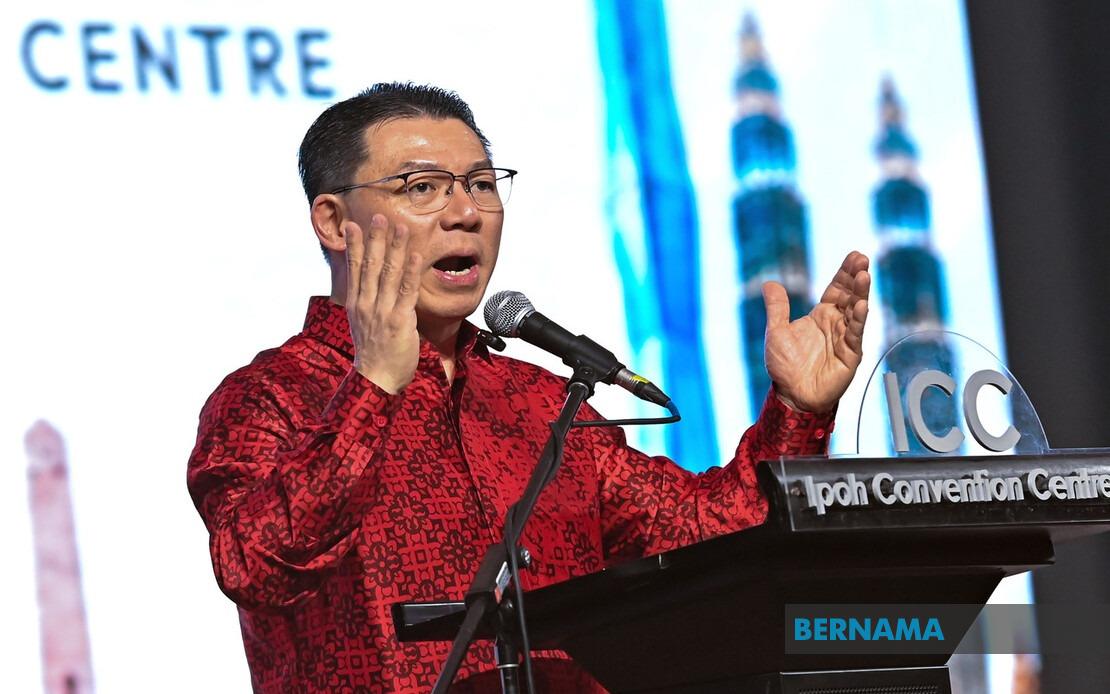
The Ministry of Housing and Local Government has formally launched the MY Public Space initiative, an ambitious framework designed to reshape Malaysia's urban public environments through internationally recognised standards. Minister Nga Kor Ming announced the programme during the 2026 National Landscape Day Celebration at Hang Jebat Stadium in Melaka, with Prime Minister Datuk Seri Anwar Ibrahim officiating the event alongside Melaka Chief Minister Datuk Seri Ab Rauf Yusoh. The initiative represents a strategic partnership between KPKT's National Landscape Department and UN-Habitat, signalling Malaysia's commitment to creating urban spaces that are not merely functional but transformative in enhancing community well-being.
The MY Public Space initiative operates on four interconnected pillars that reflect both local aspirations and global best practices. First, it establishes a national recognition framework aligned with the Rosa Sinensis Award, positioning Malaysia's landscape achievements within an internationally comparable context. Second, the programme will implement a pilot version of the MY Public Space Toolkit, a practical instrument for standardising public space development across municipalities and state governments. Third, the initiative strengthens management practices for existing public spaces, recognising that creation alone is insufficient without sustained maintenance and community engagement. Finally, the toolkit will be mainstreamed into national landscape development guidelines, embedding its principles into policy and ensuring long-term institutional adoption rather than temporary project implementation.
Nga emphasised that every public space developed under this framework must achieve five core characteristics: superior quality, inclusivity, safety, resilience, and demonstrable contribution to public well-being. This holistic approach reflects growing international recognition that public spaces function as social infrastructure, not aesthetic luxuries. For Malaysian readers familiar with the varied conditions of neighbourhood parks and communal areas, this emphasis on resilience is particularly relevant given the country's tropical climate, rapid urbanisation, and increasingly diverse demographic composition. The initiative acknowledges that public spaces must serve elderly residents, children, persons with disabilities, and transient populations equally, challenging designers and managers to think beyond conventional park-and-bench models.
The collaboration with UN-Habitat carries substantial significance beyond ceremonial partnership. As Malaysia holds the presidency of the UN-Habitat Assembly, this initiative positions the nation as a serious actor in the global sustainable development agenda. The alignment with the Sustainable Development Goals represents more than rhetorical commitment; it signals that Malaysia intends to leverage international best practices while contributing knowledge back to the UN system regarding tropical urban development. For Southeast Asian countries wrestling with similar urbanisation challenges, Malaysia's experience could provide actionable models for public space development that function effectively in humid, high-density, multicultural contexts.
The government's ambitious MADANI Parks programme forms a complementary pillar to the MY Public Space initiative. Officials have set a target of developing 1,000 MADANI Recreational Parks nationwide by 2035, ensuring that every community maintains access to quality green spaces. The acceleration of this programme is evident in recent delivery rates: during 2024 to 2025, authorities completed 217 parks against an original target of 100 annually, demonstrating institutional capacity and political prioritisation. Melaka state, where the announcement occurred, has received ten completed parks, with three additional facilities planned for Ayer Keroh and Masjid Tanah. For suburban and semi-urban Malaysians, these parks represent tangible infrastructure improvements affecting daily life, recreational opportunities, and property values in their neighbourhoods.
The economic dimensions of this landscape investment deserve careful examination. The government projects that Malaysia's landscape industry will contribute up to RM40 billion to Gross Domestic Product by 2035, a substantial figure reflecting both domestic spending and export potential. Current export data illustrates nascent but genuine international competitiveness: Malaysia recorded RM534.3 million in landscape product exports during 2025, reaching markets including Singapore, Japan, Australia, and the United States. This performance indicates that Malaysian landscape companies and designers possess technical capabilities and cost advantages that appeal to sophisticated foreign markets, suggesting potential for expansion if supported by appropriate policy and infrastructure investment.
To consolidate industry growth, KPKT is preparing the Malaysian Landscape Industry Blueprint, a strategic document addressing multiple dimensions of sectoral development. The blueprint encompasses workforce capacity building, essential given the technical skills required for sustainable landscape design and climate-responsive management. It addresses industry standard coordination, necessary for ensuring consistent quality across dispersed practitioners. Green technology innovation receives explicit attention, recognising that tropical public spaces demand advanced approaches to water management, heat mitigation, and biodiversity preservation. Critically, the blueprint aims to strengthen the landscape value chain, connecting nurseries, designers, contractors, and maintenance providers into coherent economic structures that capture value domestically rather than leaking it to foreign competitors. These comprehensive measures suggest that policymakers view the landscape sector not as peripheral beautification but as genuine economic development opportunity.
The Malaysian context for public space development differs meaningfully from Western models that often inform international best practices. High urbanisation density, year-round tropical heat, monsoon rainfall patterns, and cultural diversity create design and management challenges requiring adaptation of global principles. The MY Public Space initiative's emphasis on tailoring international practices to Malaysia's specific needs indicates sophisticated policy thinking that avoids thoughtless transplantation of foreign models. Parks must withstand intense UV exposure and heavy downpours while remaining comfortable for users, require different maintenance regimes than temperate-climate facilities, and must accommodate diverse religious and cultural practices. The initiative's acknowledgement of these contextual factors suggests that resulting public spaces will function more effectively than those designed by generic international standards.
Implementation through pilot projects and phased mainstreaming into national guidelines represents a pragmatic approach to large-scale institutional change. Rather than attempting wholesale transformation through top-down directive, the strategy allows experimentation, learning, and adjustment before becoming standardised practice. This methodology recognises that municipal governments, contractors, and maintenance staff operate under resource constraints and varying technical capacities; gradual embedding of new standards permits capacity building alongside implementation. For Malaysian observers tracking public sector reform, this approach exemplifies evidence-based, adaptive governance appropriate to a developing middle-income nation with significant variation in local institutional sophistication.
The timing of this announcement carries political and strategic significance. By launching the initiative during the 2026 National Landscape Day Celebration and with prime ministerial participation, the government elevates public space development to cabinet-level priority. This visibility increases likelihood of sustained funding, political protection from budget pressures, and coordination across fragmented municipal jurisdictions. For residents in Malaysia's major cities and secondary towns, this commitment suggests that the coming decade will bring tangible improvements in neighbourhood quality, recreational amenities, and environmental conditions. The MADANI Parks programme particularly benefits communities in outer suburbs and secondary cities historically neglected in landscape investment, addressing equity dimensions of urban development.
The economic ambitions embedded in this initiative merit scrutiny regarding feasibility and distribution of benefits. The RM40 billion GDP target by 2035 requires sustained growth in both domestic spending and export competitiveness, assuming continued government commitment and international demand. While current export performance demonstrates viability, global economic conditions, exchange rate fluctuations, and competition from lower-cost regional producers create uncertainty. The success of workforce capacity building and green technology innovation will determine whether Malaysian firms can sustain competitive advantage or whether they become dependent on capital-intensive imports. Small and medium enterprises in the landscape sector will require targeted support to participate in value chain strengthening rather than being displaced by larger competitors.
For Southeast Asian context, Malaysia's approach to public space development and landscape industrialisation offers instructive lessons. The region faces comparable urbanisation pressures, climate challenges, and economic constraints that limit comprehensive public investment. Malaysia's combination of international partnership, domestic standard-setting, pilot approaches, and clear economic objectives provides a model that neighbouring countries may adapt. The emphasis on inclusivity, safety, and resilience reflects acknowledgement that public spaces serve developmental functions beyond recreation, contributing to social cohesion, health outcomes, and quality of life metrics increasingly important to middle-income societies. As other ASEAN members pursue similar urban development objectives, Malaysia's documented experience with the MY Public Space initiative and MADANI Parks programme will constitute valuable regional knowledge.
The broader significance of this initiative extends beyond parks and landscaping to reflect Malaysia's positioning in global sustainable development discourse. By aligning public space development with UN-Habitat priorities, collaborating with international partners, and setting measurable targets integrated with SDG frameworks, the government demonstrates commitment to sustainable urbanisation as a core development strategy. This contrasts with purely infrastructure-focused approaches that prioritise motorway capacity and commercial development without equivalent attention to public realm quality. For Malaysian citizens and observers of Southeast Asian development patterns, the MY Public Space initiative represents institutional recognition that liveable, inclusive, resilient cities depend fundamentally on quality public spaces that all residents can access, enjoy, and benefit from equally.

