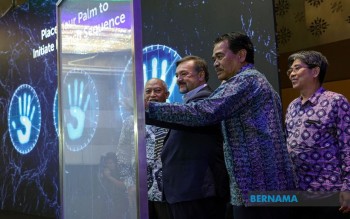
Pengurusan Aset Air Bhd (PAAB), the government-owned water asset management company, has introduced a groundbreaking sustainable Islamic finance framework that positions Malaysia as a regional pioneer in aligning Islamic financing with environmental sustainability objectives. The initiative represents three significant national achievements: it is the country's inaugural framework to incorporate blue finance mechanisms, the first to secure Platinum Rated Framework certification, and Malaysia's debut sustainable Islamic finance framework combining both elements. Announced in Kuala Lumpur on June 30, the framework reflects PAAB's strategic commitment to embedding sustainability, transparency, governance and accountability across all its financing operations.
The development of this comprehensive framework involved collaboration with Maybank Investment Bank Bhd, which served as the primary sustainability structuring adviser, and RAM Sustainability Sdn Bhd, which provided independent second-party opinion verification. Rather than simply importing international standards, PAAB has engineered a platform that deliberately synchronises its financing activities with globally recognised sustainability benchmarks whilst maintaining fidelity to core Islamic finance principles. This dual alignment is particularly significant for Malaysia's Islamic finance sector, which continues expanding its influence across Southeast Asia and beyond. The framework explicitly establishes pathways for future blue sukuk issuances and other sustainability-linked instruments designed to mobilise capital toward water infrastructure development and environmentally sound projects.
PAAB's investment achievements underscore the tangible returns from sustained capital deployment in this critical sector. As of December 31, 2026, the company's portfolio of migrated and committed investments across Malaysia's water services industry has reached RM46.88 billion. These figures translate into concrete infrastructure: twenty-one operational water treatment plants now collectively process 2.085 billion litres daily, providing reliable treatment capacity across multiple regions. Simultaneously, forty-two reservoir projects with combined storage capacity of 783 million litres have been constructed to enhance supply resilience during dry seasons and growing periods of water stress. The pipeline replacement programme has already installed 3,263 kilometres of new distribution networks, directly addressing Malaysia's chronic non-revenue water losses—a persistent challenge that has constrained supply reliability and increased operational costs for years.
Chairman Datuk Seri Jaseni Maidinsa characterised these investments as demonstration of federal government and PAAB's sustained dedication to modernising Malaysia's ageing water infrastructure whilst fortifying long-term water security. His emphasis on securing water availability for future generations reflects growing recognition within government circles that Malaysia cannot rely indefinitely on existing systems designed for previous eras and consumption patterns. Climate volatility, population growth, and industrial demand expansion all impose mounting pressures on water resources across the peninsula. The infrastructure improvements executed under PAAB's stewardship represent preparatory action against these emerging constraints, ensuring that Malaysia maintains adequate treatment and distribution capacity even as demand intensifies.
Finance Minister II Datuk Seri Amir Hamzah Azizan disclosed that PAAB intends to issue its inaugural blue sukuk during the third quarter of 2026, marking another milestone in Malaysian Islamic finance innovation. This inaugural issuance carries additional significance: it is positioned to become the world's first blue finance instrument utilising a bespoke taxonomy jointly developed by PAAB, Maybank, and RAM Sustainability with guidance from the Securities Commission Malaysia. The taxonomy represents more than administrative classification—it establishes standardised criteria for determining which water-related assets qualify as eligible for blue finance financing, creating transparency and comparability for international investors assessing such instruments.
The blue sukuk structure represents an innovative approach to securitising and collateralising water assets, transforming these typically illiquid infrastructure holdings into liquid financial instruments. By structuring sukuk repayment mechanisms around water asset performance and revenue generation, PAAB creates instruments that link Islamic financing principles directly to measurable environmental outcomes. This approach opens capital markets pathways previously unavailable for water infrastructure financing, potentially attracting investment tranches that conventional instruments could not access. The Minister emphasised that inadequate water sector investment poses systemic risks to Malaysia's economic stability and quality of life—underscoring why financial innovations that expand investment capacity deserve priority support.
The blue sukuk framework acknowledges a critical strategic gap in Malaysia's water development trajectory. Even with RM46.88 billion already committed, substantial capital remains necessary to achieve comprehensive coverage across peninsular Malaysia, Sabah, and Sarawak. Growing water stress in metropolitan areas, including greater Kuala Lumpur, Penang, and Johor Baharu, necessitates continuous upgrades to treatment and distribution infrastructure. Rural regions and developing areas equally require investment to establish reliable services. Islamic finance mechanisms capable of mobilising larger investor pools—particularly institutional investors and international sovereign wealth funds—offer feasible pathways to bridging this investment gap without straining government budgets excessively.
The Platinum Rated Framework certification provides independent validation of PAAB's sustainability commitments and operational rigour. This rating carries weight among sophisticated investors evaluating whether funds will genuinely serve environmental purposes or merely provide facade-level sustainability labelling. The combination of Platinum certification with bespoke blue finance taxonomy creates a credible investment proposition capable of attracting international capital to Malaysian water infrastructure. Maybank and RAM Sustainability's involvement enhances investor confidence that underlying assets meet rigorous valuation and sustainability standards.
For Malaysian policymakers and water sector stakeholders, this framework represents acknowledgement that traditional financing approaches cannot deliver the scale of investment required for comprehensive water security. Blue sukuk and similar instruments allow PAAB to delink water infrastructure financing from general government budgets, reducing fiscal pressure whilst maintaining public sector control over critical infrastructure. The framework's Islamic finance foundation additionally positions Malaysia to leverage its reputation as a regional Islamic finance hub, potentially attracting Middle Eastern and other Islamic-world investors seeking Shariah-compliant water infrastructure exposure.
Looking forward, the success of PAAB's inaugural blue sukuk issuance will likely influence adoption patterns across Southeast Asia's broader water sector. If the issuance achieves strong investor reception and demonstrates that blue sukuk can reliably finance water infrastructure whilst delivering acceptable returns, comparable instruments may emerge in Indonesia, the Philippines, Vietnam, and Thailand. This regional ripple effect could gradually reshape how Southeast Asian governments approach water financing, shifting toward market-based mechanisms that reduce fiscal constraints and increase investment volume. For PAAB and Malaysia more broadly, pioneering this approach confers first-mover advantages in establishing standards, building investor relationships, and positioning Malaysian institutions as thought leaders in blue finance innovation.

