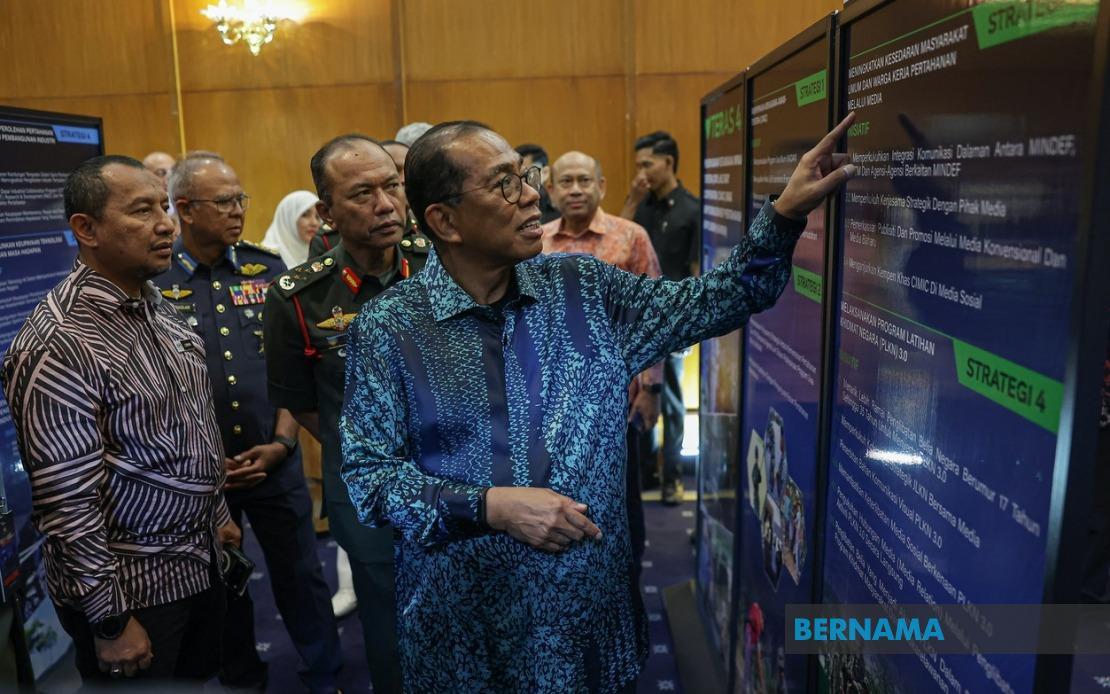
Malaysia's Defence Ministry formally unveiled two pivotal planning documents on June 25, signalling a comprehensive recalibration of the country's military strategy and operational capacity. The National Defence Strategic Plan (PSPN) and the Defence Capacity Blueprint (RTKP) 2026-2030 represent an integrated approach to defence governance, built upon the foundation of the existing Defence White Paper. Defence Minister Datuk Seri Mohamed Khaled Nordin emphasized that these instruments address the growing complexity of contemporary security challenges, positioning Malaysia to respond effectively to threats both conventional and unforeseen.
The strategic environment prompting this initiative reflects the turbulent geopolitical currents now defining Asia-Pacific affairs. Minister Mohamed Khaled highlighted that persistent geopolitical tension, coupled with rapid technological disruption—particularly in artificial intelligence and automation—creates an imperative for Malaysian defence planning to remain nimble and forward-looking. The Mid-Term Review of the Defence White Paper identified critical vulnerabilities and operational gaps requiring attention. Rather than introducing wholesale changes, the new documents build incrementally upon existing frameworks, ensuring continuity while addressing identified shortcomings in Malaysia's defence posture.
The PSPN establishes seven strategic pillars as the foundation for military modernization and readiness. These pillars encompass the operational effectiveness of the Malaysian Armed Forces, methodical enhancement of existing defence hardware and capabilities, comprehensive support systems for military personnel and veterans, and dedicated investment in defence-related technology and innovation. This structure reflects a mature understanding that military strength extends beyond acquisitions to include personnel welfare, institutional competence, and technological edge. The framework acknowledges that a capable military requires not only advanced weaponry but also motivated personnel and systems enabling rapid adaptation to emerging threats.
Complementing the PSPN, the Defence Capacity Blueprint takes a distinctly practical approach by addressing the implementation machinery required to achieve strategic objectives. Rather than outlining aspirational goals, the RTKP focuses on the concrete resources and coordination mechanisms needed to translate strategy into operational reality. The minister articulated this relationship clearly: while the PSPN provides directional guidance, the RTKP supplies the operational blueprint ensuring Malaysia possesses the financial resources, human expertise, technological sophistication, and inter-agency coordination mechanisms necessary to execute defence plans.
The capacity blueprint reflects sophisticated thinking about institutional readiness. It encompasses financial allocation mechanisms, human capital development and retention, cultivation of specialized technological expertise, and establishment of seamless coordination across government agencies and defence-related industries. This whole-of-government framing recognizes that national defence transcends the Defence Ministry itself, requiring alignment across customs, coast guard, immigration, and intelligence services. The inclusion of the broader defence ecosystem—private contractors, research institutions, and specialized suppliers—acknowledges Malaysia's dependence on industrial partnerships for sustained capability development.
A particularly significant feature of both documents is their explicit adoption of a whole-of-society approach to national defence. This represents an evolution in Malaysian strategic thinking, moving beyond traditional military-centric definitions toward recognizing that resilience against asymmetric threats requires societal-level preparedness. Public awareness, civilian-military coordination, and population resilience become integral components of the defence framework rather than peripheral concerns. This approach aligns with contemporary security studies literature emphasizing that modern threats—from cyber-attacks to supply chain disruptions—affect entire societies rather than military targets alone.
Concrete examples of capability enhancement are already materializing through specific acquisitions. The Defence Ministry received three ANKA Medium Altitude Long Endurance Unmanned Aircraft Systems in March, which have commenced operational deployment at Labuan Air Base. These systems represent significant force multiplication, enabling extended surveillance and reconnaissance capabilities across Malaysian airspace and maritime zones. The ANKA acquisition addresses critical gaps in persistent airborne observation, particularly valuable given Malaysia's extensive coastline and territorial waters requiring monitoring.
Beyond unmanned systems, Malaysia's force structure is undergoing substantial transformation through phased equipment introductions. The anticipated arrival of FA-50M light combat aircraft will modernize the Royal Malaysian Air Force's fighter capability, replacing aging platforms with systems incorporating advanced avionics and weapons integration. These aircraft, manufactured by Korea Aerospace Industries, represent a middle-weight solution offering superior performance to current platforms while remaining cost-effective relative to larger fighter acquisitions. Complementing aerial capabilities, maritime patrol aircraft acquisitions will enhance Malaysia's ability to monitor its vast exclusive economic zone, addressing persistent surveillance gaps in offshore resource protection and fishery enforcement.
The Littoral Mission Ships program represents another critical modernization trajectory. These modular vessels are specifically designed for operations in Southeast Asian waters, balancing armament capability with extended patrol endurance. The acquisition of multiple units over a phased schedule reflects both budgetary pragmatism and operational flexibility. This measured approach to capability development demonstrates alignment with the Defence Capacity Blueprint's emphasis on sustainable resourcing and realistic implementation timelines.
From a regional perspective, Malaysia's defence planning carries implications for ASEAN security architecture and South China Sea stability. As a nation bordering disputed waters and maintaining complex maritime boundaries, Malaysia's enhanced military preparedness contributes to regional balance without appearing provocative. The emphasis on surveillance, maritime patrol, and precision systems suggests Malaysian planners prioritize monitoring and presence over offensive capability accumulation—a posture consistent with ASEAN consensus on avoiding arms races while maintaining credible deterrence.
The Defence Capacity Blueprint's emphasis on human capital development addresses a critical challenge facing many Southeast Asian militaries. Recruitment, training, and retention of skilled personnel—particularly for sophisticated systems like unmanned aircraft and advanced vessels—requires sustained institutional investment. Malaysian defence planning now explicitly recognizes that technological sophistication demands personnel expertise, creating competitive pressures for talent against both civilian sectors and other regional militaries.
Looking forward, the 2026-2030 planning horizon represents a critical period for Malaysia's defence posture. The combination of geopolitical uncertainty, climate-related security challenges, and rapid technological change creates a complex environment requiring constant recalibration. By establishing adaptive frameworks through the PSPN and RTKP, Malaysia attempts to build institutional flexibility enabling responsiveness to unforeseen developments while maintaining strategic coherence. The success of these planning instruments ultimately depends on consistent resource allocation, bureaucratic coordination, and leadership commitment across multiple government agencies and planning cycles extending beyond individual ministerial tenures.

