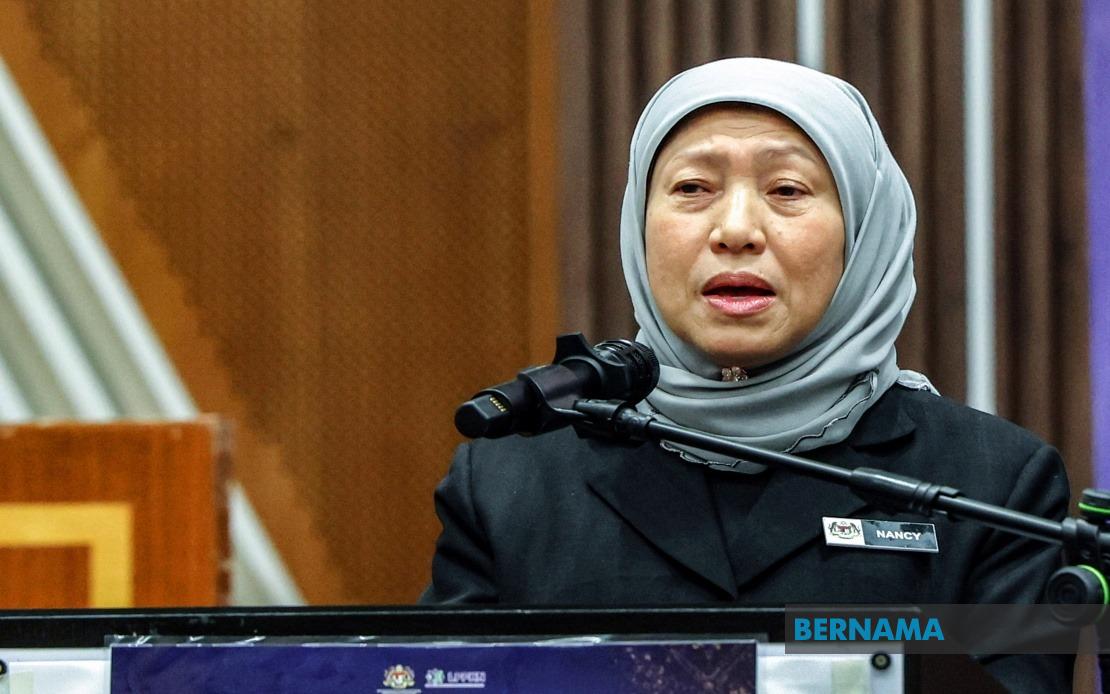
Malaysia is embarking on a comprehensive research project aimed at redefining how the country approaches male empowerment and social development. The Ministry of Women, Family and Community Development (KPWKM) will commence an 18-month national study this month, signalling a significant shift in how policymakers view men's roles within families and society. The initiative, formally called the National Gentleman Study, reflects growing recognition that men face distinct challenges requiring targeted, evidence-based intervention.
Minister Datuk Seri Nancy Shukri outlined the philosophical foundation underpinning this approach during the opening of the Men's Empowerment Consultative Forum in Putrajaya. Rather than limiting men's empowerment to traditional metrics of economic success or leadership positions, the government now frames the concept more expansively. The vision encompasses emotional resilience, mental health stability, psychological maturity, and the capacity to fulfill familial obligations with integrity and honesty. This broader understanding reflects evolving perspectives within Malaysian governance about what genuine empowerment means across genders.
Crucially, the government has positioned men's empowerment within a framework of mutual respect and gender equality. The concept of the "gentleman" being promoted here deliberately rejects notions of male dominance or paternalism. Instead, it emphasizes wisdom, shared responsibility, and recognition of women as equal partners in constructing stable, healthy family units. This framing matters significantly for Malaysian society, where traditional gender roles remain influential across many communities. By explicitly tying male empowerment to respect for women and collaborative partnerships, policymakers are attempting to reshape cultural narratives around masculinity.
The research will operate through a Public-Private-People Partnership model, designed to gather comprehensive input from multiple stakeholder groups. This consultative approach seeks to understand the genuine challenges men experience, drawing on perspectives from government agencies, private sector organizations, civil society groups, and community representatives. The study's findings will directly inform future policy development and programme design, meaning the research outcomes carry substantial practical implications for how government resources and initiatives targeting men will eventually be structured and deployed.
The urgency of this research is underscored by concerning mental health statistics. Male suicide rates in Malaysia are nearly three times higher than female rates, indicating a severe and often unaddressed crisis among men. Mental health challenges extend beyond suicides; the 2023 National Health and Morbidity Survey revealed that 4.6 percent of Malaysians aged 16 and above were managing depression. Men, in particular, often struggle to access support or acknowledge mental health difficulties due to cultural expectations around masculine stoicism, making them a vulnerable population requiring specialized attention and tailored interventions.
Economic pressures have emerged as a significant stressor affecting male well-being and family stability. Household debt in Malaysia has reached 84.3 percent of gross domestic product according to Bank Negara Malaysia, creating sustained financial strain on breadwinners and contributors to family finances. This economic burden contributes to a cascade of downstream problems affecting family cohesion and individual psychological health. Men experiencing severe financial stress often become caught in cycles of anxiety and inadequacy, particularly when cultural expectations position them as primary providers.
Family breakdown has accelerated in recent years, with divorce cases rising 4.1 percent to 60,457 in 2024. Financial stress consistently emerges as a primary factor in these dissolutions, alongside men's inability to meet maintenance obligations and prolonged domestic conflict. These statistics reveal how interconnected economic hardship, psychological strain, and relationship failure have become within Malaysian society. Understanding and addressing these patterns requires the kind of comprehensive research the government is now pursuing, as surface-level interventions cannot adequately address such complex, interrelated problems.
Particularly troubling are statistics on domestic violence, where men account for 95 percent of perpetrators according to Royal Malaysia Police data from January through December 2025. This pattern indicates that some men, facing overwhelming personal and economic pressures, resort to violence within their homes. While recognizing men's challenges, the government's framework appropriately emphasizes that empowerment must occur alongside accountability and must reinforce principles of respect and non-violence. Genuine male empowerment cannot mean enabling harmful behaviour; rather, it must include cultivating emotional regulation, healthy conflict resolution, and respect for others' safety and dignity.
The timing of this national study reflects Malaysia's broader effort to address social fragmentation and family instability through targeted intervention. Rather than treating men's issues as separate from women's or families' issues, the government is attempting to construct an integrated approach recognizing that healthy, resilient men contribute to stable families and healthy communities. This systems-level thinking represents maturation in social policy development, acknowledging that siloed approaches produce incomplete results.
The research will also serve to identify evidence-based best practices and intervention models that could be adapted or developed for Malaysian contexts. International research on men's health and empowerment exists, but the Malaysian study's local focus ensures findings reflect the country's specific cultural, economic, and social conditions. A programme effective in one context may require substantial modification for another, making locally-grounded research essential for policy effectiveness.
For Malaysian readers and policymakers, this initiative signals a willingness to engage with traditionally under-examined aspects of national development. By researching how men experience empowerment, vulnerability, and responsibility, the government may uncover insights valuable not just for male-specific programmes but for understanding broader patterns affecting family stability, economic resilience, and social cohesion. The study's outcomes will likely influence government spending priorities, social messaging, and programme design across multiple agencies for years to come, making the quality of this research consequential for millions of Malaysians.

