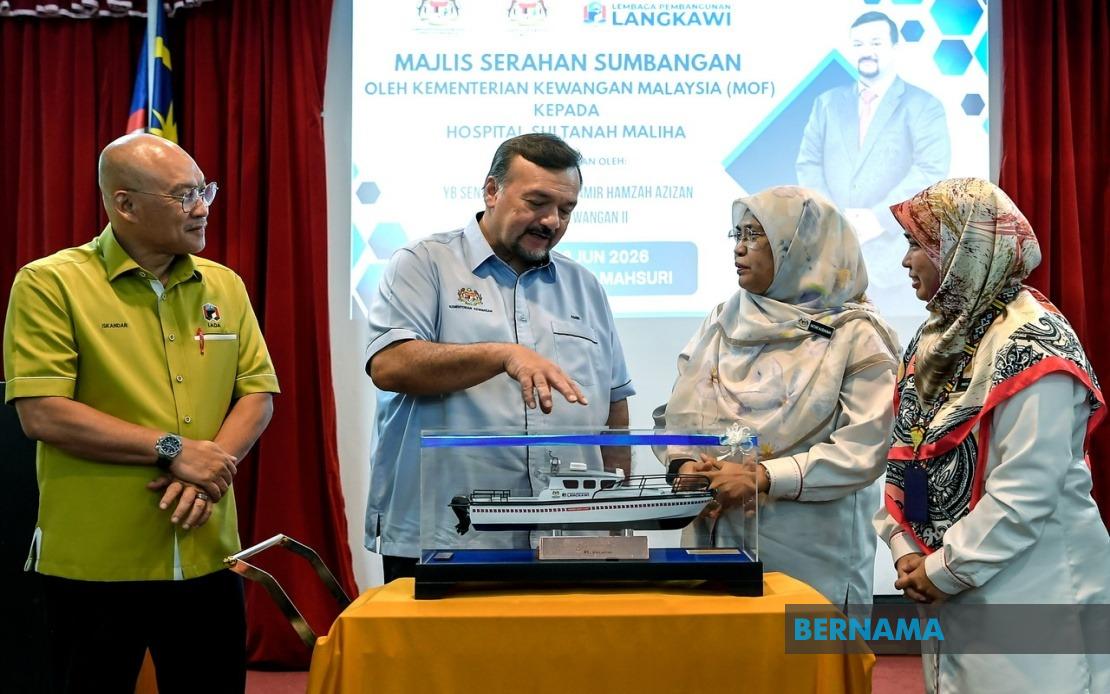
Malaysia's Ministry of Finance is investing RM5.5 million to establish a dedicated sea ambulance service serving Langkawi, marking a significant step toward modernising emergency medical transport infrastructure in the island state. Finance Minister II Datuk Seri Amir Hamzah Azizan announced the allocation, which covers both procurement costs and initial operating expenses, with service commencement targeted for early 2025. The initiative represents a direct response to longstanding challenges in transferring critically ill and injured patients from Langkawi to mainland referral hospitals, where complex procedures and specialised treatments remain concentrated.
The current system relies heavily on commercial passenger ferry services for patient evacuation, a arrangement that creates substantial vulnerability during medical emergencies. When ferry schedules are reduced or cancelled due to weather conditions or operational constraints, patients facing time-sensitive conditions face dangerous delays. The inadequacy of this arrangement has become increasingly apparent as Langkawi's population grows and tourist arrivals expand, intensifying demand for reliable emergency transport options. By creating a dedicated medical vessel, the government removes dependency on general-purpose ferry infrastructure and establishes a transport channel exclusively designed for patient safety and clinical requirements.
Hospital Sultanah Maliha will assume operational responsibility for the sea ambulance service, positioning the facility as the coordination hub for maritime emergency transfers. This arrangement leverages the hospital's existing medical expertise and administrative structure while ensuring seamless integration with broader referral networks connecting Langkawi to mainland specialist centres. The vessel's design reflects careful consideration of practical medical requirements, with capacity for two stretchers and a full medical team of up to 12 personnel, enabling nurses and doctors to provide continuous clinical care throughout the journey to the mainland. This configuration transforms patient transport from passive movement into active emergency treatment, maintaining vital continuity of care during the critical transfer window.
Patient dignity and medical confidentiality receive priority within the service design framework. Unlike passenger ferries where ill patients are exposed to public observation and potential privacy breaches, the dedicated sea ambulance provides enclosed, controlled environments specifically configured for clinical work. This separation addresses both practical medical requirements and the psychological wellbeing of vulnerable patients undergoing transfer during frightening circumstances. Families accompanying patients also benefit from the private, clinical atmosphere rather than congested public transport conditions.
Beyond the sea ambulance project, the Finance Ministry simultaneously committed RM700,000 toward acquiring advanced healthcare equipment for Hospital Sultanah Maliha, demonstrating a comprehensive approach to strengthening Langkawi's medical infrastructure. This equipment portfolio spans medical devices, information technology systems, furniture, vehicles, and security installations, collectively designed to elevate clinical capacity and operational efficiency. The investment recognises that modern, well-equipped facilities form the foundation upon which emergency services ultimately depend, making simultaneous investment in transport and fixed infrastructure logically coherent.
Digitalisation emerges as a critical component within this modernisation strategy. Hospital Sultanah Maliha is implementing an Electronic Medical Record system compatible with nationwide Health Ministry standards, enabling seamless data sharing across the healthcare network. The hospital is receiving portable computing devices allowing clinical staff to document patient information in real time during ward rounds, directly populating the digital system rather than relying on manual data entry completed hours or days later. This technological foundation means that when patients transfer to mainland hospitals, receiving physicians immediately access complete, current medical records rather than navigating incomplete paper documentation or facing communication delays that compromise clinical decision-making.
For Malaysian healthcare policy, the Langkawi initiative signals deliberate investment in addressing geographic disparities in emergency service access. Island and remote communities have traditionally absorbed disproportionate burdens from inadequate transport infrastructure, experiencing worse health outcomes partly attributable to delayed referral care. By prioritising a dedicated maritime ambulance service, the government acknowledges that equity in emergency healthcare requires infrastructure investment proportional to geographic challenge rather than simple per-capita funding allocation. This principle carries implications for other peninsular islands and remote coastal regions facing similar transport barriers.
The sea ambulance service also supports Malaysia's substantial tourism economy by reinforcing the safety and security environment that international visitors require. Medical emergencies involving tourists create complex logistical challenges, and reliable emergency transport enhances both visitor confidence and the destination's reputation for adequate healthcare provision. For Langkawi specifically, which attracts millions of annual visitors, demonstrating commitment to emergency response capability represents competitive advantage within Southeast Asia's increasingly crowded tourism market.
The project timeline extending into early 2025 allows adequate preparation for operational commencement, including crew training, equipment procurement, and integration protocols with Hospital Sultanah Maliha and mainland referral facilities. Implementation success depends on coordinated effort across multiple government agencies and healthcare institutions, requiring clear governance structures and sustained political commitment beyond initial funding allocation. The dual investment in both sea ambulance transport and fixed-facility equipment modernisation suggests comprehensive thinking about infrastructure interdependencies, though ongoing operational funding will require careful budgeting as initial capital commitments transition into recurring expenditure requirements.
For Langkawi residents and the wider region, this initiative addresses a persistent vulnerability in emergency healthcare access that previous policy frameworks had inadequately resolved. The convergence of dedicated medical transport, digital information systems, and upgraded clinical facilities creates an integrated emergency response ecosystem substantially more capable than existing arrangements. As Malaysia continues developing healthcare infrastructure across diverse geographic and demographic contexts, the Langkawi sea ambulance service demonstrates how targeted investment can transform emergency service accessibility, particularly benefiting populations previously disadvantaged by geography.

